
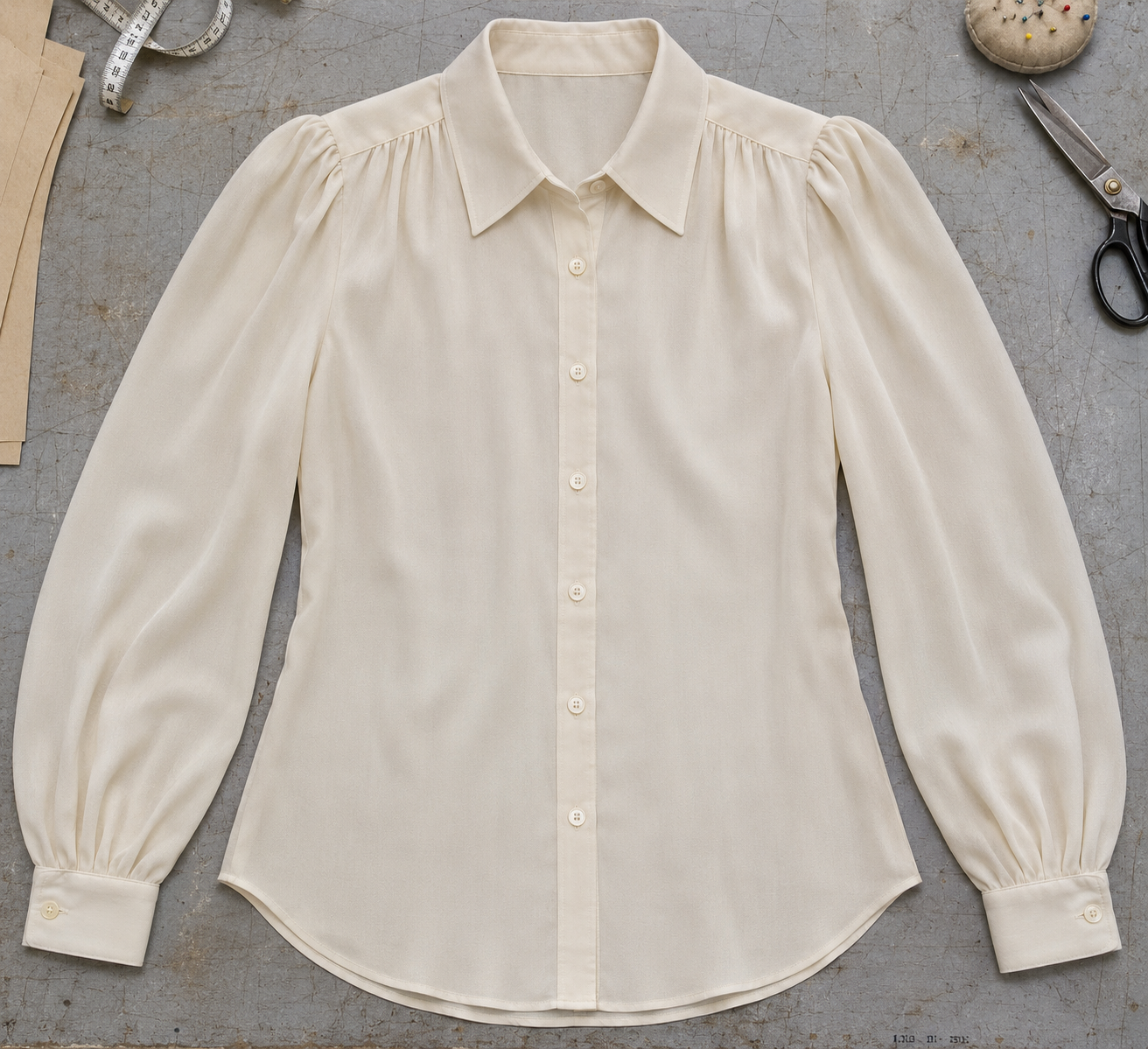
Start With the Blouse You Need to Sell
A blouse manufacturer is a good fit only if it can turn your design, fabric and fit requirements into an agreed production scope. A photograph and a target price alone are not enough to establish that.
At Orange Sea Clothing, we make womenswear tops under OEM and ODM arrangements, so we are an option for brands developing a blouse from their own design or seeking development support. We also offer low MOQ production for smaller runs and can scale to bulk. The right quantity, construction and commercial terms still need to be assessed for your particular blouse.
Define the Fit and Construction
Start with how the blouse should sit on the body. A loose silhouette may need a defined shoulder position to avoid looking oversized; a fitted blouse needs enough room across the bust and back to remain comfortable in motion.
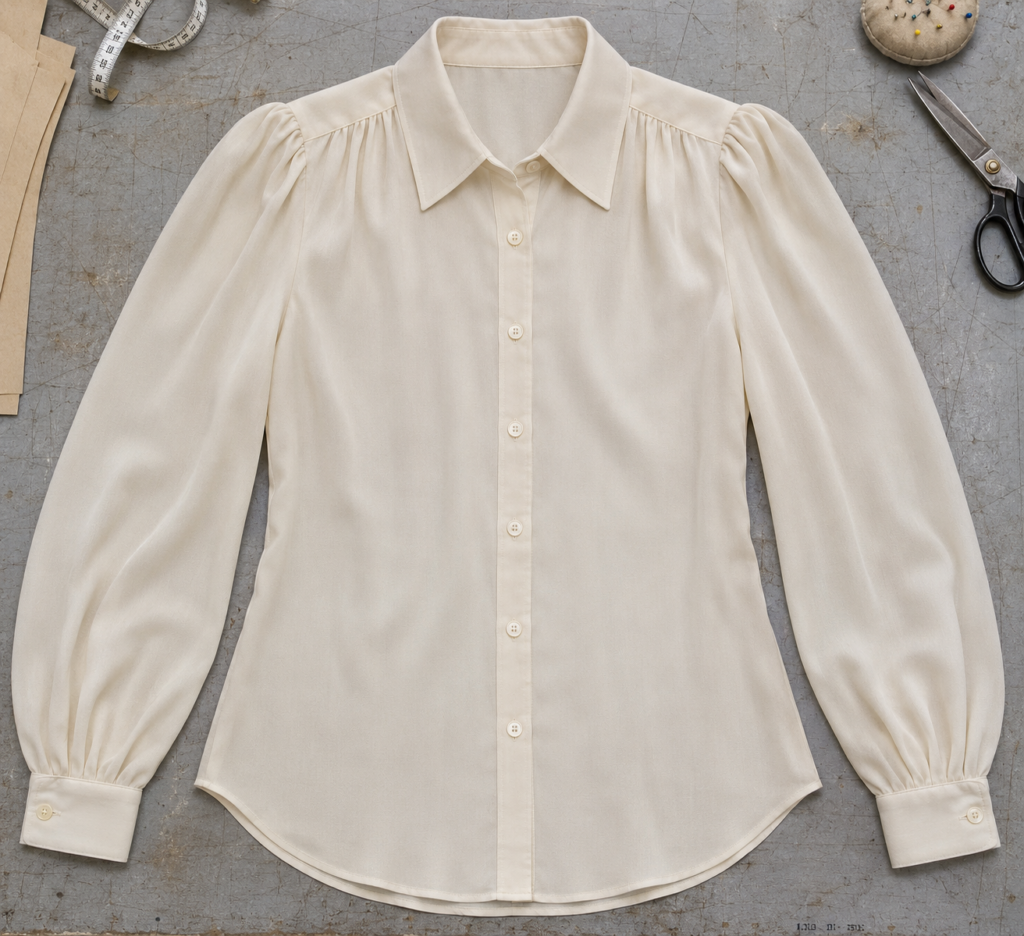
A tech pack is useful, but a clear initial brief can also include sketches, measurements and reference garments. Tell us what matters at these points:
- Shoulder and bust: Show where the shoulder seam should sit, the intended bust fit and any darts or shaping.
- Sleeves: Specify the length, cuff and desired room when the wearer raises or reaches with her arms.
- Collar and neckline: Show the shape, opening and how structured or relaxed the collar should look.
- Closure: Identify buttons, ties, zips or another fastening, including placement where it affects coverage.
- Hem: Describe the length and shape, and whether the blouse is intended to be tucked in or worn out.
An image rarely settles all these decisions. If the closure, shaping or fabric is unclear, we may have to quote on assumptions or ask for more detail. A later change can affect both the sample and the production price.
Choose Fabric for the Intended Wear
Choose the fabric against the way the blouse will be worn, not just how it looks in a photograph. A fluid fabric can give a softer silhouette, while a fabric with more body can hold a collar or sleeve shape differently. Sheer or lightweight material may need a coverage decision, such as lining or a different fabric choice.
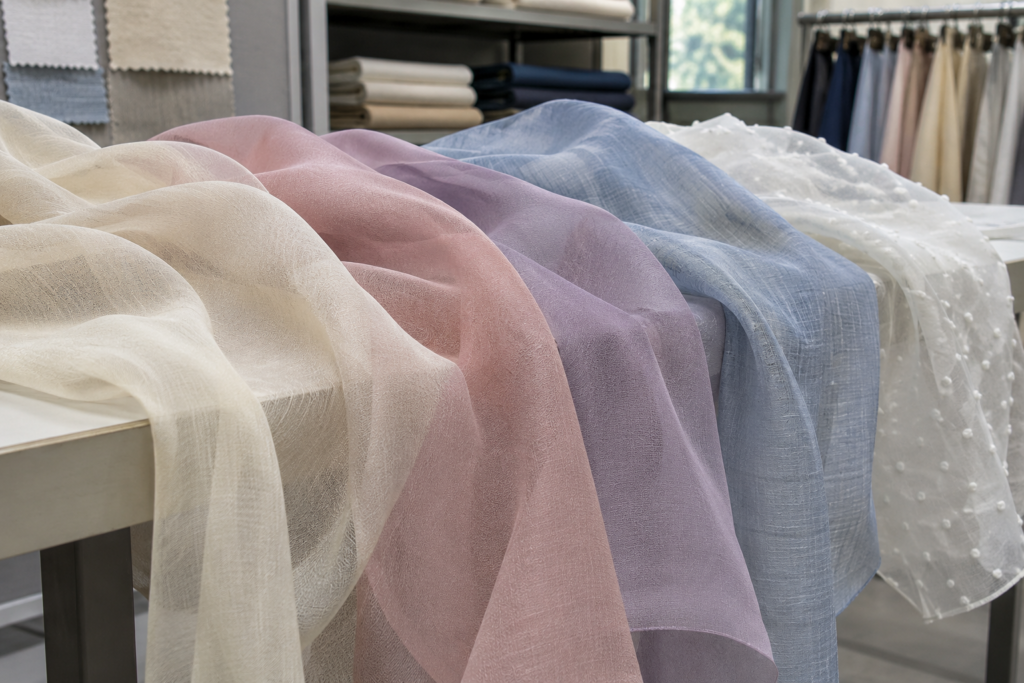
Comfort and care matter too. Consider how the fabric feels against the skin, whether it restricts movement, and what washing or pressing the customer will accept. A finish that suits the design may not suit the intended care routine.
If you have them, share fibre content, fabric weight, weave or knit construction, colour references and care requirements. A physical swatch or reference garment can make drape and coverage easier to discuss. We need to confirm the availability and suitability of the proposed fabric for your order rather than assume a match.
Send the Brief and Compare the Proposed Scope
For an initial assessment, send us the design views, fit and construction details, fabric information, size range, expected quantity, branding requirements and destination. Tell us whether you need OEM production from an established design or ODM support to develop it. Flag any target delivery date and requirements that cannot change.
We quote within 24 hours, but the usefulness of an initial quote depends on the information available. If we must work from assumptions about fabric or construction, treat the price and scope as provisional until those details are resolved.
When comparing proposals, check what each includes: fabric and trims, sample charges, revisions, production, inspection and shipping. A lower figure is not directly comparable if key items are still undecided. For a broader checklist, see our guidance on how to prepare a request for quotation (RFQ).
Use the Sample to Resolve the Blouse’s Details
Our in-house sample room develops samples in about 7 days. Confirm what that timing covers for your blouse, along with the sample cost and revision terms, before starting.
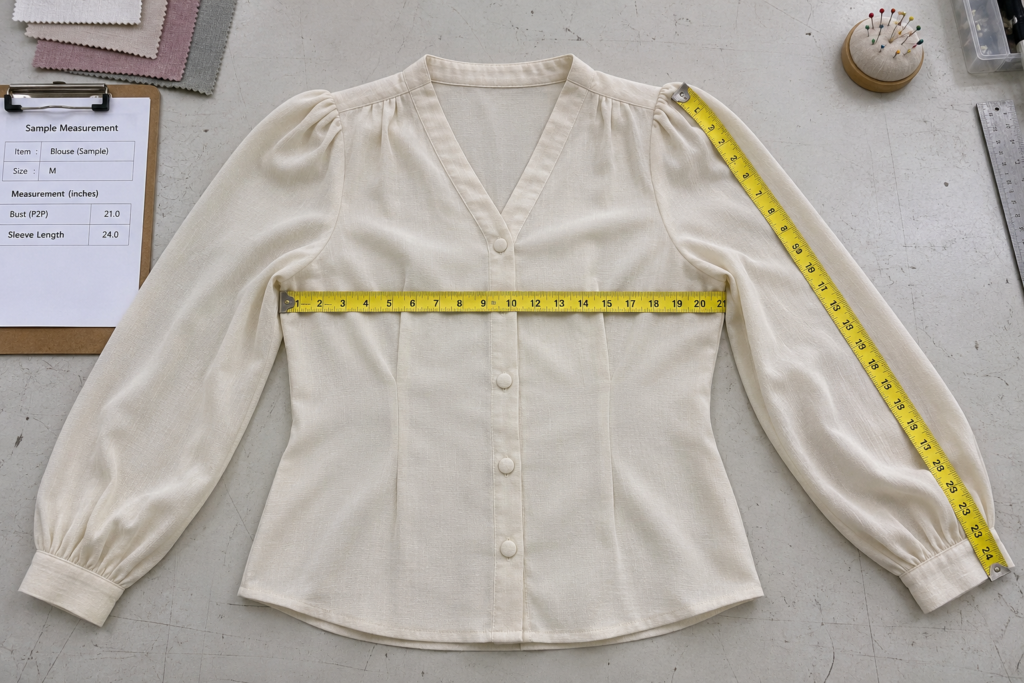
Assess the sample on the intended wearer or fit model, using the agreed measurements as well as visual checks. Look at the shoulder position and bust fit, then ask the wearer to reach forward and raise her arms. Check whether the hem rises unacceptably or the sleeves restrict movement.
Inspect coverage in the intended wearing conditions. Button placement should prevent unwanted gaping; the collar should sit as intended both open and closed. Check cuffs, seams and the way the fabric hangs.
Record changes against specific points and measurements rather than asking only for a “better fit.” Discuss whether another sample is needed and how any changes affect cost and timing. Approval of one sample does not automatically settle every production detail, including grading across sizes.
Confirm the Order or Choose a Specialist
Before placing the order, agree which sample and specifications will be the production reference. Confirm the size breakdown and grading, fabric and trim choices, quantities, labelling, packaging and acceptance criteria. Discuss how measurements, appearance and any defects will be assessed, and what documentation or inspection is included.
Settle the commercial terms as well: final price, payment, production lead time, shipping responsibilities and any conditions attached to fabric sourcing. Ask us to confirm the blouse-specific MOQ and capacity; a general low MOQ does not establish the minimum for every design.
If your blouse depends on a specialist construction, finish, fabric or certification, verify that the requirement can be met before committing. A specialist supplier may be the better choice if the technique or evidence you need cannot be confirmed.
Send us your blouse brief, reference images and intended quantity for an initial assessment of the design and proposed scope.
What to send us
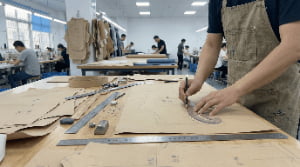
If the specifications above match what you are sourcing, send your tech pack to Orange Sea Clothing. If the pack is not written yet, sketches and a reference sample are enough to start — sample development covers the design review, fabric and trim sourcing, pattern making and the first prototype, so you see fit and construction before you commit to a production run.
Comments