
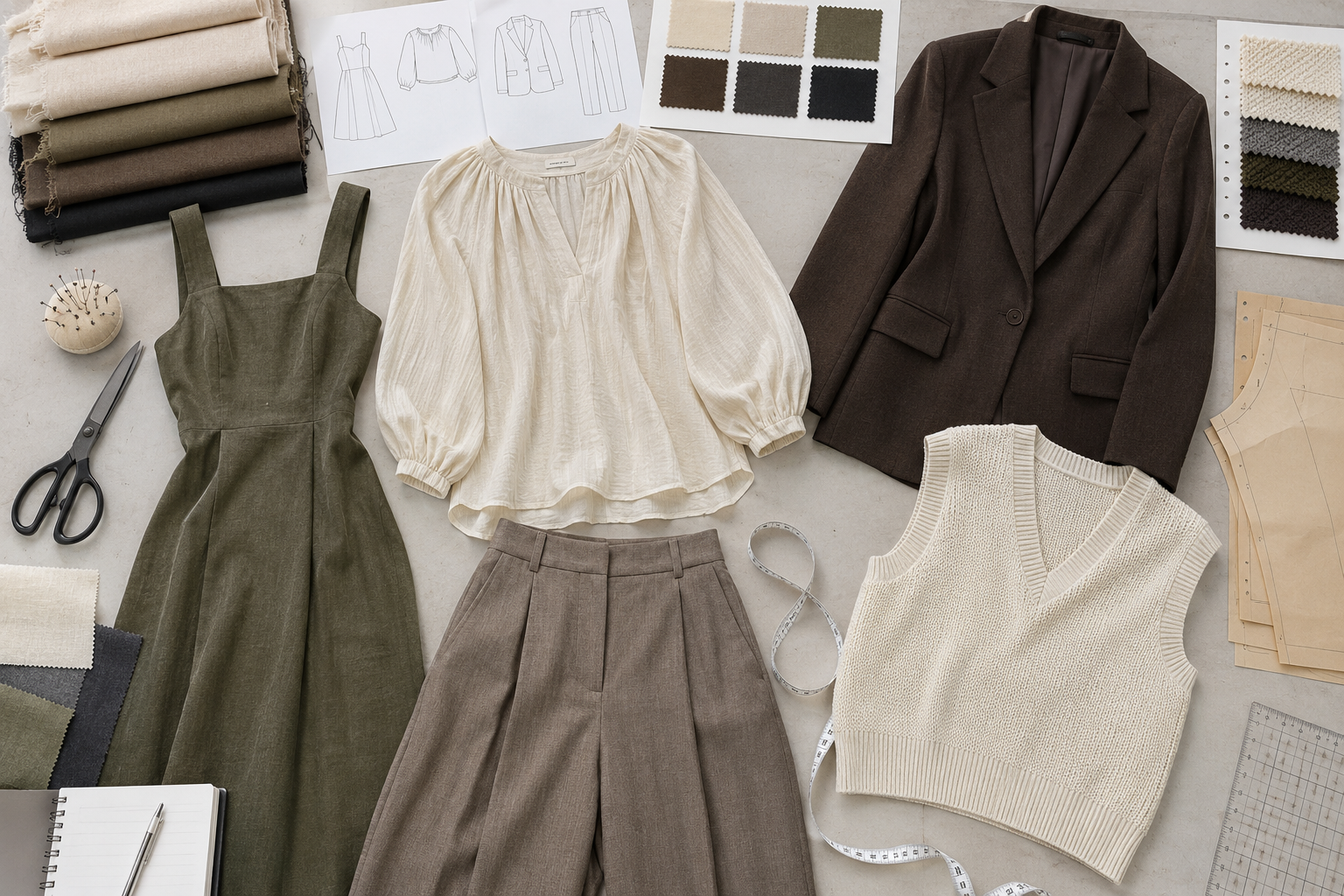
Decide What Must Be Custom
Approach us when the garment you want to develop is within our womenswear range and you can identify the changes that matter to your brand. We make dresses, skirts, tops, bodysuits, sets and outerwear through OEM and ODM production, from small batches through to bulk production.
Start with the feature a customer needs to recognise or feel: perhaps a particular neckline, fit, fabric appearance or branded label. Then decide which details can change if they make the garment difficult to source or produce within your budget.
A category match is a starting point, not confirmation that we can make every construction or source every material. If your design depends on a specialised technique or proprietary fabric, tell us before treating the product as suitable for our line.
Separate the Garment Design From the Details Around It
Changes to the garment itself can affect the pattern, fit and how the pieces are assembled. Changes around it may alter its appearance or presentation without requiring the same design work. The boundary is not absolute: a different fabric, for example, can change how a silhouette hangs and fits.
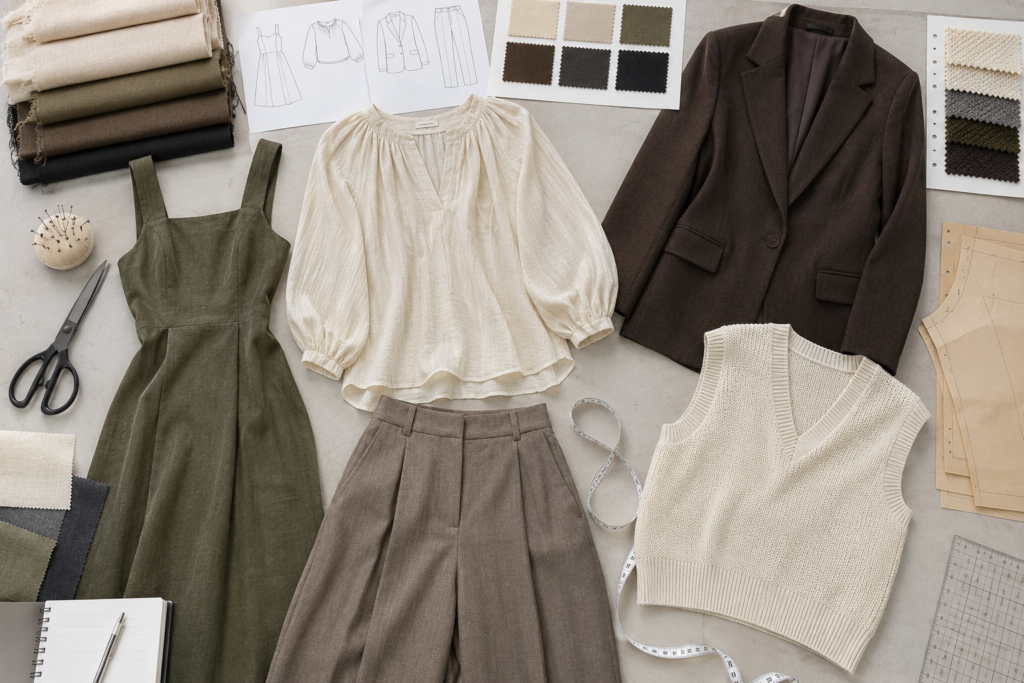
Separate your choices into two groups:
- Design and construction: silhouette, length, neckline, sleeve shape, fit, closures and details such as lining or boning. Specify where a feature must sit or how it should look when worn, rather than describing it only as “fitted” or “relaxed.”
- Materials and presentation: fabric, colour, trims, labels and packaging. Identify any exact material or branding method you need, and flag alternatives you would consider.
Mark each choice as fixed, preferred or open. A fixed fabric composition may rule out alternatives that otherwise achieve a similar look; an open trim choice gives more room to discuss sourcing. Conversely, if the shape is the reason customers will buy the piece, relaxing that requirement just to simplify production may undermine the design.
We can assess the proposed combination, but availability of particular fabrics, trims, branding methods and packaging needs to be confirmed for the project.
Choose What to Send for an Initial Assessment
Send us the design information you have, even if some choices remain unresolved. A sketch, reference photographs or an existing garment reference can communicate the intended look; a tech pack can add measurements and construction details where available.
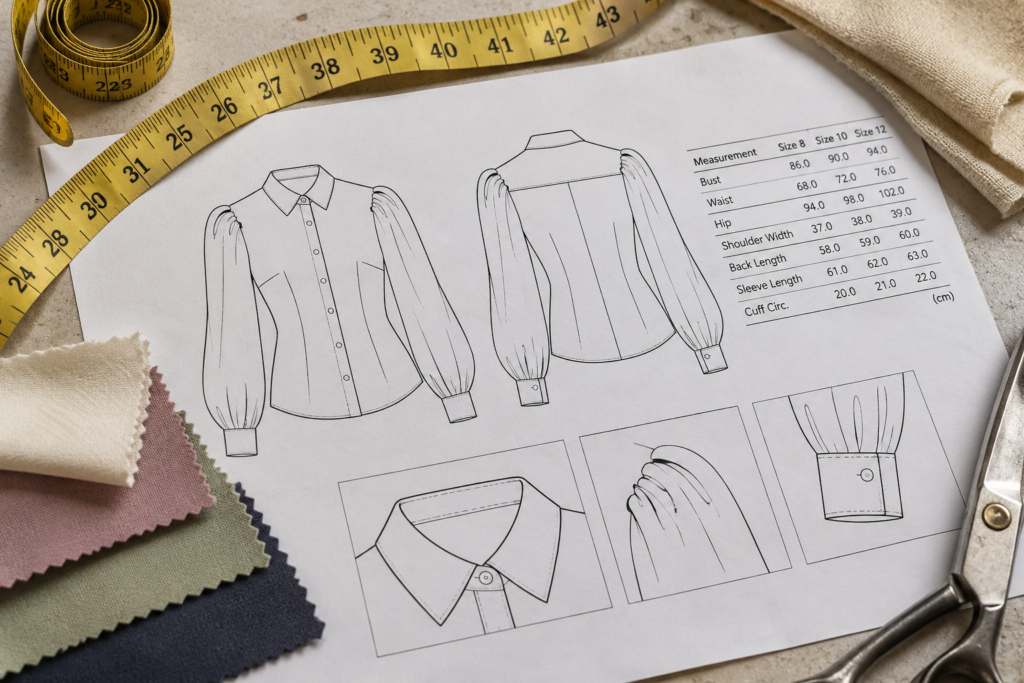
Alongside the references, tell us the product category, intended quantity and size range, plus the features you marked as fixed or open. If you have a target budget or required delivery date, include those too. Identify any exact fabric, trim or branding requirement, and distinguish it from a visual reference you are willing to adapt.
Unresolved choices limit what an estimate can cover. Without a fabric decision, for example, a price cannot reliably represent the final material choice; without construction details, the work needed to make the garment remains uncertain. We offer quotes within 24 hours, but the information available determines what we can assess and what still needs confirmation.
For a fuller discussion of preparing an enquiry, see our guide to requesting a quote.
Test the Details That Matter in a Sample
A physical sample lets you assess the proposed garment in a way a sketch or tech pack cannot. Our in-house sample room supports that assessment; sampling generally takes about 7 days, although the timing for a particular design needs to be confirmed.
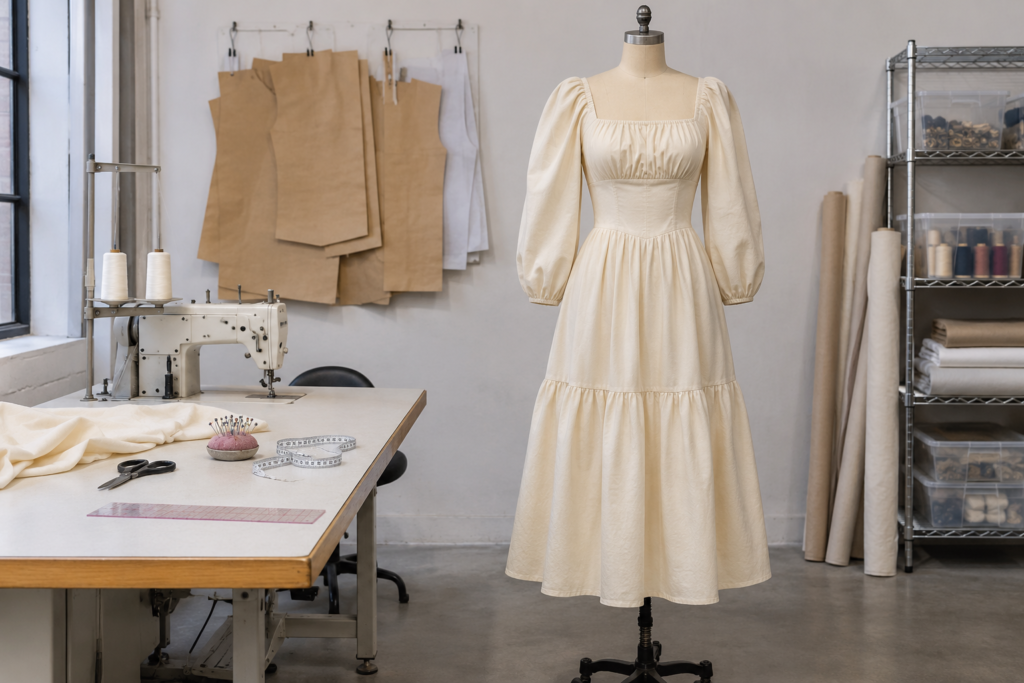
Assess the sample against the decisions that matter to your product. Try it on a fit model in the intended sample size, check the silhouette and movement, and look at details such as closures, seams and trim placement. If a fabric or trim is a substitute, note that when judging its appearance and feel.
Keep feedback specific: identify where the garment needs to change and which features should stay as they are. A photograph can help show the issue, but measurements and fit comments make the intended correction clearer.
An approved sample does not, by itself, settle every bulk-production detail. Fabric availability, grading across the size range and any changes after sampling still need to be agreed before an order is placed.
Check Whether the Customization Fits the Order
The more decisions a garment requires in development, the more carefully we need to assess their cost against the intended quantity. A distinctive fit or construction may be worth developing if it is central to your brand; a detail with little effect on the customer’s choice may be a candidate to keep flexible.
We offer low MOQ production suited to startups and small batch runs, with a path to bulk production. The applicable MOQ depends on the proposed order, so we need the style, quantities and intended variations before confirming what is feasible. Do not assume that every combination of fabric, color and size can be ordered at the same minimum.
Discuss sample and development charges, revision allowances and pattern ownership before committing to development. If the available budget does not accommodate the proposed scope, consider simplifying the garment or reviewing the order plan rather than assuming the same customization can be delivered for less.
Confirm the Scope or Approach a Specialist
Before ordering, agree on the product reference the order will follow, including the approved sample and any documented changes. Confirm the size range, grading, materials, trims, branding, quantities, price, bulk lead time and shipping terms. Ask us to clarify any point that remains open rather than relying on the sample alone.
If your garment needs specialized construction, a proprietary material, performance testing or a particular certification, tell us what is required and how it must be verified. A womenswear category match does not establish that every such requirement can be met.
A specialist may be a better choice where a mandatory technical requirement cannot be confirmed. Likewise, if you need a service outside womenswear OEM/ODM production, a supplier focused on that service may fit your project better.
Send us the brief you have, including the decisions still open, and we can assess whether the proposed garment is a fit for our line.
What to send us
If the specifications above match what you are sourcing, send your tech pack to Orange Sea Clothing. If the pack is not written yet, sketches and a reference sample are enough to start — sample development covers the design review, fabric and trim sourcing, pattern making and the first prototype, so you see fit and construction before you commit to a production run.
Comments