
What a Low MOQ Actually Buys You
A common issue is that a factory will quote a low MOQ based on a standard block, then hit production problems when it tries to grade a plus size dress without an existing pattern library for that fit. Ask whether they have previously produced plus size dresses for export, and request photos of the inside seams and hem finishes from those runs.
The Tech Pack Is Your Filter
A plus size dress requires a different approach to ease, dart placement, and bust-to-waist ratio than a standard size. If you send a tech pack that only specifies a size 8 measurement chart and expect the factory to grade it up, the fit will be wrong. The factory needs a grading sheet that specifies the grade rules between sizes, not just the base size measurements. Before you send your tech pack, make sure it includes a point of measure (POM) chart that covers bust, waist, hip, upper bust, bicep, and dress length for every size in your range. The factory’s response to this document tells you more than any factory audit checklist. If they ask for the grade rules, they understand the process. If they tell you they will scale it proportionally, move on. A proportional grade on a plus size dress will distort the neckline and armhole.
Sourcing Plus Size Fabric at Low Volume
Fabric sourcing is the most common bottleneck for low MOQ plus size production. A factory that quotes a low MOQ for cutting and sewing may still require you to meet the fabric supplier’s minimum. A 50-meter minimum on a digital print stretch crepe is common, but if your dress uses 2.2 meters per garment in a size 22, that fabric only yields 22 dresses. You need to ask the factory whether they have stock fabric options that work for plus size, or whether they can source from a local fabric market where small cuts are available. Ask whether the fabric has been tested for weight recovery after stretch, because plus size garments put more stress on the fabric than standard sizes. A fabric that recovers well at a size 10 may bag out at a size 20.
Sample Development and Fit
The sample process for plus size dresses is not optional. You need a fit sample in at least a size 18 and a size 22 before you approve production. A factory that pushes you straight to a pre-production sample from a size 8 block is not set up for plus size. The fit sample should be cut from a fabric with similar weight and stretch to the bulk fabric, not a cheaper substitute. Check the armhole depth, the cross-back width, and the side seam curve. If the factory sends a fit sample with a side seam that pulls forward, the pattern needs adjustment before you move to the next stage. Do not approve a sample based on a photo. You need to try the garment on a fit model or a plus size dress form.
Production and Quality Control
In production, the main risks are fabric shading, seam slippage, and hem twisting. A factory that has produced plus size dresses before will have a procedure for checking seam slippage on stretch fabrics, because the stress on the seams is higher in plus sizes. Ask whether they do an in-line inspection during sewing, or only a final inspection. For a 50-piece run, a final inspection is usually sufficient, but you should still specify an AQL of 2.5 for major defects. Check whether the factory uses a plus size dress form for final measurement checks, or whether they measure flat. Flat measurement on a plus size dress can hide fit issues that only appear when the garment is worn.
Logistics and Lead Time
A low MOQ order does not always mean a fast lead time. If the factory is sourcing fabric specifically for your order, the lead time is driven by the fabric, not the sewing. A typical lead time for a 50 to 100 piece plus size dress order with custom fabric is 35 to 45 days, not including shipping. If the factory quotes 15 days, they are likely using stock fabric and a standard block, which means the fit will be generic. Ask for a production schedule that separates fabric lead time from cutting and sewing lead time. This will tell you where the bottleneck is.
What to Ask Before You Request a Quote
Before you ask for a price, ask these three questions. First, ask how many plus size dress styles they have produced for export in the last 12 months. Second, ask whether they have a plus size fit form or a fit model. Third, ask whether they can produce a graded size chart for sizes 14 to 28 from your tech pack, or whether they need you to provide the grade rules. The answers will tell you whether the factory is a real partner or just a low MOQ listing. A factory that answers these questions directly and asks for your POM chart is worth a quote. A factory that gives a vague answer and pushes for a deposit is not.
You are not just buying a dress; you are buying a factory’s ability to execute your fit at a volume that makes sense for your brand. Start the conversation with the tech pack, not the price list.
Tech packs are critical. I’ve seen too many brands fail because they tried to save money by skipping them. The article mentions tolerances – that’s huge. Without specifying +/- tolerances, you can’t reject a batch for being slightly off. Also, the BOM needs to be exhaustive. I once forgot to specify the thread color on a tech pack and the factory used whatever was in the machine. Ended up with contrasting stitching that ruined the whole aesthetic. Now I specify everything down to the stitch count per inch.
The grading sheet part is so important. I made the mistake early on of just giving base size measurements and assuming the factory could figure out the rest. They couldn’t. Ended up with size 16 dresses that looked like tents because they just scaled everything proportionally. Now I include detailed grade rules for every POM. It’s more work upfront but saves so much headache later.
One thing I’d add is about the cover page. Make it look professional. I used to just send the tech pack without any branding, and I think factories took me less seriously. Once I started adding a clean cover page with my logo and brand info, I noticed the factories were more responsive and detail-oriented. Presentation matters even in B2B.
The part about fabric sourcing at low volumes is spot on. I ran into this exact problem. Found a factory willing to do 50 pieces, but the fabric I wanted had a 300 meter minimum. Ended up having to compromise on fabric quality to meet my budget and MOQ. Should have asked about stock fabric options upfront.
I disagree with the advice to not approve a sample based on a photo. Sometimes you have no choice if you’re working with an overseas factory and trying to save on shipping costs. I’ve approved samples from photos many times. The key is to ask for very specific photos – close-ups of seams, measurements laid flat, etc. It’s not ideal but it can work if you’re detailed in your requests. Just make sure your tech pack is bulletproof. I’ve used tech pack templates from different sources and they vary wildly in completeness. The best ones I’ve found include a section for packaging and labeling requirements, which many forget. Also, make sure to include care label content and placement – that’s another thing that’s easy to overlook but critical for compliance. The article mentions using Adobe Illustrator for sketches, which is standard, but I’d also recommend learning to use a tech pack specific software. There are some good ones out there that integrate with PLM systems and make updates much easier when you’re doing multiple rounds of revisions. One thing the article doesn’t mention is the importance of version control. Every time you make a change to the tech pack, save it as a new version with a date. I learned this the hard way when a factory used an outdated tech pack and produced 200 dresses with the wrong collar. Now I’m religious about versioning. The advice about checking whether the factory has experience with plus sizes is crucial. I once worked with a factory that had great reviews for standard sizes but completely botched a plus size order. They didn’t understand how to grade for larger sizes and the armholes were all wrong. Always ask for samples of their previous plus size work.
The article mentions seam-to-seam measurements but doesn’t go into enough detail about how to measure them. For someone new to this, it can be really confusing. I’d recommend finding some YouTube tutorials on how to measure garments properly. It’s not as intuitive as you might think. Also, the tolerance section is really important. I usually set tolerances at +/- 1/4 inch for most measurements, but tighter for things like collar width or button placement. If you don’t specify tolerances, the factory will use their own standards which might not match yours. I’d add that you should always include a measurement chart with both body measurements and garment measurements. Some factories work from body measurements, others from garment measurements. Including both prevents confusion. The article mentions color choices but doesn’t talk about color matching across different fabrics. If your garment uses multiple fabrics, they need to match. Specify that all fabrics should be color-matched to the same Pantone, and request a lab dip for each fabric type before approving production. One thing I’ve learned is to always specify the stitch type and SPI (stitches per inch) for each seam. This affects both the appearance and durability of the garment. A factory will default to whatever is fastest if you don’t specify. The part about logistics and lead time is important. I always build in extra time for revisions. If a factory quotes 35 days, I plan for 50. There are always delays, especially with customs and shipping. Don’t promise your customers a delivery date based on the factory’s quoted lead time.
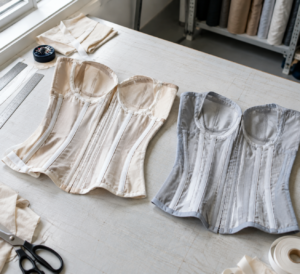
I’d emphasize the importance of the BOM even more. It needs to include EVERYTHING – thread, elastic, shoulder pads, interfacing, care labels, hang tags, poly bags, everything. If it’s not on the BOM, the factory won’t include it. I’ve had factories use cheap interfacing because I didn’t specify the weight and type. Now I’m extremely detailed about every component. Also, for plus size specifically, you need to think about structural support. A plus size dress might need boning, a built-in bra, or power mesh lining that a straight size wouldn’t require. These need to be specified in the tech pack. The factory won’t add them on their own.
The article mentions asking for photos of inside seams from previous plus size runs. I’d take it further and ask for actual samples. Yes, it costs money, but seeing and feeling the quality in person is worth it. Photos can hide a lot of issues. One thing I always do now is specify the grainline on my flat sketches. This tells the factory how to cut the fabric, which affects how the garment hangs and stretches. It’s a small detail but it matters.
I’d add a section about packaging and shipping specifications to the tech pack. How should the garments be folded? What kind of poly bags? Hang tags or flat packed? Carton dimensions and weights? These details matter for both quality control and shipping cost calculations.
I’ve been making tech packs for years and still learned a few things from this article. The point about not using abbreviations without defining them is good – I’ve been guilty of using industry shorthand that factories don’t understand. Now I keep a glossary at the front of each tech pack. The advice about plus size grading is crucial. I’ve seen so many brands try to enter the plus size market without understanding that it requires a different pattern block, not just grading up from a straight size. If you’re serious about plus size, you need to invest in proper pattern development for that size range.
One thing I’d add is about communication during the sample process. Don’t just wait for the factory to send samples. Schedule regular check-ins, especially during the first fit sample stage. Ask for photos during construction. Catching issues early saves time and money. I always request a size run of samples, not just one size. For plus size, fit can change dramatically between sizes 14, 18, 22, and 26. You need to see how the garment grades across the whole range. The article mentions AQL 2.5 for major defects, which is standard, but I’d also specify what counts as a major vs minor defect. Is a skipped stitch major or minor? What about a loose thread? Define these in your tech pack to avoid disputes during final inspection.
The part about asking for a production schedule that separates fabric lead time from cutting and sewing is really smart. I’ve been caught off guard by fabric delays that I wasn’t aware of until the whole order was late. Now I ask for a detailed timeline upfront. I’d also recommend visiting the factory if possible, or at least having a third-party inspection company do an audit before you place your first order. Photos and video calls only show you what the factory wants you to see.
I disagree with the advice to not approve samples based on photos. Sometimes you have no choice if you’re working with an overseas factory and trying to save on shipping costs. I’ve approved samples from photos many times. The key is to ask for very specific photos – close-ups of seams,
What to send us
If the specifications above match what you are sourcing, send your tech pack to Orange Sea Clothing. If the pack is not written yet, sketches and a reference sample are enough to start — sample development covers the design review, fabric and trim sourcing, pattern making and the first prototype, so you see fit and construction before you commit to a production run.
Comments