
Start With the Quality Decision
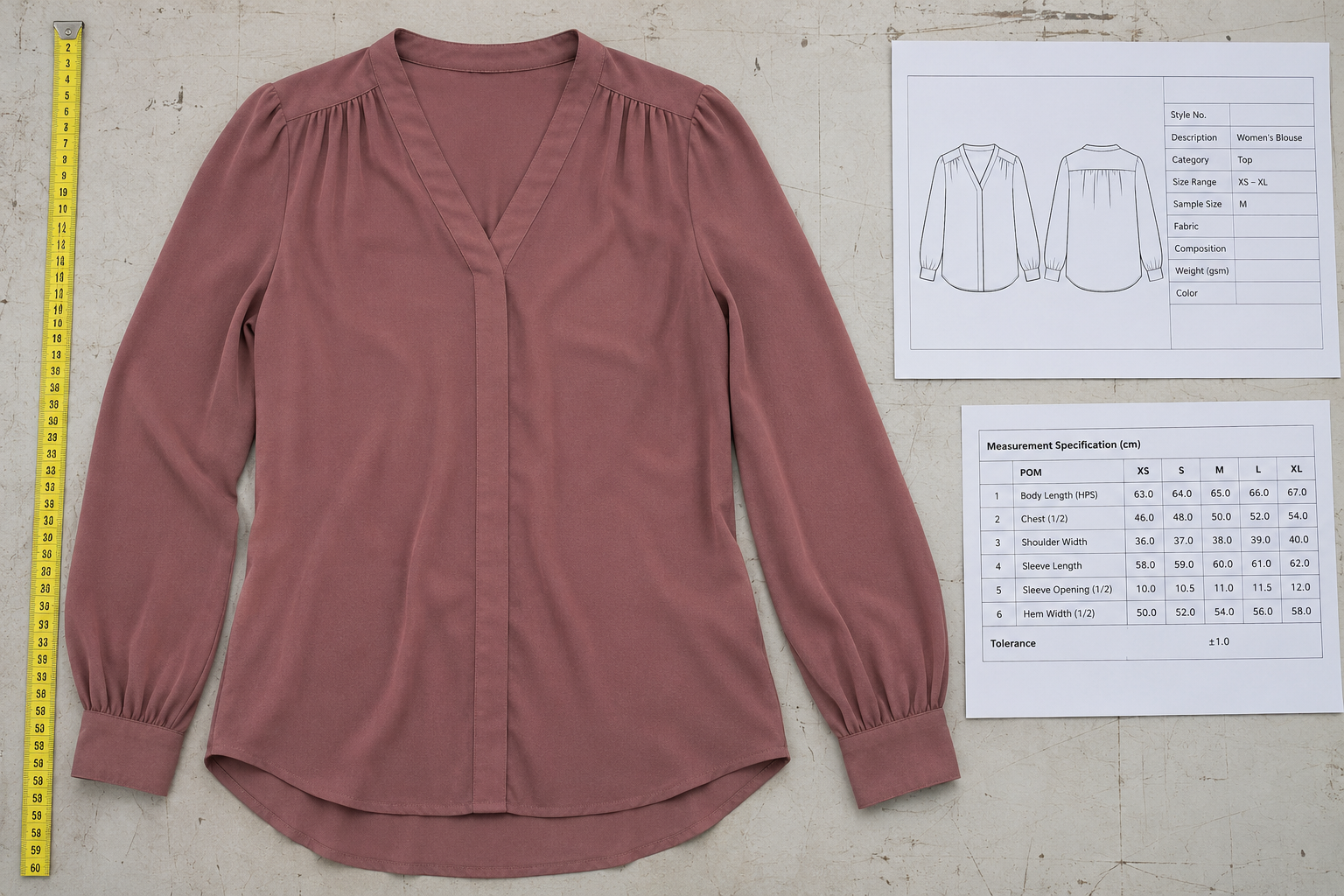
An approved sample shows what a garment should look and feel like; it does not establish that every bulk garment will match it. Before committing to bulk, agree with us on a style-specific inspection and acceptance plan: what will be checked, how results will be judged and what happens if a check fails.
Orange Sea Clothing manufactures womenswear in Dongguan, China, for OEM and ODM projects, including dresses, skirts, tops, bodysuits, sets and outerwear. The risks differ by style: a fitted bodysuit needs close attention to measurements, while a dress may depend heavily on the appearance and consistency of its fabric. Ask us to confirm the proposed controls for your garment rather than assuming that sample approval covers production.
Turn Likely Defects Into Checkable Requirements
Fit can vary even when a garment resembles the approved design. Visible construction defects, inconsistent materials and incorrect labels can also make finished pieces unsuitable for sale. The useful starting point is to tell us which details affect acceptance.
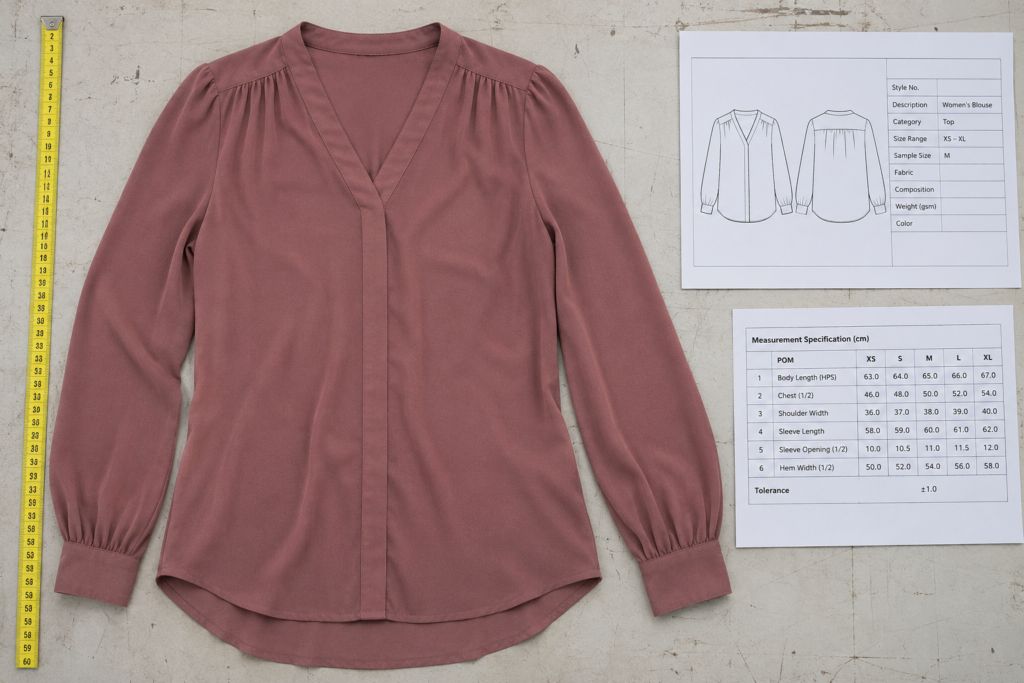
For an initial discussion, provide:
- Fit: measurement points, size chart and grading, plus the fit areas that matter most.
- Construction: details such as seam placement, closures and visible stitching, with reference images where appearance matters.
- Materials: fabric and trim specifications, colour references and any requirements for matching components.
- Labels: approved wording, placement and artwork, including care and fibre information you intend to use.
Then agree with us on the measurement tolerances, how appearance will be judged and which deviations make a garment unacceptable. A direction such as “neat stitching” leaves too much open to interpretation. Label content should also be checked against the requirements of the intended sales market; visual inspection alone does not establish that it is compliant.
Establish the Production Reference
A sample can be approved for appearance while its measurements or materials remain open to change. That ambiguity makes it harder to judge whether bulk garments match what was ordered.
Our in-house sample room supports womenswear development, with sampling in about 7 days. Use that stage to review the physical garment and identify changes before bulk production. Then confirm with us which approved sample governs the order, which measurements apply and which specification revision takes precedence if documents and sample differ.
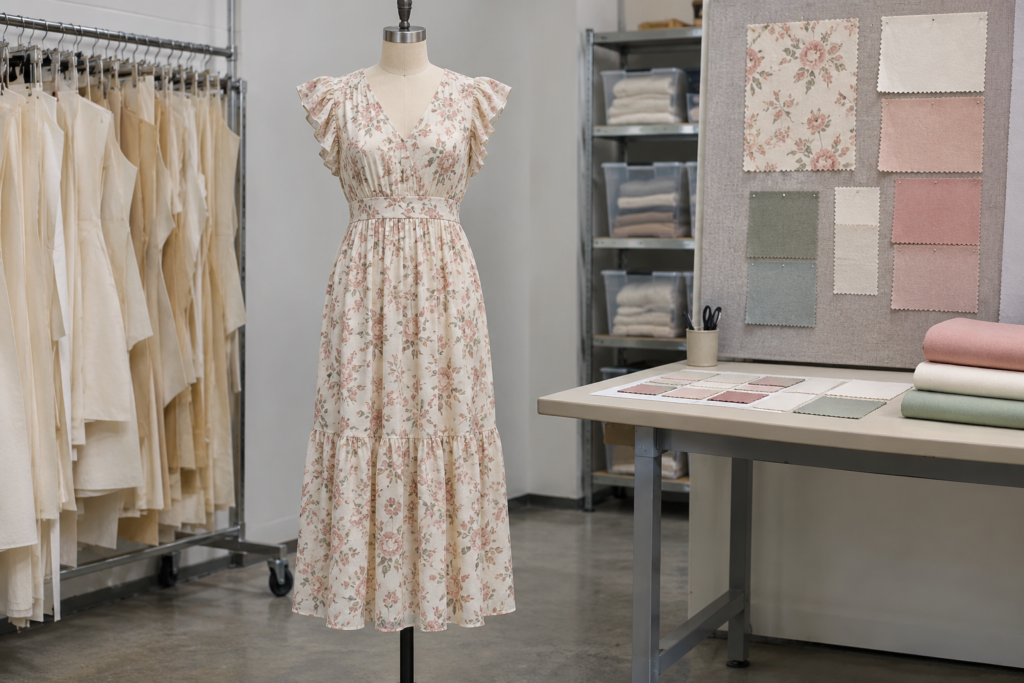
Record any changes made after approval, including their effect on fabric, trims, fit or construction. A physical reference helps both sides see the intended result, but it is not a substitute for agreeing how production garments will be inspected and accepted.
Agree on Checks From Materials to Finished Garments
A fabric mismatch discovered after cutting can affect more than appearance: replacing the material may mean cutting and sewing again. Before ordering, discuss with us which checks make sense at each stage and what happens if a result falls outside the agreed requirements.
- Incoming materials: Fabric, trims and labels can be compared with the agreed references before they enter production. Discuss which properties need checking and how differences will be assessed.
- Work in progress: Checking construction and measurements during sewing can reveal a recurring problem before it reaches more garments. Agree on which operations or garment features warrant attention; a later check may find the same problem only after more work needs correction.
- Finished garments: A review can identify visible defects, measurement deviations and incorrect labels before shipment. It cannot undo time spent making or correcting affected pieces.
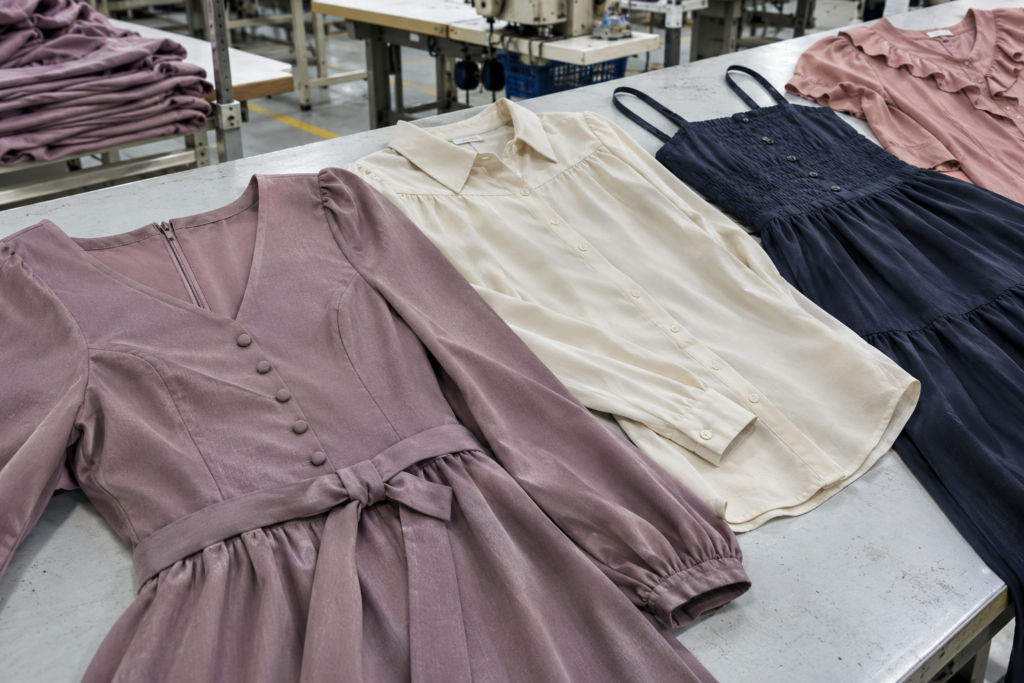
These are decision points to discuss, not an assumed inspection schedule. Ask us which checks we propose for your style, who would perform them and what results we can provide.
Set Acceptance and Failure Handling
A defect found during inspection still needs a decision: is the garment acceptable, repairable or rejected? Set those boundaries with us before bulk production, rather than leaving them to a judgment at shipment.
Agree on:
- Scope and selection: Which sizes, colours and order quantities will be covered, how garments will be selected and how many will be checked.
- Defects and tolerances: Which issues matter for the style, how they will be classified and the permitted measurement variation at each specified point.
- Reporting: What findings, counts, measurements or photographs will be shared, and when.
- Failed checks: Whether affected garments are to be sorted, repaired or replaced; who approves the remedy; and whether reinspection is needed before shipment.
An AQL plan is useful only when its sampling and acceptance criteria are agreed for the inspection. Do not assume one applies. If you want an independent inspection, confirm with us whether it can be arranged, its timing and who pays. Rework and reinspection can affect cost and lead time, so discuss those consequences before they are needed.
Verify the Evidence and Decide Whether to Proceed
A garment can look correct and still fail a performance or compliance requirement. Visual inspection and measurement do not, by themselves, establish colourfastness, chemical compliance or whether a label satisfies the rules in your destination market.
Ask us what evidence can be provided for your style: material specifications, sample and measurement records, inspection findings, or relevant test reports. For any report, check what was tested, the method, the result and whether the tested material or garment matches what will be supplied. Confirm separately whether specialist testing is available and who would arrange and pay for it.
If your programme requires documented inspection capabilities or specific test evidence, proceed only after confirming that the proposed arrangements meet those needs. A specialist testing provider may be the better choice for performance or compliance testing; another manufacturer may be a better fit if the required production controls or records cannot be agreed.
For an initial quality discussion with us, share the style and materials, intended market, order quantities and size range, approval reference, critical requirements and any required tests or inspection arrangements.
What to send us
If the specifications above match what you are sourcing, send your tech pack to Orange Sea Clothing. If the pack is not written yet, sketches and a reference sample are enough to start — sample development covers the design review, fabric and trim sourcing, pattern making and the first prototype, so you see fit and construction before you commit to a production run.

Comments