
A two piece set is two garments, but it is one SKU, and that is where most sourcing plans break. The factory that quotes you a 30-day lead time for a set is usually quoting for the top and bottom sewn in parallel, not in sequence. If they cut and sew the top first, then the bottom, your 30 days becomes 45, and your launch window closes. Before you compare prices or MOQs, ask one question: does the factory treat the set as a single production unit, or as two separate orders? The answer determines whether you get a cohesive product or two pieces that never quite match.
The Set Is the Unit, Not the Pieces
A two piece set fails when the top and bottom are made from different dye lots, or when the bottom is cut from a different roll of fabric than the top. The factory that treats the set as one unit will cut both pieces from the same roll, dye them in the same batch, and grade them together. Ask for the cutting plan and the dye lot number before you sign. If the factory cannot show you a single cutting plan that includes both pieces, you are looking at two separate orders, and the color match is a gamble.
In a coordinated set, color consistency is not a preference, it is the product.
What a Factory That Understands Sets Actually Does
A factory that has made sets before will have a workflow that reflects it. They will have a set-specific cutting table, where the top and bottom are cut from the same fabric lay. They will have a grading system that sizes the top and bottom together, so a size medium set has a medium top and a medium bottom, not a medium top and a small bottom. They will have a quality control step that checks the set as a unit, not as two pieces. Ask for photos of their set production line. If they send you photos of individual garments, they do not make sets.
The Lead Time Question That Saves Your Launch
The lead time for a set is not the lead time for a single garment. It is the time to make the top, plus the time to make the bottom, plus the time to match them and pack them together. A factory that quotes 30 days for a set is either making them in parallel (which requires two sewing lines) or they are not quoting the full cycle. Ask how many sewing lines they will dedicate to your set. If the answer is one, your lead time is the sum of the two pieces, not the maximum. If the answer is two, you have a factory that can actually hit the date.
MOQ for Sets: The Number That Matters
The MOQ for a set is not the MOQ for a single garment. If a factory quotes you an MOQ of 500 for a set, they mean 500 sets, which is 1,000 garments. But some factories quote MOQ per piece, so 500 means 500 tops and 500 bottoms, which is 500 sets. Clarify the unit. Ask for the MOQ in sets, and ask for the MOQ in pieces. The difference is not semantic, it is the difference between 500 sets and 1,000 sets, and that is a 100% difference in your fabric commitment.
The Fabric Question That Determines Color Match
The fabric for a set must come from the same roll, or at the very least, the same dye lot. If the factory sources fabric for the top and bottom separately, you will get a color shift. Ask for the fabric lot number for both pieces, and ask for a swatch of the top and bottom from the same lot. If the factory cannot provide this, they are not sourcing the fabric as a unit. In a two piece set, the fabric is not a component, it is the product, and the lot number is your proof.
How to Spot a Factory That Will Miss Your Date
Factories that miss ship dates for sets usually do so because they treat the set as two orders. They cut the top, sew it, and then cut the bottom. They run out of fabric for the bottom and have to reorder, which adds days. They finish the top and have to wait for the bottom to catch up. Ask for the production schedule, and look for the words "parallel" or "sequential." If the schedule is sequential, your date is at risk. If it is parallel, you have a factory that plans for sets.
The Packing List That Reveals the Truth
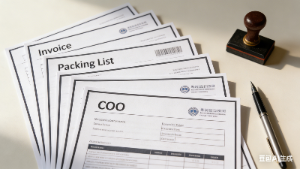
The packing list for a set should show one SKU, not two. If the factory packs the top and bottom separately, you will have to match them yourself, which adds labor and risk. Ask for the packing list before you ship. If it shows two SKUs, the factory is not treating the set as a unit. A set that is packed as a set is a set that is sold as a set, and that is the only way to guarantee the customer gets what they ordered.
The Quality Control Step That Most Factories Skip
Quality control for a set is not the same as quality control for a single garment. The factory must check the color match between the top and bottom, the size match (medium top with medium bottom), and the construction match (same stitching, same hem, same label placement). Ask for the QC checklist for sets. If the factory does not have a set-specific checklist, they are not checking the set as a unit, and you will get returns for mismatched pieces.
The Question to Ask Before You Sign
Before you sign a contract with a factory for a two piece set, ask one question: "Can you show me a cutting plan, a production schedule, and a packing list for a set you have made in the last six months?" If they can, you have a factory that makes sets. If they cannot, you have a factory that makes garments, and they will make your set as two garments, which is not a set. The difference is not in the price, it is in the process, and the process is what gets you to your ship date with a product that sells.
The
What to send us
If the specifications above match what you are sourcing, send your tech pack to Orange Sea Clothing. If the pack is not written yet, sketches and a reference sample are enough to start — sample development covers the design review, fabric and trim sourcing, pattern making and the first prototype, so you see fit and construction before you commit to a production run.


Comments