
Why We Ask Questions
We ask questions because we want the sample to be right the first time. A buyer might specify "100% cotton, 200gsm" and leave out the finish. Is it brushed? Is it mercerized? Is it enzyme washed? Each of those changes the hand and the shrinkage. If we guess, the sample might not match the buyer’s idea, and we lose a week. If we ask, the buyer might not know, and we can suggest based on the garment type. That conversation is faster than a remake. We are not trying to be difficult. We are trying to hit the target with one shot. A tech pack that answers the questions before we ask is a tech pack that saves you money.
An incomplete tech pack costs in three ways. First, it costs time. Every round of clarification adds days. We had a buyer last month who wanted a hoodie and sent a picture with "make it like this." We sent a sample. The hood was too small. The buyer said "bigger." We sent another. The pocket was wrong. That was three weeks and three samples before we had a spec. Second, it costs in samples. Each sample has a cost in fabric, cutting, sewing, and shipping. Third, it costs in bulk. If the spec is not locked, the bulk run might vary from the approved sample, and the buyer rejects it. That is the worst outcome. The tech pack is the lock that prevents it.
When a tech pack arrives, our merchandiser reviews it against our capability. We check the fabric availability, the trim sourcing, and the construction feasibility. If something is not possible, we say so. If a stitch type is not standard for us, we suggest an alternative. We then create a Bill of Materials and a costing sheet. The buyer sees the cost before sampling. If the cost is too high, we adjust the spec together—maybe change the fabric weight or simplify a seam. The tech pack is a living document until the sample is approved. After approval, it is the standard. We do not change it without the buyer’s written agreement. That is how quality is maintained across a production run.
What to Include for a Smooth Start
To get a smooth start, include these in your tech pack. A flat sketch, front and back, with callouts for every detail. A measurement chart with points of measure, target values, and tolerances. A construction sheet with seam types and stitch counts. A fabric spec with composition, weight, and finish. A trim list with sizes and materials. A label and packaging spec. A color callout with Pantone numbers. When we have that, we can move. When we do not, we stop and ask. The buyer who prepares the pack is the buyer who gets to market first. The buyer who relies on the factory to guess is the buyer who is still sampling when the season ends.
Even with a full tech pack, we have a conversation. We confirm the sample size, the fit model, and the wash standard. We discuss the lead time and the shipping terms. We agree on the inspection standard—AQL 2.5 is common. We talk about the payment terms and the deposit. The tech pack is the technical foundation; the conversation is the commercial one. Both are needed. A buyer who sends a pack and then disappears is a buyer who delays their own order. We need your input on the sample, and we need your approval to proceed. The pack starts the process; your engagement finishes it.
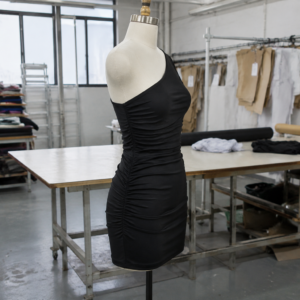
In our sample room, the tech pack is printed and pinned next to the sewing machine. The cutter uses the measurement chart to make the pattern. The sewer uses the construction sheet to set the machine. The finisher uses the trim list to attach the labels. When the sample is done, it is measured against the chart. If a point is out of tolerance, it is remade. That is why a full pack matters. It is the reference for every step. Without it, the sample room works from memory and pictures, and that is not repeatable. With it, the sample room works to a standard, and that is how you get a product that can be produced in bulk.
The Bottom Line
The tech pack is not a formality. It is the first and most important quality control. It is the document that turns your idea into a spec we can produce. The more complete it is, the faster we move, the fewer samples you pay for, and the better the bulk matches the sample. If you are serious about your brand, spend the time on the pack before you spend the money on the sample. We are here to help you refine it. Send us what you have, and we will tell you what is missing. That is the start of a partnership that gets your product to market on time and to spec.
What to send us
If the specifications above match what you are sourcing, send your tech pack to Orange Sea Clothing. If the pack is not written yet, sketches and a reference sample are enough to start — sample development covers the design review, fabric and trim sourcing, pattern making and the first prototype, so you see fit and construction before you commit to a production run.



Comments