
A Sample Date Is Not a Bulk Delivery Date
Suppose you plan a launch around a sample arriving in about a week. The sample may still need approval, while bulk production and delivery have their own schedules. Treating that first estimate as the whole timeline can leave the launch without stock.
Our in-house sample room’s approximately 7-day sampling estimate is useful for initial planning, not as a delivery promise. Before committing to a launch date, ask us to assess a bulk and delivery schedule for your specific style, quantity and destination. Confirm what the sampling estimate covers as well: do not assume it includes material sourcing, revisions or sample shipping.
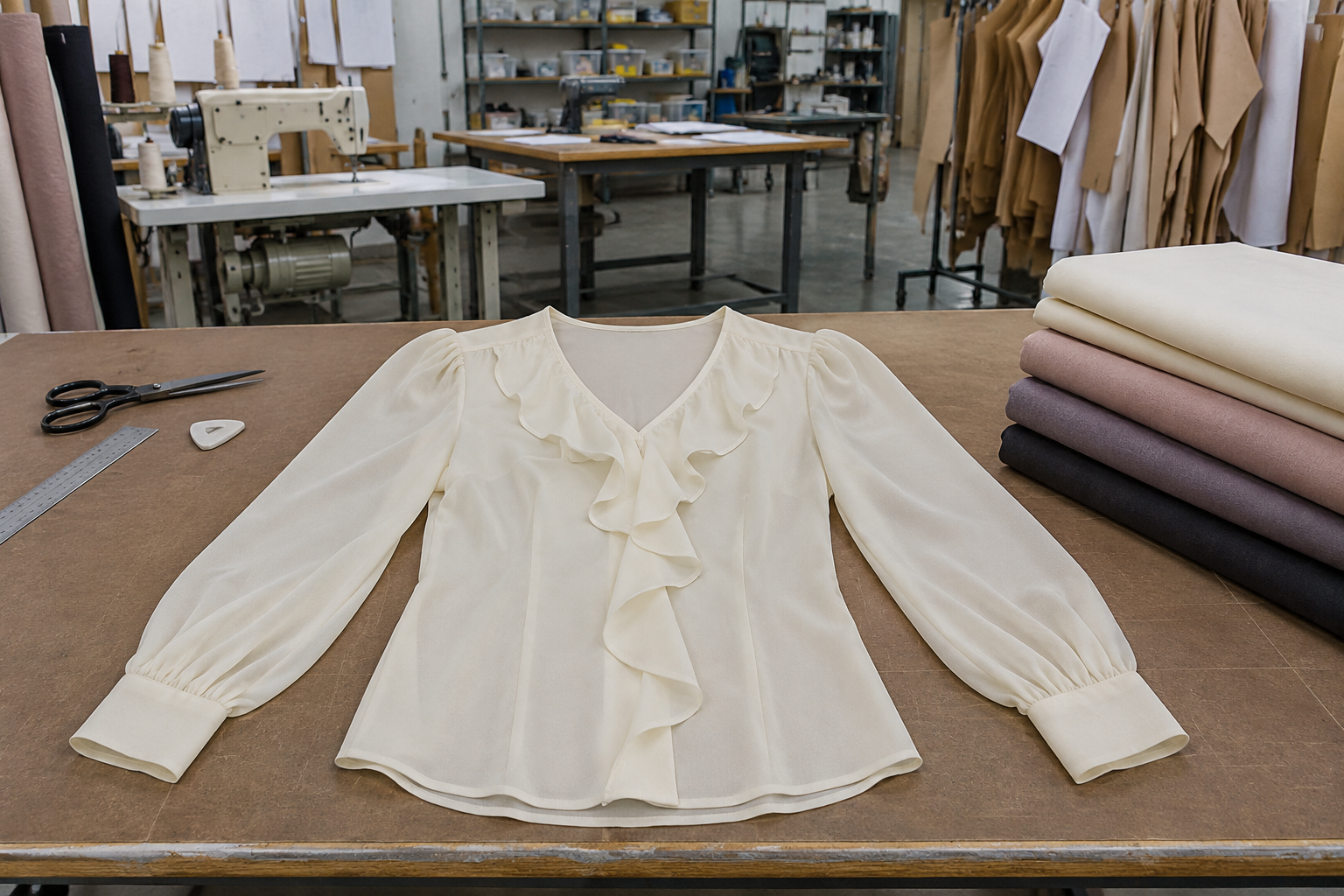
Dealbreaker: A Schedule That Does Not Reach Your Required Date
A garment finished at the factory is not yet stock at your launch destination. Compare three milestones separately:
- Sample completion: When will the sample be ready for review, and does that date leave time for approval or changes?
- Bulk completion: When is the order expected to be finished, based on the approved product and order scope?
- Delivery: When is the order expected at the required destination, after the applicable shipping and clearance steps?
Work backward from the date you need stock, not just the public launch date. Allow for any work you must complete after delivery, as well as unresolved decisions before bulk production.
If the necessary dates cannot be agreed, or the proposed timetable leaves no room for outstanding work, discard that schedule as a basis for the launch. A sample may still be worthwhile for product development, but it does not make an unsupported delivery date viable. If your date is fixed, a supplier able to substantiate a suitable schedule may be the better choice.
Dealbreaker: Unclear Start Points and Approval Dependencies
A lead time without a defined starting event can make two schedules look comparable when they are not. Ask us what must be ready before the sampling estimate starts and what event marks its completion. A complete tech pack, construction details and material choices help define what is being sampled; missing specifications can leave the timing assessment unresolved.
For bulk, confirm the corresponding start and finish events and the dependencies behind them:
- Materials: Which fabric and trims are specified, and is their availability confirmed for the order?
- Approval: What sample or specification must you approve before bulk timing can be agreed?
- Order scope: Are the style, quantities, sizes and any required changes defined?
- Scheduling: When can production be scheduled for that scope, and what does the proposed completion date cover?
Do not assume an approval date or a production slot from the sample estimate. If a material changes or the sample needs revision, ask how that affects the proposed milestones before relying on them.
Important: Compare What Each Lead Time Includes
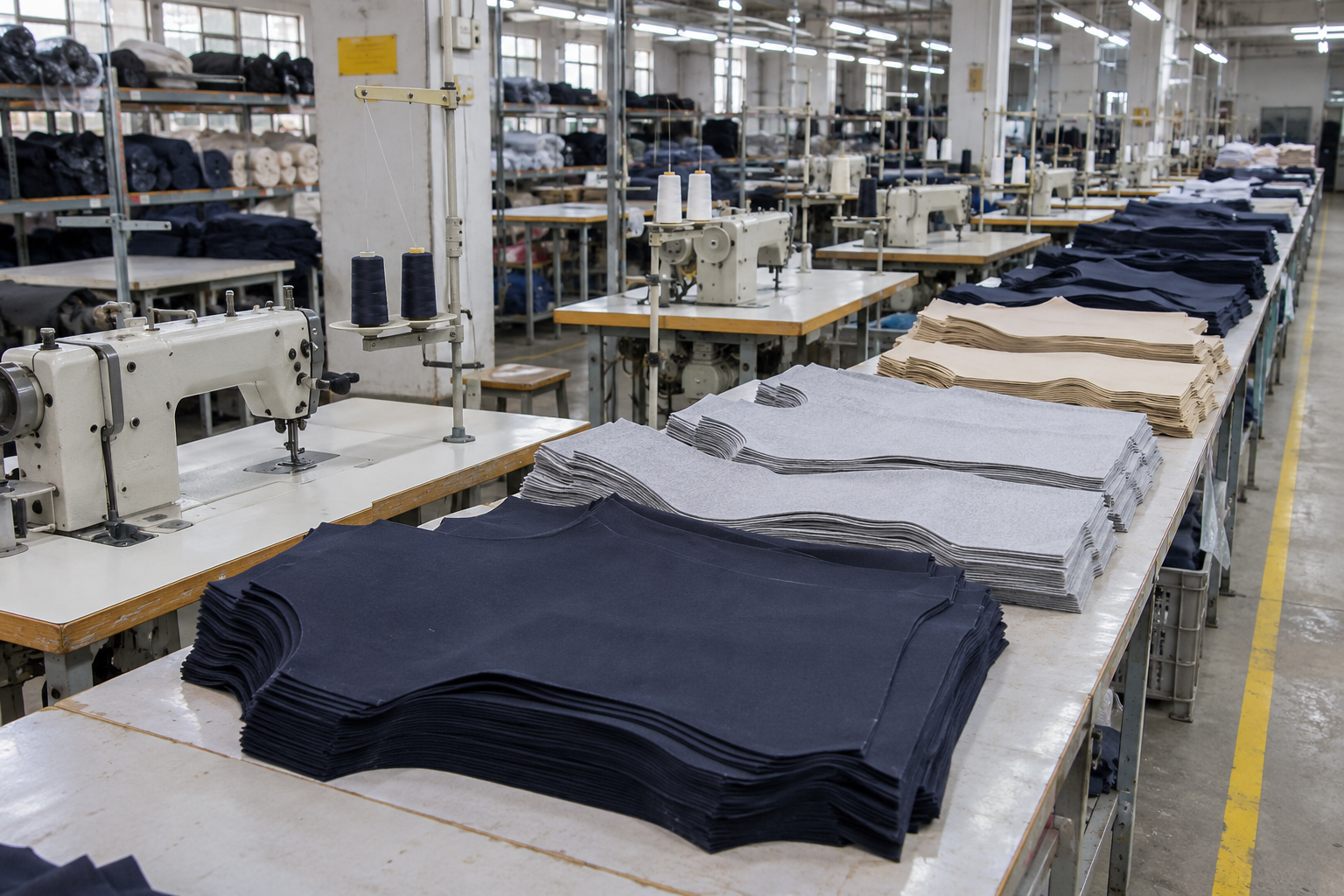
A short estimate is hard to compare with a longer one if the work covered is different. Our in-house sample room has an approximate sampling time of 7 days; that is not a confirmed bulk schedule.
| What to compare | Sampling | Bulk production |
|---|---|---|
| Scope and milestone | Ask us what work the estimate covers and what event marks completion. | Ask for the work covered and the expected bulk-completion milestone for your style and quantity. |
| Dependencies | Confirm what specifications and materials need to be ready before timing starts. | Confirm the required approvals, material availability and production scheduling. |
| Evidence | Ask us to set out the applicable estimate and its start and end points in writing. | Ask for a style-specific written schedule with its start and end points. |
Do not assume revisions, material sourcing, inspection or shipping are included in either period. Ask us to identify which activities are included, which remain unconfirmed and how they affect delivery.
Important: Choose the Next Stage by What Remains Unresolved
An untested fit or construction detail can make an early bulk date misleading. Start with a sample if you still need to assess the garment physically: a drawing or tech pack cannot settle every question about fit, fabric behavior and finish.
If the product and order scope are sufficiently defined, ask us for a bulk schedule rather than treating another sample estimate as a production commitment. Share the approved specifications, intended quantity and materials so we can assess the timing against your required date.
Moving quickly can be useful, but proceeding while changes remain possible may leave both the specifications and the production slot unsettled. Conversely, waiting for every detail to be settled before discussing bulk timing can delay a feasibility decision. We recommend discussing the likely order scope alongside sampling, while keeping any unconfirmed date separate from an agreed schedule.
Nice to Have: Flexibility That Protects the Launch
A fixed launch date leaves fewer choices if a material or production slot is unavailable. A later delivery date, a change in order scope or an alternative material may create options worth assessing with us. None guarantees a shorter lead time: each change needs a revised assessment, and a material substitution may also change the garment’s appearance or performance.
Tell us which requirements are fixed and which you can change without compromising the collection. We can then discuss the timing against those boundaries rather than assume a substitute is acceptable.
If we cannot agree a schedule that supports your required date, choose a supplier that can provide a verifiable one. If the design needs specialist construction or testing, confirm that capability for the order; a supplier with the relevant specialism may be the better choice.
What We Need to Assess Your Timeline
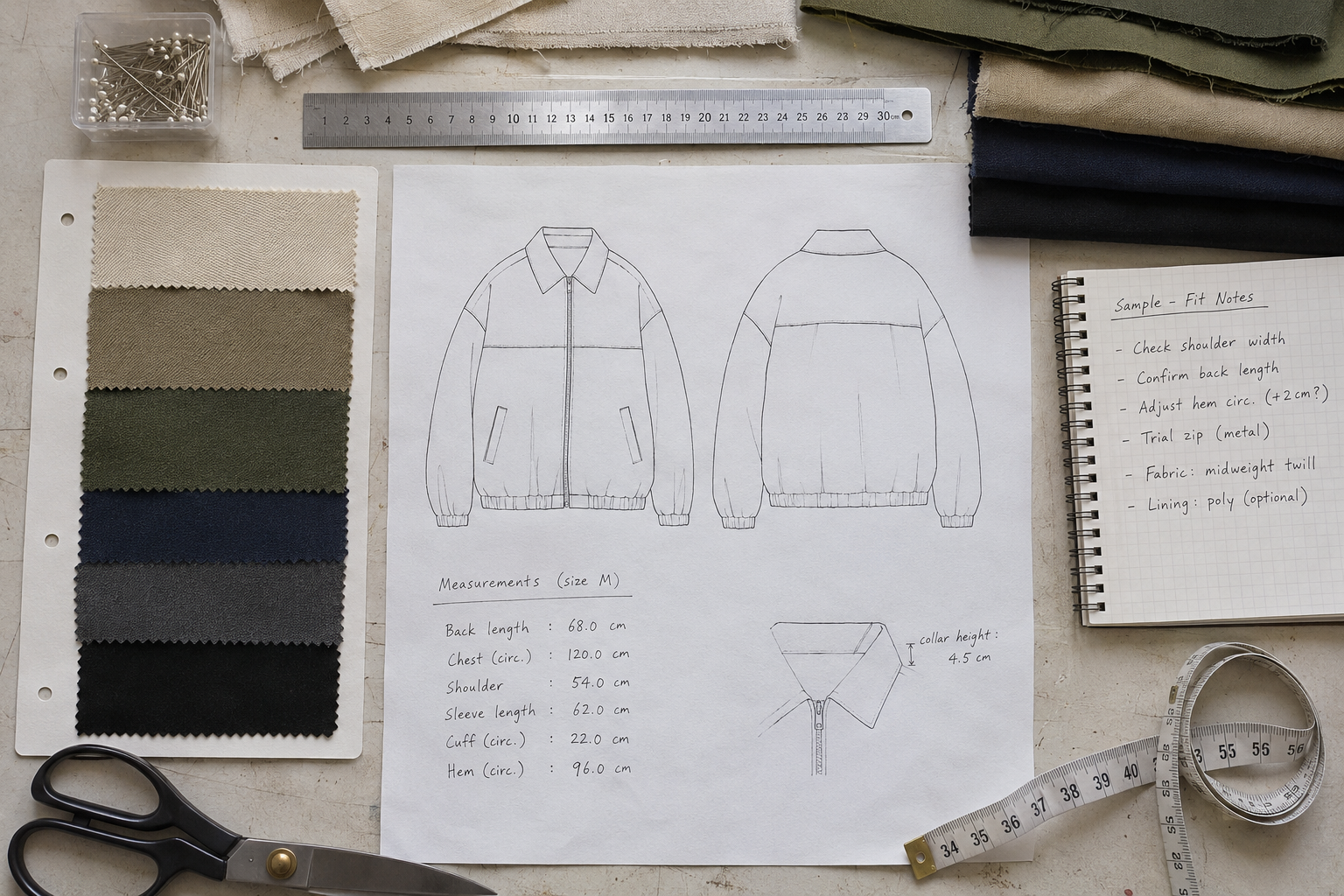
Send what you have, and identify the details still being decided:
- Style and specifications: Garment type, tech pack or drawings, measurements, construction details, finishes and size range.
- Order scope: Quantities by style and size, plus any flexibility in the order.
- Materials: Preferred fabrics, trims and alternatives you would consider; note any known availability.
- Approval status: What has been approved, what still needs a sample or decision, and who will approve it.
- Dates and destination: Required sample date, bulk-completion date if applicable, delivery destination and required arrival or launch date.
We quote within 24 hours; quote timing is separate from sampling, bulk production and delivery timing. Send us your available details to request a quote and schedule assessment.
What to send us
If the specifications above match what you are sourcing, send your tech pack to Orange Sea Clothing. If the pack is not written yet, sketches and a reference sample are enough to start — sample development covers the design review, fabric and trim sourcing, pattern making and the first prototype, so you see fit and construction before you commit to a production run.


Comments