
How to Determine if a Women’s Clothing Factory is Reliable? Master These 5 Core Dimensions for Worry-Free Cooperation
In the women’s clothing industry, choosing a reliable factory is crucial for a brand’s stable development. Whether it’s a startup or a mature company, the factory’s strength directly impacts product quality, delivery time control, and cost management. This article will teach you how to quickly determine if a women’s clothing factory is worth cooperating with, based on 5 core dimensions.
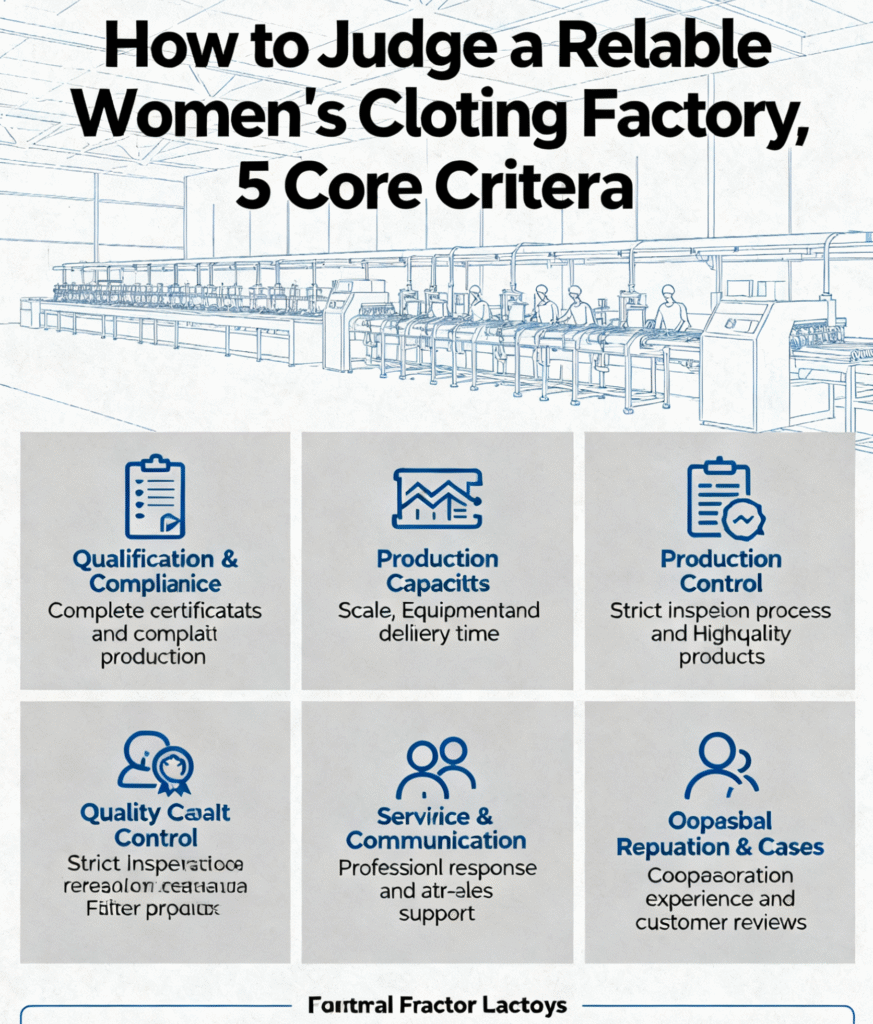
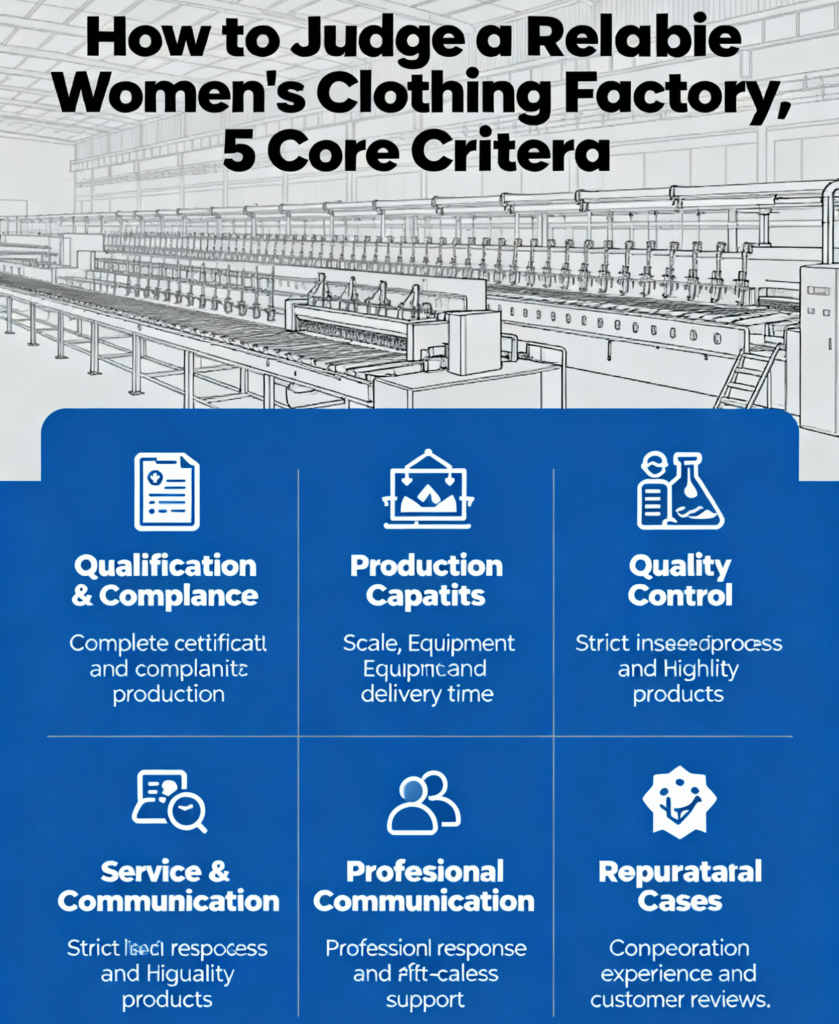
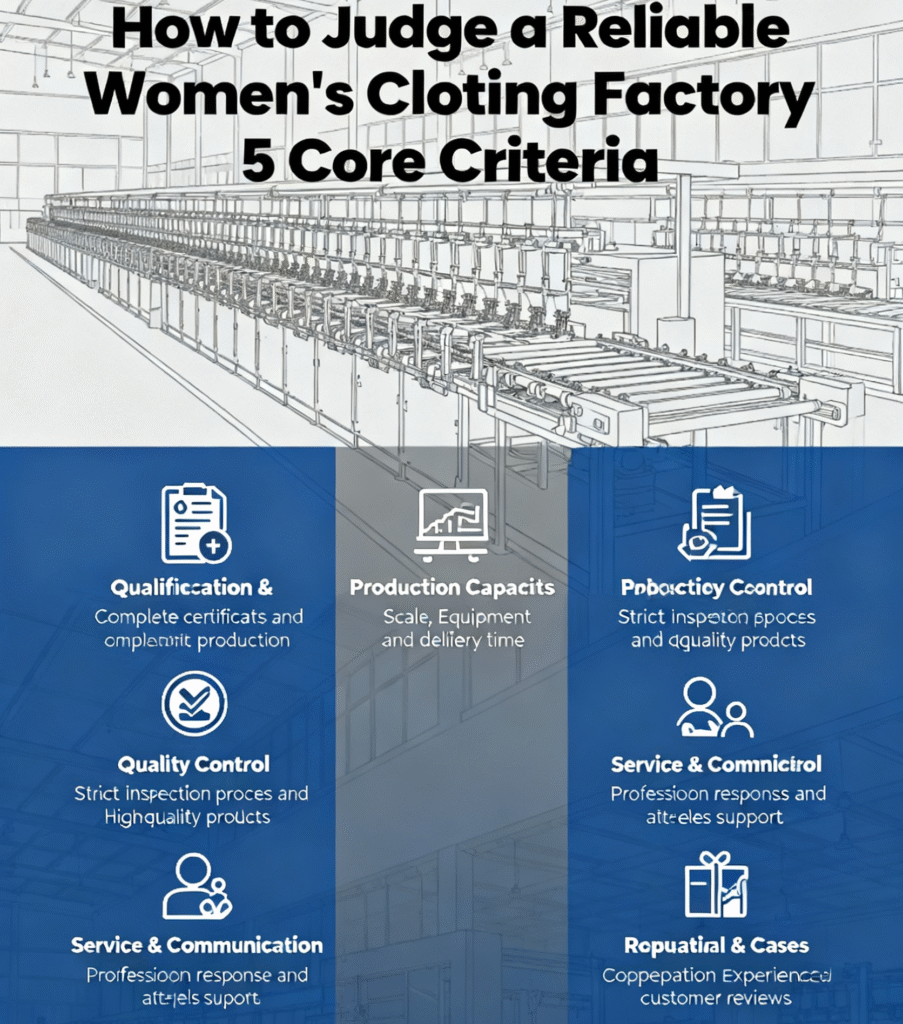
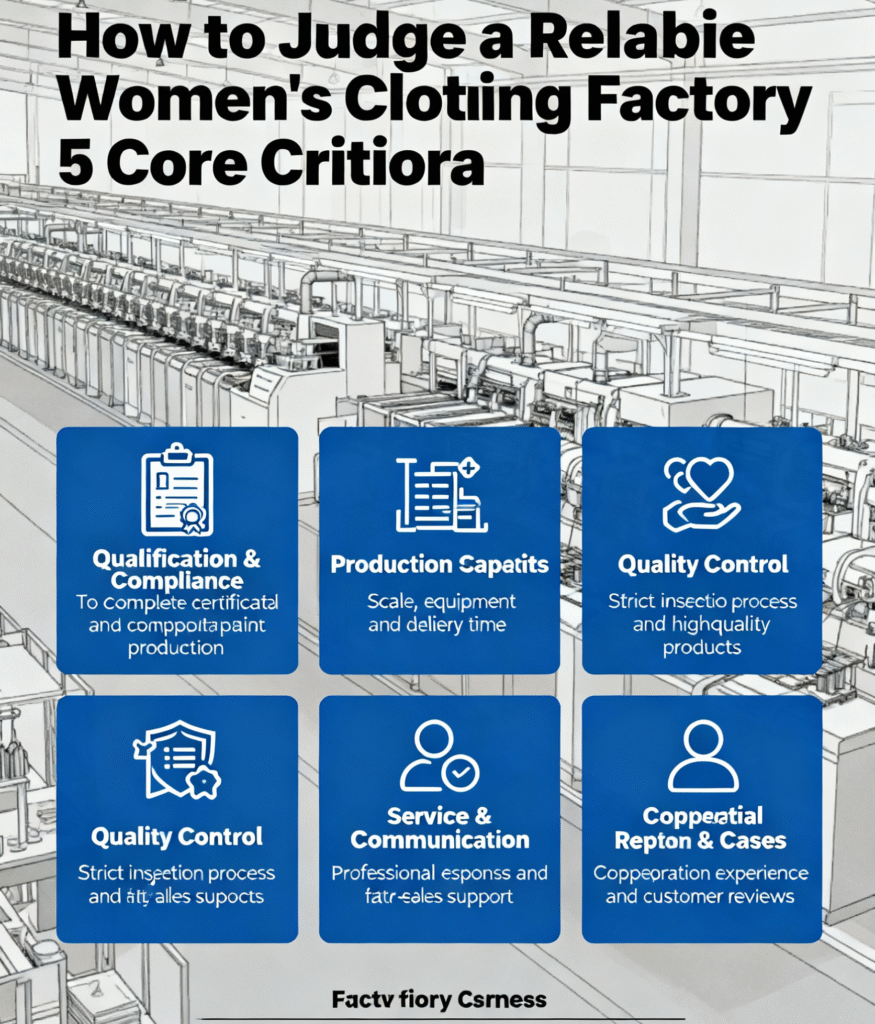
I. Qualifications and Compliance: The Foundation of Cooperation
A reliable women’s clothing factory must first possess complete compliance qualifications.
Check basic documents such as business licenses and production licenses to confirm that the business scope includes women’s clothing production and processing.
If export business is involved, verify whether it has import and export rights and the corresponding customs registration qualifications.
Check whether the production environment meets environmental standards and whether it has a pollution discharge permit and other relevant documents.
II. Production Capacity: Can It Match Your Needs?
Production capacity directly determines whether the factory can complete orders on time and in the required quantity.
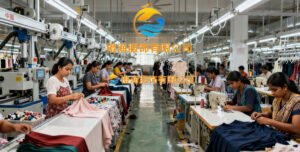
Conduct an on-site inspection of the factory’s scale, including factory area, number of production lines, and worker allocation.
Understand the sophistication of the equipment, such as whether the cutting machines, sewing machines, and ironing equipment meet industry standards.
Inquire about maximum production capacity and typical delivery times to confirm the ability to handle peak order demand.
III. Quality Control: The Core Support of Product Reputation
Product quality is the lifeline of a brand, making the factory’s quality control system crucial.
Examine the factory’s quality inspection process, including raw material inspection, production process monitoring, and finished product sampling.
Request samples to observe fabric texture, sewing techniques, pattern accuracy, and detail processing to ensure they meet standards.
Understand the factory’s defect rate control standards and after-sales handling plans to assess their commitment to quality.
IV. Service and Communication: Key to Smooth Cooperation
Good service and efficient communication reduce friction in cooperation.
Assess the professionalism of the factory’s personnel, their ability to respond quickly to needs and provide reasonable suggestions.
Understand the factory’s sampling cycle and costs to assess their support for small-batch trial orders.
Confirm the after-sales communication mechanism to ensure timely solutions are provided in case of quality issues or delivery delays.
V. Industry Reputation and Case Studies: Witness to True Strength
A factory’s past cooperation cases and industry reputation are the most direct references.
Inquire about the types of brands the factory has partnered with, and whether it has experience collaborating with well-known brands or peers.
Learn about other clients’ evaluations of the factory through industry exhibitions, online platforms, and other channels.
-
Lace Bodysuit Manufacturer: How to Vet a China Factory
Learn the ASTM specs, wash tests, and MOQ tactics that separate a reliable China lace bodysuit manufacturer from a sample shop.
-
Lace Bodysuit Tech Pack: Specs That Prevent Rework
Write a lace bodysuit tech pack that cuts rework. Get measurable specs for stretch, AQL, seams, and testing—plus common mistakes to avoid.
-
Lace Corset Tech Pack Specs: Avoid 11% Defect Rates
Specify stitch density, seam type, boning channels, and pattern match in your lace corset tech pack. Verify factory capability and inspect samples to avoid costly defects.
Request production case studies of past orders to see its performance in producing women’s clothing of different styles and categories.

Comments