

Uniqlo’s Behind-the-Scenes Garment Manufacturers: Brand Selection Logic & Small Order Solutions
In the global fast fashion industry, garment manufacturers are the core force supporting brands’ large-scale development. As a world-renowned apparel brand, Uniqlo’s massive product system relies on a global network of garment manufacturers. Meanwhile, the industry faces a common pain point: large-scale garment manufacturers cooperating with well-known brands often reject small orders, while garment manufacturers in Chenghai, Guangdong, fill this market gap with flexible production capacity. This article will analyze Uniqlo’s manufacturer layout, the core logic behind brands choosing garment manufacturers, and solutions for small order needs.
I. Uniqlo’s Core Garment Manufacturer Layout
Uniqlo’s supply chain spans the globe, with 445 cooperative garment manufacturers worldwide to date. China accounts for 240 of these, making it the brand’s most important production base. These garment manufacturers have become long-term partners of Uniqlo due to their large-scale and professional capabilities. Representative enterprises include:
- Shenzhou International: One of Uniqlo’s most trusted garment manufacturers and the world’s largest vertically integrated manufacturer. Covering the entire process from fabric R&D to finished product delivery, it ships 2 million pieces daily with an annual capacity exceeding 550 million pieces, supporting Uniqlo’s core knitwear supply.
- Crystal Group: A versatile garment manufacturer covering five major apparel categories, delivering nearly 500 million products annually. It achieves global production capacity coordination through digital systems, becoming a stable long-term partner of Uniqlo.
- Chenfeng Group: A senior garment manufacturer cooperating with Uniqlo for 30 years, specializing in woven garment production. With an annual output of 65 million pieces, it ranks among the top three woven garment exporters in China, providing stable capacity for Uniqlo’s shirt products.
- Nam Hing Group: The world’s largest garment manufacturer for Uniqlo’s sweaters, owning over 4,000 computerized flat knitting machines and accounting for 40% of Uniqlo’s global sweater production capacity.
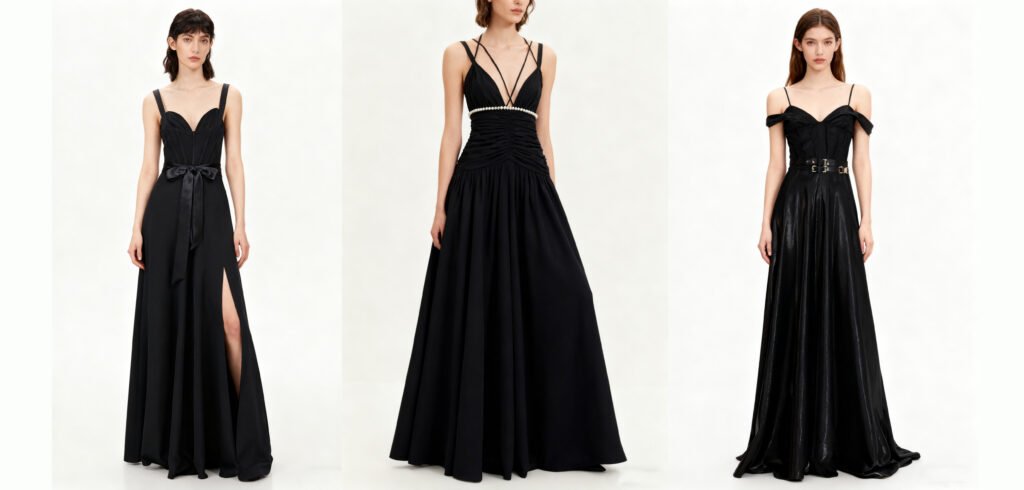
These garment manufacturers generally possess ultra-large-scale production capacity, full industrial chain supporting capabilities, and strict quality control systems, serving as the core guarantee for Uniqlo’s thousands of stores worldwide.
II. Core Reasons Brands Choose Garment Manufacturers
Well-known brands like Uniqlo opt for garment manufacturers instead of building their own factories, essentially a rational decision based on business efficiency and market competitiveness. The core logic includes three points:
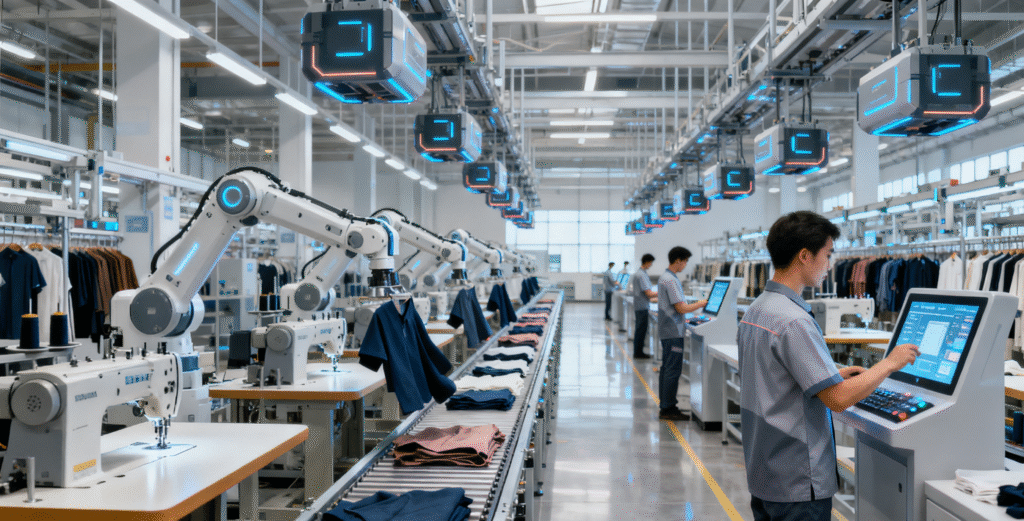
1. Cost Optimization and Risk Control
Building factories requires huge fixed costs such as equipment procurement, plant construction, and personnel management. Garment manufacturers share costs through large-scale production, reducing brands’ production investment by 30%-50%. Additionally, the manufacturing model allows flexible adjustment of order quantities, avoiding the risk of idle capacity caused by market demand fluctuations.
2. Professional Production Capacity and Technical Support
Leading garment manufacturers have accumulated professional capabilities far beyond brand-owned factories after years of focusing on niche areas. For example, Shenzhou International’s fabric R&D technology and Regina Miracle’s underwear process innovation can help brands upgrade product quality without investing R&D resources in cultivating technical teams.
3. Rapid Response to Market Demand
Through digital management and industrial chain integration, garment manufacturers can significantly shorten production cycles. Hualida Group, cooperating with Uniqlo, can achieve rapid delivery in 19 days, enabling brands to quickly follow fashion trends and improve market response speed.
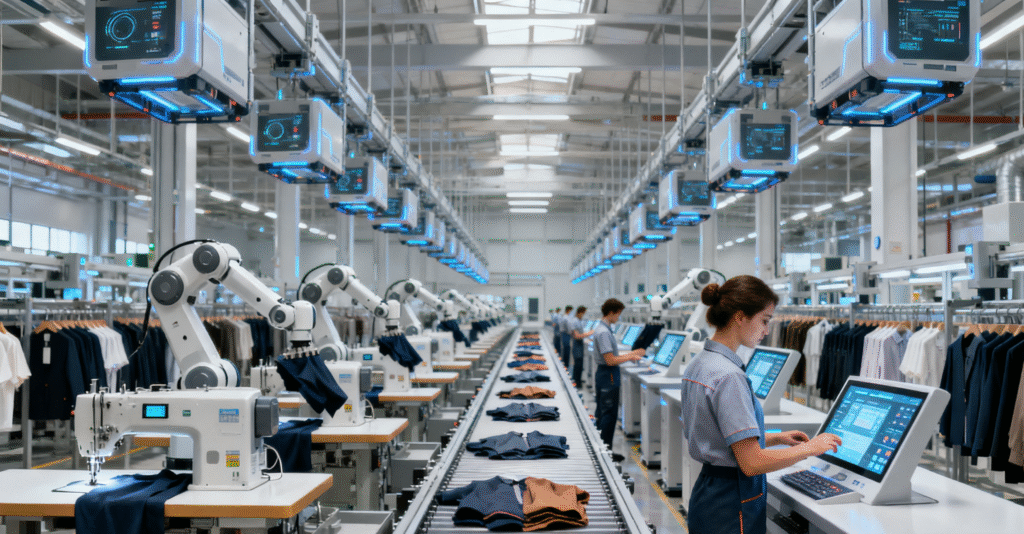
III. Why Do Garment Manufacturers of Well-Known Brands Reject Small Orders?
Despite supporting brands’ large-scale development, large garment manufacturers generally refuse small-batch orders (usually less than 500 pieces) for three core reasons:
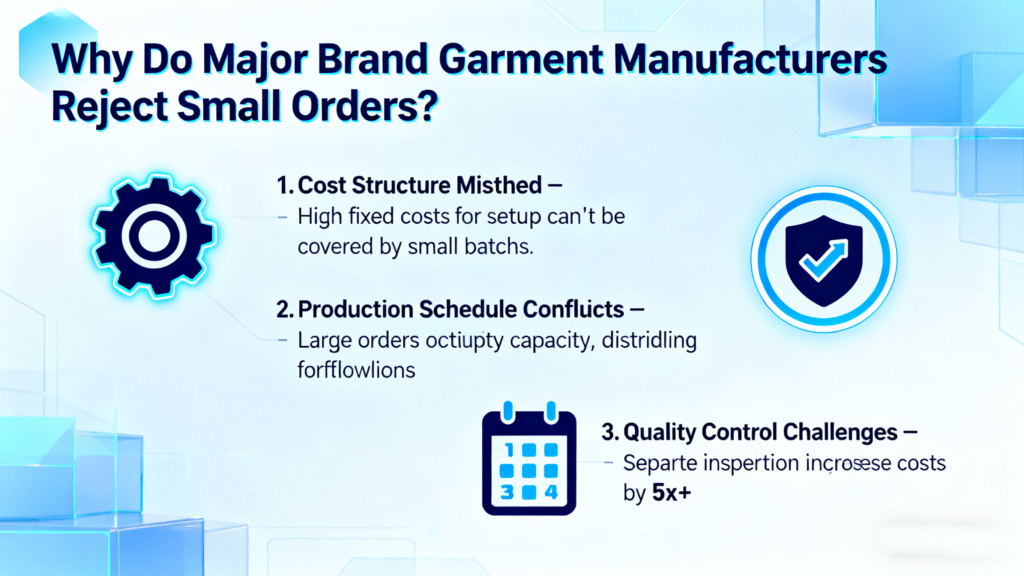
- Mismatched Cost Structure: Large garment manufacturers have high fixed costs such as equipment debugging, mold preparation, and production line scheduling. Only when the order quantity reaches a certain level (usually over 1,000 pieces) can costs be covered, and small orders will directly erode profits.
- Production Capacity Planning Conflicts: Leading garment manufacturers have tight production schedules all year round, undertaking large orders from brands like Uniqlo and Nike. Small orders will disrupt existing production rhythms and reduce overall production efficiency.
- Quality Control System Adaptation Issues: The quality inspection processes of large garment manufacturers are designed for batch production. Small orders require separate sampling inspections, leading to a more than 5-fold increase in quality inspection costs and difficulties in ensuring consistent quality.
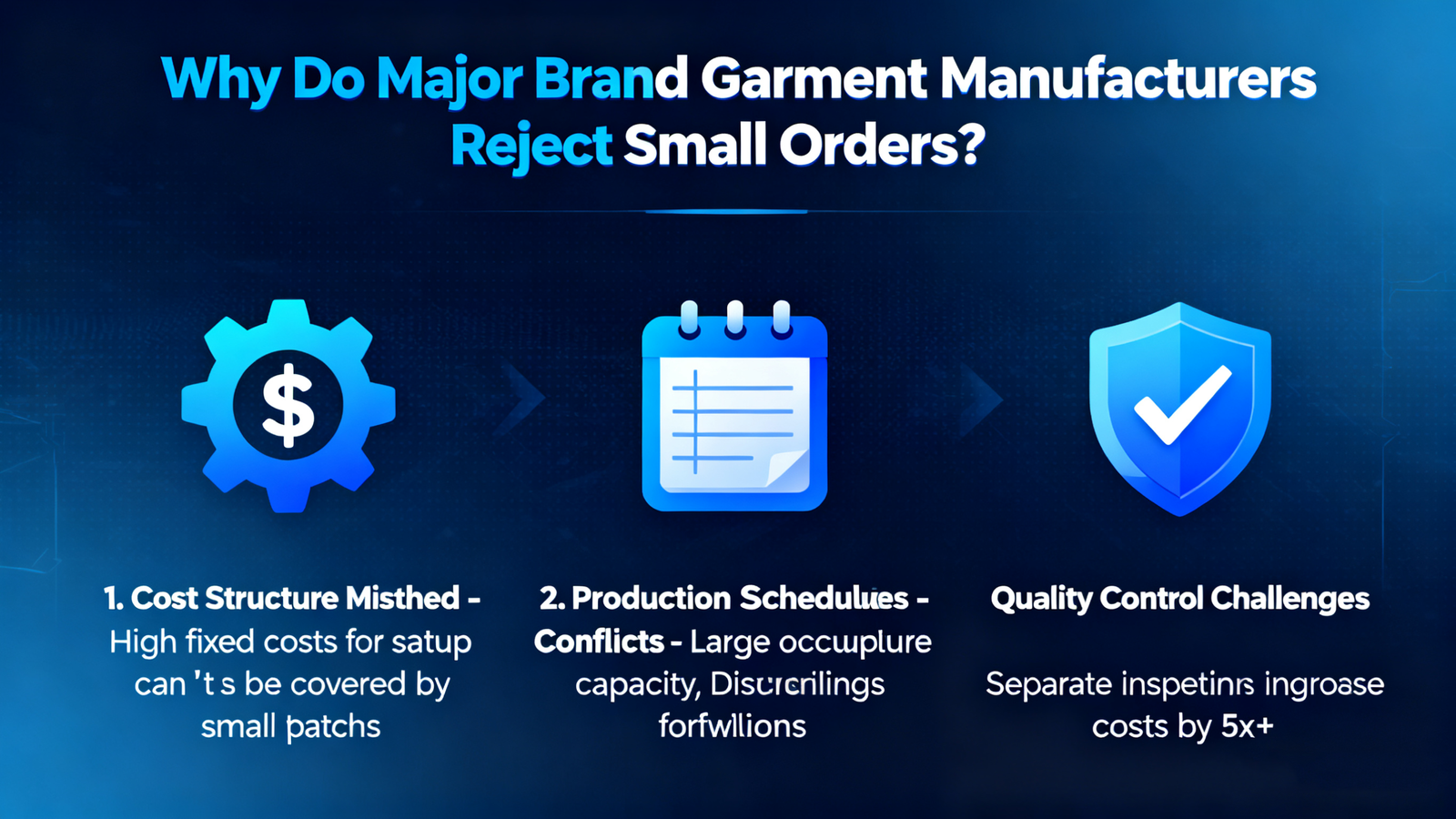
This “focus on bulk orders, neglect small orders” model makes it difficult for start-up brands, designer brands, and niche merchants to meet their small order needs.
IV. Chenghai Garment Manufacturers: Flexible Solutions for Small Orders
As an important apparel industry cluster in eastern Guangdong, garment manufacturers in Chenghai have broken industry pain points with “flexible production capacity,” becoming an ideal choice for small order needs. Their core advantages are reflected in three aspects:
1. Low-Threshold Order Acceptance Capacity
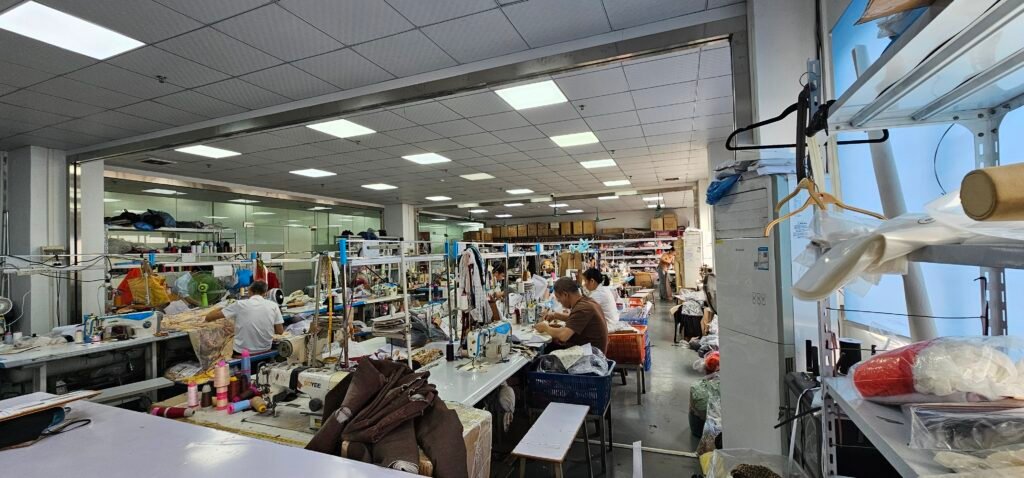
The 47 ISO-certified garment manufacturers in Chenghai generally support small orders starting from 50 pieces, and some factories can even accept customized orders of less than 30 pieces. This fully meets the trial production and customization needs of niche brands and start-up merchants.
2. Full Industrial Chain Supporting Services
Chenghai has more than 3,000 apparel-related enterprises and is only 25 kilometers away from the world’s largest textile and fabric market, enabling quick access to over 600 types of raw materials. The procurement cycle is 4-7 days shorter than in inland areas. The full-chain services from fabric supply, auxiliary material matching to sample design allow efficient production of small orders.
3. Rapid Delivery and Flexible Response
Garment manufacturers in Chenghai adopt intelligent production equipment and flexible scheduling models. The production cycle for small orders is only 7-15 days, and sample making can be completed in as fast as 3 days. For orders requiring special processes such as rhinestone application and embroidery, production processes can also be flexibly adjusted to ensure delivery timeliness.
Conclusion
Garment manufacturers are the core support for brands’ large-scale development. By cooperating with leading garment manufacturers, well-known brands like Uniqlo have achieved cost optimization, quality assurance, and rapid market response. The refusal of large garment manufacturers to accept small orders has created a differentiated market space for Chenghai garment manufacturers. With flexible production capacity, full industrial chain supporting services, and rapid delivery capabilities, Chenghai has become the optimal solution for small order needs, providing professional production support for start-up brands, designers, and niche merchants.
If you need further expansion, I can help you sort out a Chenghai Garment Manufacturers Small Order Cooperation Guide, including a list of high-quality factories, cooperation processes, and bargaining skills to facilitate quick connection with suitable production resources. Would you like to try it?
Comments