In the global garment manufacturing industry, Crystal International has firmly secured its position as the “Global Garment Manufacturing Giant” through decades of in-depth cultivation and innovation. As a leading full-category garment manufacturer, it has not only set a benchmark in the overall garment manufacturing sector but also become a core partner for numerous international brands in the women’s garment manufacturing track, relying on precise market insights and strong production capabilities.
I. Crystal International: Rooted in Garment Manufacturing, Building a Global Industrial Layout
Crystal International’s core competitiveness stems from its in-depth control over the entire garment manufacturing chain. From raw material procurement to finished product delivery, the global system it has built not only ensures efficiency but also establishes its leading position in the industry.
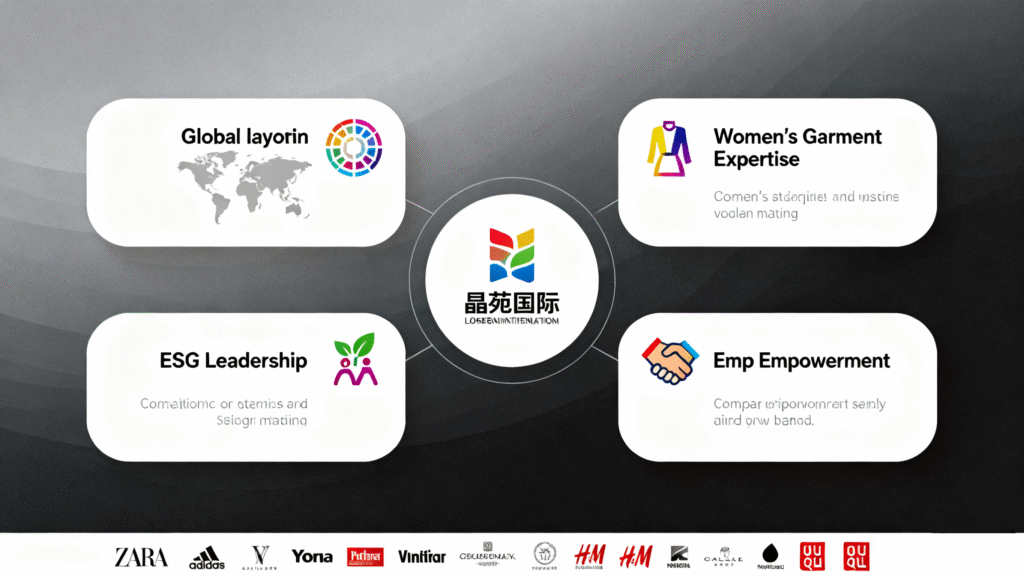
Global Production Layout: It has established dozens of production bases in Asia, the Americas, Europe, and other regions, being close to major consumer markets and raw material producing areas. This shortens the supply chain cycle and meets the quick-response demands of garment manufacturing.
Full-Category Manufacturing Capabilities: It covers multiple categories such as casual wear, sportswear, underwear, and children’s clothing. Among them, women’s garment manufacturing, as a key segment, accounts for over 30% of its total business and serves globally renowned women’s clothing brands such as ZARA, H&M, and Uniqlo.
Technology-Driven Production: It has introduced intelligent equipment and digital management systems, realizing automated upgrades in cutting, sewing, quality inspection, and other links. This not only improves the precision of garment manufacturing but also reduces the production difficulties caused by complex styles in women’s garment manufacturing.
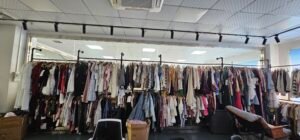
Women’s clothing OEM factory assembly line
II. Focus on Women’s Garment Manufacturing: Crystal International’s Differentiated Competitive Advantages
Due to characteristics such as diverse styles, complex fabrics, and segmented sizes, women’s garment manufacturing has higher requirements for the flexibility and refinement capabilities of production enterprises. Crystal International has formed unique advantages in women’s garment manufacturing through three core measures:
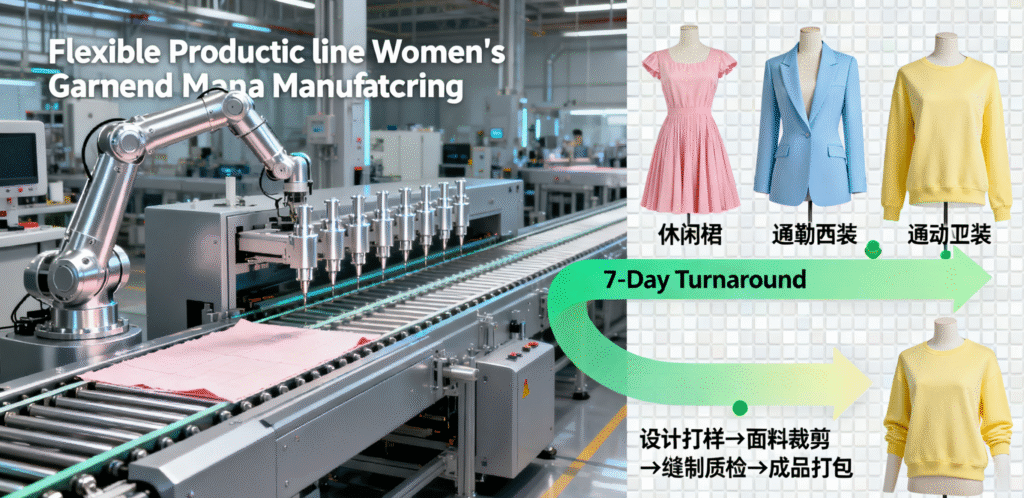
Flexible Production Adapts to Fast Fashion Demands: Aiming at the characteristics of “diverse styles, small batches, and fast iteration” in women’s clothing, it has built flexible production lines. It can complete the entire process from design sampling to mass production in as fast as 7 days, meeting the needs of brands for rapid new product launches.
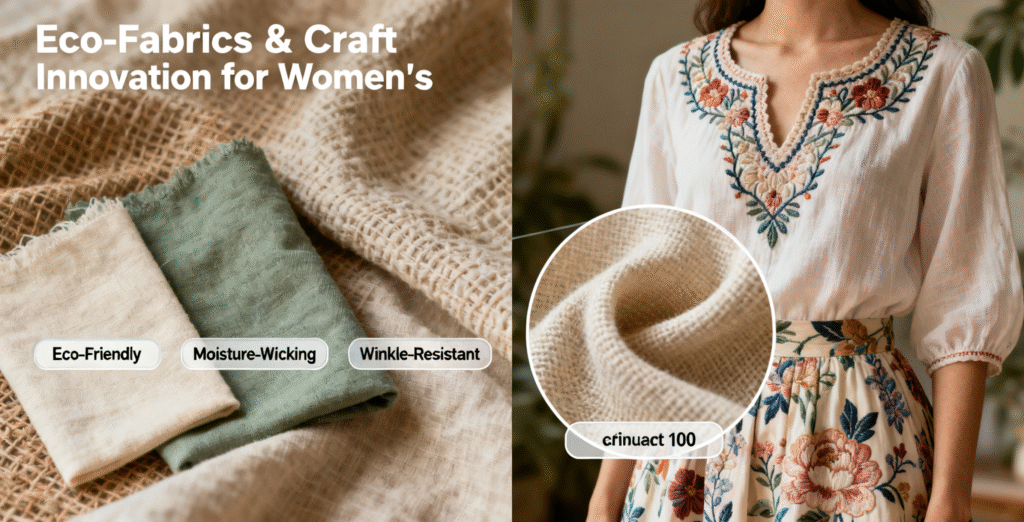
Fabric and Craftsmanship Innovation: It cooperates with global fabric suppliers to introduce eco-friendly fabrics and functional fabrics (such as wrinkle-resistant and moisture-wicking fabrics). Meanwhile, it integrates personalized crafts like embroidery and printing into women’s garment manufacturing to enhance product added value.
Strict Quality Control System: Women’s garment manufacturing has extremely high requirements for details. Crystal International has established a full-process quality inspection standard, with clear specifications for every step from fabric color fastness testing to garment size calibration, ensuring that the delivered products meet the quality requirements of global brands.
III. From Garment Manufacturing to Industry Benchmark: Crystal International’s Sustainable Development Path
Amid the global trend of pursuing green and sustainable development in the garment industry, Crystal International has integrated environmental protection concepts into the entire garment manufacturing process, providing a reference development model for the industry.
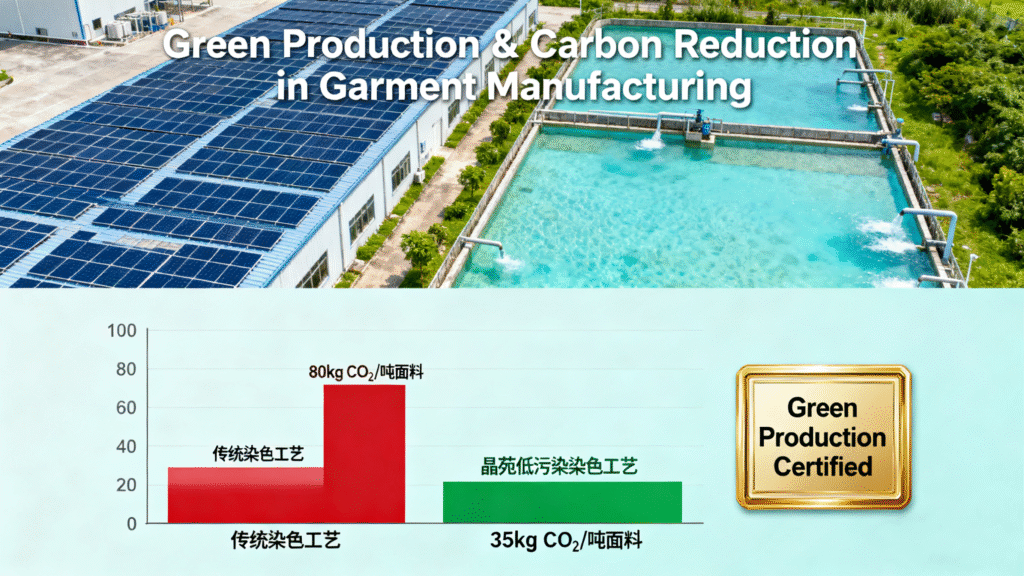
Green Production for Carbon Reduction: It has introduced solar power generation and water recycling systems in its production bases to reduce energy consumption and carbon emissions during garment manufacturing. Especially in the fabric dyeing link of women’s garment manufacturing, it adopts low-pollution processes to minimize environmental impact.
In-depth Integration of ESG Concepts: It incorporates Environmental (E), Social (S), and Governance (G) indicators into its corporate development strategy, safeguarding the labor rights and interests of the upstream and downstream of the supply chain. At the same time, it promotes the green transformation of garment manufacturing through technological innovation, which has also become an important plus for attracting cooperation with international brands.
Empowering Small and Medium-Sized Brands: Targeting the production needs of small and medium-sized women’s clothing brands, it has launched a service package of “small-batch customization + quick-response delivery”. By sharing its garment manufacturing resources, it helps small and medium-sized brands reduce production costs and promotes the joint development of the industry ecosystem.
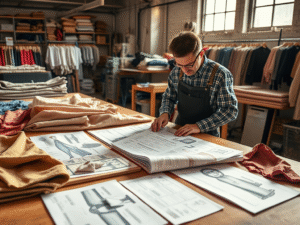
Women’s clothing OEM fabric
IV. Conclusion: Crystal International Injects New Momentum into the Garment Manufacturing Industry
As a leading enterprise in the global garment manufacturing industry, Crystal International has not only consolidated its industry position through technological innovation and global layout but also defined new standards for modern garment manufacturing in the field of women’s garment manufacturing with its flexible, refined, and green capabilities. In the future, with the continuous changes in consumer demands, Crystal International’s development path will also provide a reference for more garment manufacturing enterprises – only by taking core technologies as the support and market demands as the guidance can enterprises maintain their leading position in the fierce industry competition.
Would you like me to organize a Core Process Table for Crystal International’s Women’s Garment Manufacturing? The table will clearly list the key links and timelines from design docking, fabric procurement to production and delivery, allowing you to intuitively understand the operation mode of its women’s garment manufacturing.
Since starting my factory business in 2017, I've faced many hardships and challenges. Looking back now, I'm grateful for persevering—believing that hard work eventually pays off.



Comments