
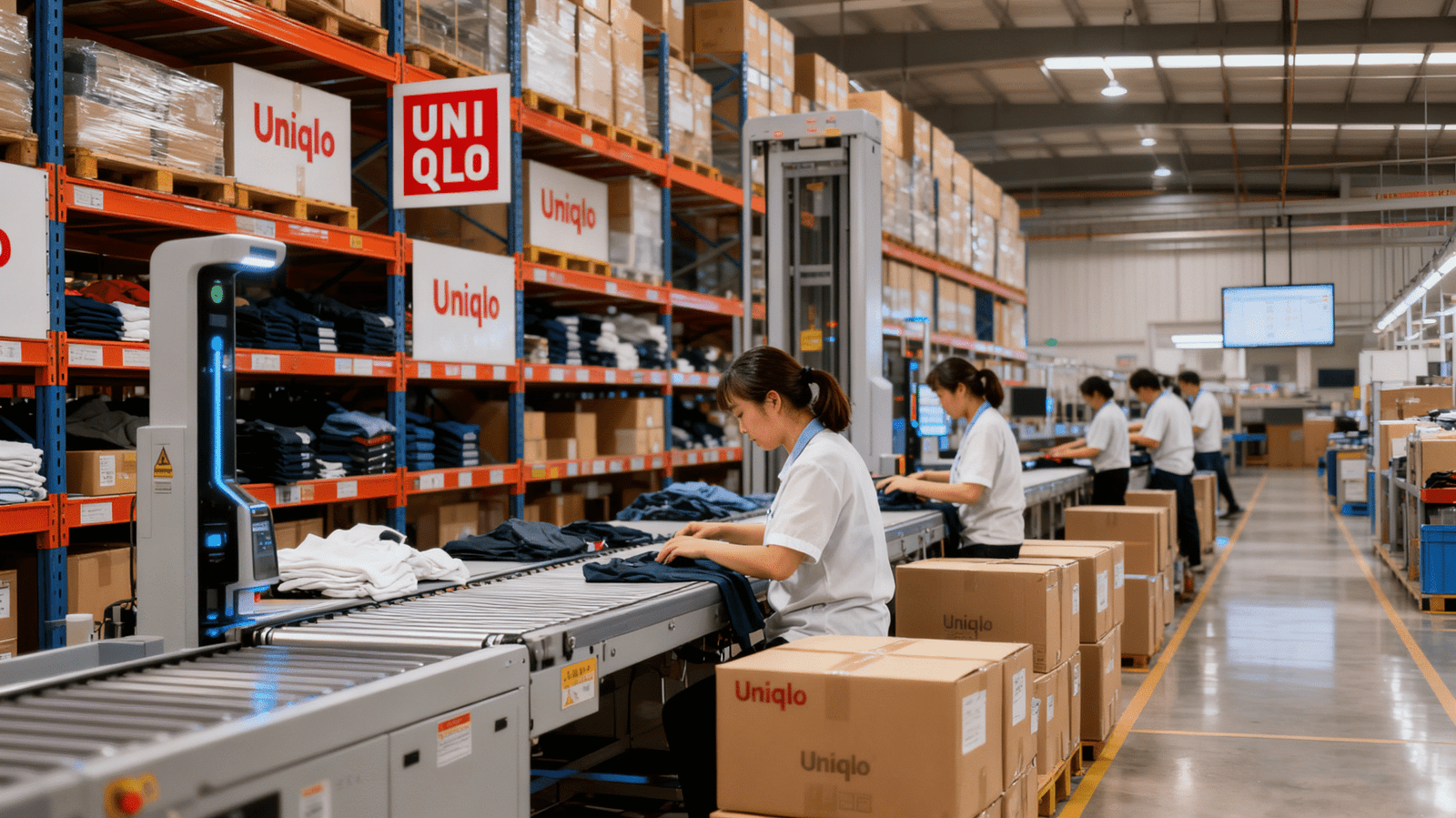
Uniqlo OEM: How Vertical Integration Makes Its Supply Chain Unbeatable
In the competitive landscape of fast fashion and casual apparel, Uniqlo stands out not just for its minimalist designs and high-quality basics, but for a supply chain strategy that turns Uniqlo OEM into a core competitive advantage. Unlike many retailers that treat contract manufacturers as mere vendors, Uniqlo has redefined the Uniqlo OEM model through deep vertical integration—forging unbreakable bonds with its core contract factories and taking end-to-end control of production processes. This approach doesn’t just cut costs; it ensures consistency, speeds up innovation, and keeps the brand agile in a volatile market. Let’s dive into how Uniqlo OEM works and why its vertical integration strategy is a masterclass for the industry.
The Foundation of Uniqlo OEM : Choosing Core Contract Factories as Strategic Partners
At the heart of Uniqlo OEM lies a rigorous selection process for core contract factories—one that prioritizes long-term collaboration over short-term cost savings. Uniqlo doesn’t scatter orders across dozens of unknown manufacturers; instead, it narrows down to a network of 200+ core factories (mostly in China, Vietnam, and Bangladesh) that meet its strict criteria for quality, efficiency, and ethical practices. These aren’t just “suppliers”—they’re strategic partners embedded in Uniqlo’s supply chain DNA.
What makes a factory “core” in the Uniqlo OEM ecosystem? First, technical expertise: factories must master Uniqlo’s signature fabrics, from Heattech’s thermal insulation to Airism’s breathability. Second, production scalability: they need to ramp up orders for bestsellers (like the Ultra Light Down jacket) without sacrificing quality. Third, shared values: Uniqlo’s “Code of Conduct for Production Partners” mandates fair labor practices and environmental responsibility, and core factories are audited regularly to maintain these standards.
This selective approach to Uniqlo OEM contract factories eliminates the risks of fragmented supply chains—delays, inconsistent stitching, or ethical scandals—that plague competitors. By focusing on a tight-knit network, Uniqlo builds trust: factories invest in Uniqlo-specific training and equipment, while Uniqlo provides steady orders and technical support. It’s a win-win that forms the backbone of its vertical integration.
Vertical Integration in Uniqlo OEM: From Design Board to Store Shelf
Vertical integration is where Uniqlo OEM truly shines. Unlike traditional retailers that hand off designs to factories and step back, Uniqlo inserts itself into every stage of production—turning “outsourcing” into “co-creation.” Here’s how this plays out across the supply chain:
1. R&D Collaboration: Co-Creating Fabrics with OEM Partners
Uniqlo’s most iconic products start with fabric innovation—and its OEM factories are part of this process from day one. When Uniqlo’s R&D team develops a new fabric (eg, Smart Ankle Pants’ wrinkle-resistant material), core factories are brought in early to test production feasibility. Factories provide feedback on weave patterns, dyeing techniques, and machine requirements, ensuring the fabric doesn’t just perform well in labs, but is easy to mass-produce at scale.
This collaboration is critical for Uniqlo OEM efficiency. For example, the development of Heattech 2.0 required adjustments to knitting machines; Uniqlo worked with its Japanese and Chinese core factories to retrofit equipment, cutting time-to-market by 30% compared to a traditional “design-then-manufacture” model. By integrating OEM partners into R&D, Uniqlo turns innovation into actionable production plans.
2. Production Oversight: Standardizing Processes Across OEM Factories
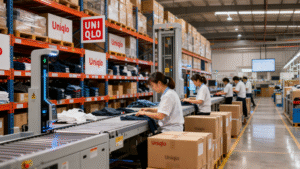
Vertical integration doesn’t mean Uniqlo owns factories—it means it controls how they operate. The brand has a dedicated “Production Excellence Team” that trains Uniqlo OEM workers on standardized techniques, from sewing seams on Oxford shirts to assembling zip-ups on hoodies. Every core factory uses Uniqlo’s proprietary production management system, which tracks everything from material usage to production time in real time.
This level of oversight ensures consistency across Uniqlo OEM partners. A customer buying a Uniqlo Basic T-shirt in New York will get the same fit and quality as one bought in Tokyo, even if the two shirts were made in different factories. It also reduces waste: the real-time system flags inefficiencies (eg, a factory using 10% more fabric than average) so Uniqlo can intervene and optimize processes—cutting costs for both the brand and its OEM partners.
3. Logistics & Inventory Sync: Tying OEM Output to Market Demand
The final piece of Uniqlo OEM vertical integration is linking production to logistics and sales data. Uniqlo’s supply chain platform shares real-time sales data (from online stores and physical locations) with its core factories. If a particular color of Airism T-shirts sells out in Europe, the platform automatically triggers a production adjustment at the nearest Uniqlo OEM factory in Turkey or Poland—ensuring restocks arrive in 7–10 days, compared to the industry average of 2–3 weeks.
This sync between OEM production and demand eliminates overstock (a major cost for fashion brands) and stockouts (a major frustration for customers). During peak seasons like Black Friday, Uniqlo’s OEM partners can shift production to high-demand items within 48 hours, thanks to the pre-negotiated flexibility built into their contracts—another benefit of the brand’s long-term partnership approach.
Why Uniqlo OEM’s Vertical Integration Beats Traditional Outsourcing
Traditional fashion OEM models are transactional: brands send specs, factories produce, and little communication happens in between. Uniqlo OEM flips this script with vertical integration, and the results speak for themselves:
-
Lower Costs, Higher Quality : By working with core factories and optimizing processes, Uniqlo cuts production waste by 15–20%—savings it passes to customers without compromising quality. Its OEM partners, meanwhile, benefit from steady orders and reduced downtime.
-
Faster Time-to-Market : Integrating OEM partners into R&D and using real-time data cuts product development cycles by up to 40%, letting Uniqlo respond to trends (eg, post-pandemic loungewear demand) faster than competitors.
-
Ethical and Sustainable Operations : Uniqlo’s tight control over OEM factories ensures compliance with sustainability goals—80% of its core factories now use renewable energy for production, and the brand aims to reach 100% by 2030.
-
Brand Loyalty : Consistency in quality and availability (thanks to reliable OEM production) builds trust. Customers know they can count on Uniqlo basics to fit and last—a direct result of its vertical integration strategy.
The Future of Uniqlo OEM: Tech-Driven Vertical Integration
Uniqlo isn’t stopping at its current OEM model. The brand is investing in AI and IoT to deepen vertical integration even further. For example, it’s testing “smart factories” with core Uniqlo OEM partners—using sensors to monitor fabric tension during weaving and AI to predict maintenance needs for production machines. This tech reduces human error and boosts efficiency by another 12%.
It’s also expanding its regional Uniqlo OEM networks to reduce shipping costs and carbon footprints. New core factories in Mexico and Southeast Asia will serve North American and Asian markets, respectively, while maintaining the same standardized processes as existing partners. This “localized vertical integration” ensures Uniqlo stays agile amid global supply chain disruptions.
Conclusion: Uniqlo OEM’s Vertical Integration Is a Blueprint for Success
Uniqlo’s success isn’t just about great designs—it’s about reimagining Uniqlo OEM as a strategic, integrated part of its business. By choosing core contract factories carefully, inserting itself into every stage of production, and using data to sync supply with demand, Uniqlo has turned outsourcing into a competitive edge.
For other fashion brands looking to improve their supply chains, Uniqlo OEM offers a clear lesson: vertical integration isn’t about owning every step—it’s about building trust with partners, standardizing processes, and using collaboration to drive efficiency and quality. In a world where customers demand consistency, sustainability, and speed, Uniqlo’s OEM model isn’t just effective—it’s future-proof.
Comments