
Types of Sewing Machines Used in Clothing Factories: A Complete Guide for B2B Buyers
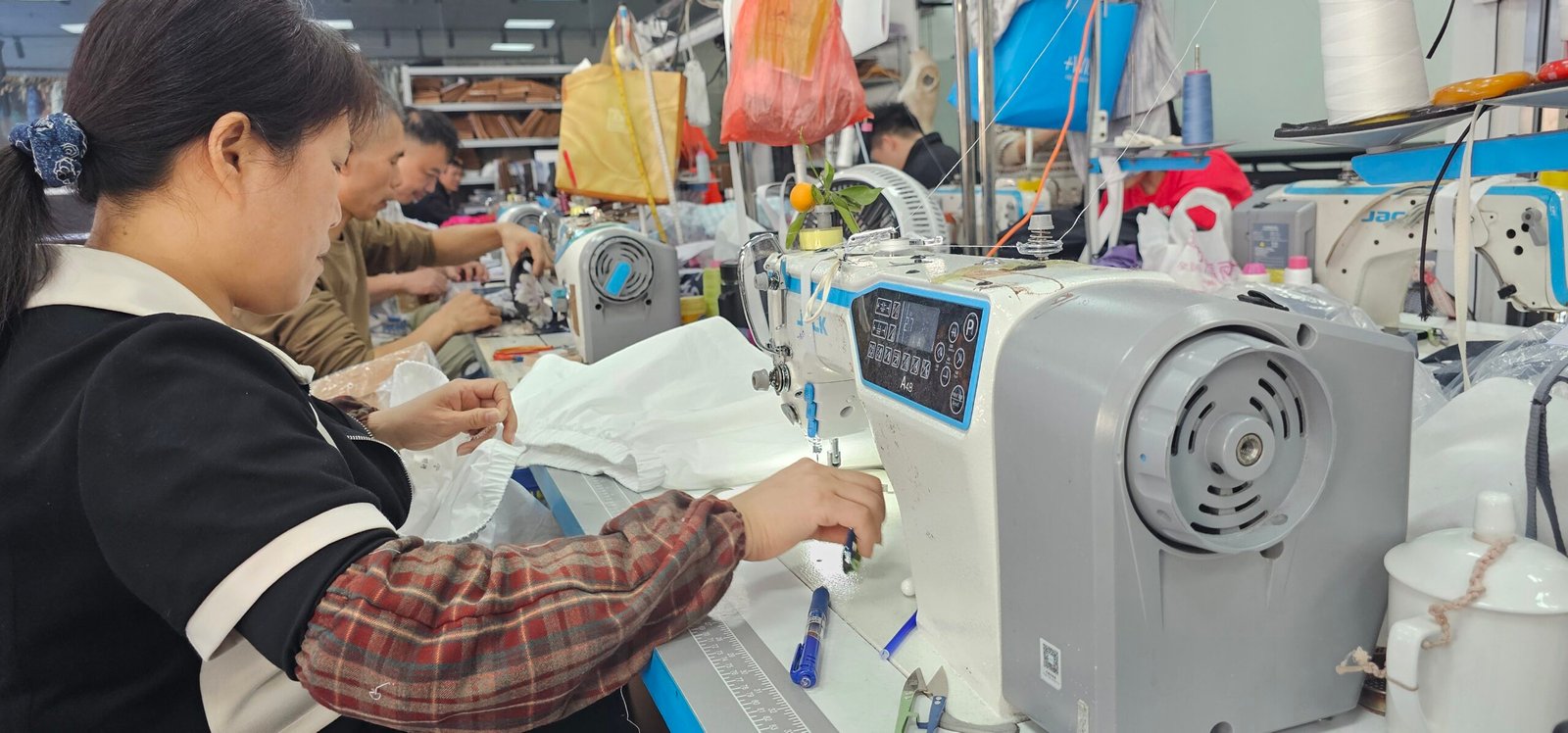
Clothing factory sewing machine configurations depend on product categories (e.g., knit/woven, casual/sports/kids’ wear), process complexity, and order models (e.g., small-batch quick turnaround, bulk OEM). Below is a detailed guide to mainstream sewing machine types, functional features, application scenarios, and English terminology, specifically tailored to Chenghai-based clothing factories offering OEM/ODM services—aligning with the common needs of European and American B2B buyers while highlighting professionalism for international communication.
I. Core Sewing Machines (Essential Equipment)
1. Lockstitch Machine
-
English Terminology: Lockstitch Sewing Machine (Industrial Grade: Industrial Lockstitch Machine)
-
Function: The most basic sewing equipment, forming “stitch type 101” (interlocking upper and lower threads). Suitable for basic processes such as fabric joining, topstitching, and button attaching for most fabrics.
-
Features: High speed (up to 3,000-5,000 stitches per minute), flat stitches, and compatibility with light fabrics (e.g., chiffon) to medium-heavy fabrics (e.g., cotton, light denim). It is the most widely used equipment in clothing factories.
-
Application Scenarios: Side seams of T-shirts, shirt plackets, trouser waistbands, and kids’ wear joining—meeting the mass production needs of casual and basic clothing in European and American markets.
-
Small-Batch Quick Turnaround Advantage: Easy to operate and quick to switch styles without complex debugging, making it ideal for fast transitions between multi-style, small-batch orders.
2. Overlock Machine (Serger)
-
English Terminology: Overlock Machine / Serger (Industrial Grade: Industrial Overlock Machine)
-
Function: Also known as “edge sewing machine,” primarily used for edging fabric to prevent fraying. It can also complete fabric joining (e.g., side seams of knitwear) with an integrated “edging + sewing” stitch.
-
Features: Common 3-thread, 4-thread, and 5-thread models (5-thread overlocking is more durable for heavy or stretchy fabrics). High speed and neat edge finishing.
-
Application Scenarios: Edging of knitwear (T-shirts, hoodies, sports pants) and lining edging of woven garments (shirts, jackets). It meets the basic requirement of European and American buyers for “neat edges” in garment craftsmanship.
-
Key Selling Point: Overlocking quality directly affects garment durability. B2B buyers overseas often pay close attention to overlocking standards—equipping 5-thread overlock machines can be highlighted as a key process advantage of the factory.
3. Coverstitch Machine
-
English Terminology: Coverstitch Machine (Industrial Grade: Industrial Coverstitch Machine)
-
Function: Also known as “binding machine,” mainly used for topstitching and edging elastic areas such as necklines, cuffs, and hems of knitwear. The stitch features “2/3 threads on the surface + 1 thread on the bottom” with strong elasticity.
-
Features: Flat and elastic stitches that won’t break when the fabric stretches—core equipment for knitwear production.
-
Application Scenarios: Necklines of T-shirts, cuffs of hoodies, hems of sports pants, and joining of elastic fabrics for kids’ wear. Aligns with European and American market demands for “comfortable elasticity” in knitwear.
-
Small-Batch Quick Turnaround Compatibility: Supports various elastic fabrics (spandex, modal) and allows easy adjustment when switching neckline/cuff sizes—suitable for small-batch elastic garment production.
II. Specialty Sewing Machines (For Custom Processes)
1. Button Sewing Machine
-
English Terminology: Button Sewing Machine (Automatic Model: Automatic Button Attaching Machine)
-
Function: Automatically sews flat buttons, snap buttons, and press buttons. Adjustable button position and stitch density.
-
Features: Industrial automatic models integrate “button feeding, positioning, sewing, and thread cutting”—3-5 times more efficient than manual operation with secure stitches.
-
Application Scenarios: Button attachment for shirts, jackets, trousers, and kids’ wear. European and American buyers have high requirements for button durability (wash-resistant and non-falling). Automatic button sewing machines ensure consistency.
2. Buttonhole Sewing Machine
-
English Terminology: Buttonhole Sewing Machine (Automatic Model: Automatic Buttonholer Machine)
-
Function: Creates buttonholes (straight, round, or keyhole). Divided into straight buttonhole machines (for shirts, jackets) and keyhole buttonhole machines (for suits, coats).
-
Features: Integrated automatic positioning, cutting, and edging with uniform stitches and neat buttonhole edges. Adjustable for different fabric thicknesses.
-
Application Scenarios: Buttonholes on shirt plackets, jackets, and kids’ wear outerwear. Essential equipment for formal and casual jackets in European and American markets—reflecting the completeness of the factory’s craftsmanship.
3. Two-Needle Lockstitch Machine
-
English Terminology: Two-Needle Lockstitch Machine
-
Function: Two needle bars sew simultaneously to form parallel double stitches, enhancing the durability and aesthetics of sewn areas.
-
Features: Adjustable stitch spacing (3-10mm), suitable for medium-heavy fabrics, with exquisite double-stitch visual effects.
-
Application Scenarios: Side seams of trousers, topstitching on waistbands, decorative stitching on shirts, and kids’ wear. European and American markets have high demands for the “aesthetics of visible stitching”—two-needle machines are key to improving product texture.
4. Blind Hem Machine
-
English Terminology: Blind Hem Machine / Invisible Stitch Machine
-
Function: Creates “invisible stitches” (no visible stitches on the surface), mainly used for hemming garments (e.g., trousers, jackets, shirts) to maintain a neat appearance.
-
Features: Stitches hidden in the fabric fold with only subtle stitches on the reverse side. Good elasticity and wrinkle resistance.
-
Application Scenarios: Hemming of European and American casual trousers, suits, and jackets. Meets overseas buyers’ aesthetic demand for “invisible craftsmanship” and upgrades product quality.
5. Embroidery Machine
-
English Terminology: Embroidery Machine (Computerized Model: Computerized Embroidery Machine)
-
Function: Implements embroidery of logos, patterns, and text. Divided into single-head (small-batch customization) and multi-head (mass production) models.
-
Features: Computer-programmed control for precise patterns. Supports various embroidery stitches (flat embroidery, appliqué, 3D embroidery) and adapts to different fabrics (knit, woven, leather).
-
Application Scenarios: OEM/ODM services for embroidering brand logos on European and American brand clothing, cartoon patterns on kids’ wear, and functional logos on sportswear. Core equipment for differentiated customization—enables quick switching between embroidery patterns in small-batch quick turnaround mode.
III. Automated/Efficient Equipment (For Small-Batch Quick Turnaround)
1. Computerized Industrial Lockstitch Machine
-
English Terminology: Computerized Industrial Lockstitch Machine
-
Function: Adds a computer control system to traditional lockstitch machines, supporting automatic thread cutting, automatic presser foot lifting, automatic stitch counting, and stitch memory.
-
Features: Easy to operate, reducing manual time (e.g., automatic thread cutting saves 50% of thread cutting time) with consistent stitches—ideal for multi-style, small-batch production.
-
Small-Batch Quick Turnaround Advantage: Quickly recalls stored stitch parameters when switching styles, reducing debugging time by 60%. Improves small-order production efficiency and meets European and American buyers’ core demand for “fast delivery.”
2. Template Sewing Machine
-
English Terminology: Template Sewing Machine (Intelligent Model: Intelligent Template Sewing Machine)
-
Function: Fixes fabric with preset templates to automate complex processes (e.g., suit necklines, shirt armholes, curved joining of kids’ wear).
-
Features: High-precision sewing without skilled workers, reducing human error. Supports complex shape sewing with fast speed and stable quality.
-
Application Scenarios: Standardized orders in OEM services (e.g., standardized clothing for European and American brands). Quick template replacement in small-batch quick turnaround mode adapts to complex process requirements of different styles.
3. Ultrasonic Cutting and Sealing Machine
-
English Terminology: Ultrasonic Cutting and Sealing Machine
-
Function: Uses ultrasonic vibration for integrated cutting and sealing of fabrics (especially knitwear and chemical fiber fabrics). No need for overlocking—edges won’t fray.
-
Features: Flat cuts without scorching, high speed, suitable for light and elastic fabrics. Reduces subsequent overlocking processes.
-
Application Scenarios: Edge processing of sportswear (yoga wear, swimwear) and underwear. The European and American market’s demand for “seamless craftsmanship” in sportswear is growing—this equipment enhances product competitiveness.
IV. Equipment Configuration Recommendations by Product Category (Aligning with European & American B2B Needs)
|
Product Category
|
Core Sewing Machine Configuration
|
Key Concerns of Overseas Buyers
|
|
Knit Casual Wear (T-shirts, Hoodies)
|
Lockstitch Machine + 3/4/5-Thread Overlock Machine + Coverstitch Machine + Computerized Lockstitch Machine + Embroidery Machine
|
Overlocking quality, elastic topstitching on necklines, precision of logo embroidery
|
|
Woven Garments (Shirts, Jackets)
|
Lockstitch Machine + Overlock Machine + Two-Needle Machine + Button Sewing Machine + Buttonhole Machine + Blind Hem Machine
|
Visible stitch craftsmanship, neatness of buttonholes, invisible effect of blind hems
|
|
Sportswear (Yoga Wear, Sports Pants)
|
Lockstitch Machine + 5-Thread Overlock Machine + Coverstitch Machine + Ultrasonic Cutting & Sealing Machine + Template Sewing Machine
|
Elastic stitches, seamless craftsmanship, durability (stretch-resistant, wash-resistant)
|
|
Kids’ Wear (Infant, Children’s Clothing)
|
Small Lockstitch Machine + 4-Thread Overlock Machine + Coverstitch Machine + Button Sewing Machine (Safety Buttons) + Embroidery Machine (Cartoon Patterns)
|
Safety craftsmanship (no exposed stitches), pattern delicacy, small-size compatibility
|
V. Core Summary (For Factory B2B Marketing)
As a Chenghai-based clothing factory specializing in OEM/ODM and small-batch quick turnaround, sewing machine configuration must balance “comprehensive basic processes” and “flexibility & efficiency”:
-
Core equipment (lockstitch machines, overlock machines, coverstitch machines) is the foundation to meet European and American buyers’ core process needs—ensure sufficient quantity (1:2:1 ratio based on production capacity).
-
Automated equipment (computerized lockstitch machines, template sewing machines) is the core support for small-batch quick turnaround. Highlight these as marketing strengths (e.g., “fast style switching, 3-7 day delivery” supported by advanced equipment).
-
Specialty equipment (embroidery machines, ultrasonic cutting machines) enhances product differentiation, adapting to European and American brands’ customization needs (e.g., logo embroidery, seamless craftsmanship) to boost competitiveness.
When communicating with overseas B2B buyers, explicitly mention equipment configuration (e.g., “Equipped with 5-thread overlock machines and computerized lockstitch machines for high-quality finishing and fast turnaround”) to highlight the factory’s professionalism and production capacity—aligning with international buyers’ core demands for “mature craftsmanship and efficient delivery.”

Comments