

Is H&M Clothing Produced In-House? The Full Story Behind H&M OEM
Walk into any H&M store, and you’ll be greeted by racks of trendy, affordable clothing that cater to every style—from casual basics to runway-inspired pieces. But have you ever stopped to wonder: where does all this merchandise come from? Is H&M clothing made in the brand’s own factories, or does it rely on other production methods? The answer lies in a strategy that’s central to H&M’s global success: H&M OEM. In this article, we’ll pull back the curtain on H&M’s production model, explore why HM OEM manufacturing is the backbone of its operations, and break down how this approach benefits both the brand and consumers.
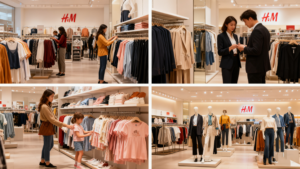
H&M’s Business Model: Why It Doesn’t Rely on Own Factories
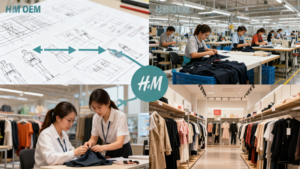
First, let’s dispel a common myth: H&M does not own a large network of production factories. Instead, the Swedish retail giant operates on a “light asset” business model, focusing on what it does best—design, marketing, and supply chain management—while outsourcing manufacturing to third-party partners. This is where H&M OEM comes into play. OEM, or Original Equipment Manufacturing, refers to the process where a brand contracts a manufacturer to produce goods based on its specific designs, standards, and requirements. For H&M, this model is non-negotiable, and here’s why:
-
Flexibility for Fast Fashion: Fast fashion thrives on speed—being able to turn runway trends into in-store items in weeks, not months. Owning factories would tie H&M to fixed production capacities, making it hard to scale up for viral trends or scale down for slower seasons. With HM OEM partners spread across Asia, Europe, and Africa, H&M can quickly adjust production volumes to meet consumer demand.
-
Cost Efficiency: Building and maintaining factories is capital-intensive—think of labor, equipment, and overhead costs. By partnering with H&M OEM manufacturers in regions with competitive production costs (such as Bangladesh, Vietnam, and China), H&M keeps its operational expenses low. These savings are then passed on to consumers in the form of affordable prices, a key part of H&M’s value proposition.
-
Global Reach, Local Expertise: H&M’s OEM network isn’t just about cost—it’s about access to local manufacturing expertise. Different regions specialize in different textiles: for example, Turkey excels in denim production, while Bangladesh is a leader in basic cotton garments. By working with HM OEM suppliers who know their craft, H&M ensures consistent quality across its diverse product line.
How H&M Manages Its OEM Network: Quality and Accountability
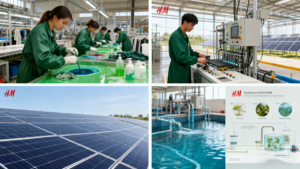
Critics of OEM models often raise concerns about quality control and ethical practices—but H&M has invested heavily in ensuring its OEM supply chain meets strict standards. The brand’s approach to managing H&M OEM partners is a masterclass in balancing scale with responsibility:
First, H&M has a rigorous supplier approval process. Before partnering with an OEM manufacturer, the brand conducts thorough audits to assess working conditions, environmental practices, and production capabilities. Only suppliers that meet H&M’s “Code of Conduct” (which covers everything from fair wages to waste reduction) are allowed to join its network. This due diligence ensures that H&M OEM products aren’t just trendy—they’re also produced ethically.
Second, H&M maintains close communication with its OEM partners throughout the production process. The brand provides detailed design specs, fabric samples, and quality benchmarks, and sends in-house inspectors to monitor production at key stages. This hands-on approach prevents defects and ensures that every item with the H&M label lives up to the brand’s standards. For consumers, this means that whether a sweater is made by an OEM factory in China or a tailor shop in Portugal, it’s consistent in fit and quality.
Finally, H&M is committed to making its OEM supply chain more sustainable. The brand has set a goal to use 100% recycled or sustainably sourced materials by 2030, and it works with its OEM partners to adopt eco-friendly production methods—such as water-saving dyeing techniques and renewable energy use. This focus on sustainability has made sustainable H&M OEM a growing priority for both the brand and environmentally conscious shoppers.

The Benefits of H&M OEM for Consumers
You might be thinking: how does H&M’s OEM model affect me as a shopper? The truth is, HM OEM is one of the reasons you can buy a stylish dress for $20 or a cozy hoodie for $15. Here’s how it directly benefits consumers:
-
Affordable Prices: As mentioned earlier, OEM manufacturing cuts down on H&M’s production costs, which translates to lower prices for shoppers. This makes fashion accessible to a wider range of people, regardless of their budget.
-
Constantly Updated Inventory: Thanks to the flexibility of its OEM network, H&M can quickly produce and restock trending items. If a certain jacket goes viral on social media, H&M’s OEM partners can ramp up production to meet demand—so you won’t miss out.
-
Diverse Product Range: H&M’s global OEM network allows it to offer a huge variety of products. Whether you need workout gear, office attire, or kids’ clothes, the brand’s OEM partners can produce specialized items to cover every category.
Common Questions About H&M OEM
To wrap up, let’s address some of the most frequently asked questions about H&M OEM:
-
Where are H&M’s OEM factories located? H&M works with over 1,900 suppliers in more than 40 countries. The top production regions are Asia (Bangladesh, Vietnam, China), Europe (Turkey, Romania), and Africa (Kenya, Ethiopia).
-
Does H&M’s OEM model mean lower quality? No. H&M’s strict audit process and quality control measures ensure that OEM-produced items meet the same standards as if they were made in in-house factories. Many high-end brands use OEM models too—quality depends on the brand’s oversight, not the production method.
-
Is H&M moving away from OEM manufacturing? Not anytime soon. The OEM model is core to H&M’s business strategy, and the brand continues to invest in strengthening its supply chain partnerships rather than building its own factories.
Final Thoughts on H&M OEM
So, to circle back to the original question: no, H&M does not produce most of its clothing in its own factories. Instead, H&M OEM is the driving force behind its global supply chain, allowing the brand to deliver affordable, trendy fashion to millions of shoppers worldwide. By focusing on design and supply chain management while leveraging the expertise of third-party manufacturers, H&M has built a business model that’s both efficient and consumer-friendly.
Next time you pick up an H&M item, remember: behind that stylish piece is a global network of HM OEM partners working to bring fashion within reach. And as H&M continues to refine its OEM strategy—with a focus on sustainability and ethical practices—the future of its production model looks even more promising.





Comments