
Intangible Cultural Heritage Chaozhou Embroidery : A Millennium-old Tapestry Woven with Gold and Craftsmanship
In the treasure house of Chinese traditional crafts, Intangible cultural heritage Chaozhou embroidery shines like a resplendent gem, with a history spanning over a thousand years. Originating in the Tang and Song Dynasties and flourishing in the Ming and Qing Dynasties, this exquisite art form is not only a major school of “Yue Embroidery” (one of China’s Four Famous Embroideries) but also a vivid carrier of Lingnan culture. Today, let’s explore the unique charm of this time-honored Intangible cultural heritage Chaozhou embroidery and uncover the stories woven into its threads.
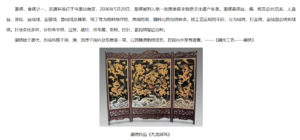
A Millennium of Inheritance: The Historical Footprint of Intangible Cultural Heritage Chaozhou Embroidery
The history of Chaozhou embroidery can be traced back to the Tang Dynasty, as recorded in the ancient book “Du Yang Za Bian” (Miscellaneous Records of Du Yang). During that period, Chaozhou’s textile industry was already thriving, and embroidery techniques began to take shape. By the Song Dynasty, Chaozhou embroidery had gradually developed its own style, with works being used in imperial tributes and local rituals. The Ming and Qing Dynasties marked its golden age—embroidery workshops spread all over Chaozhou, and skilled craftsmen emerged in large numbers. Their works, characterized by grandeur and exquisite details, were not only popular domestically but also exported to Southeast Asia and beyond, becoming a symbol of Chinese craftsmanship.
What makes Intangible cultural heritage Chaozhou embroidery stand out in the long river of history? Unlike other embroideries that focus on delicate needlework and soft colors, Chaozhou embroidery has formed a unique aesthetic with its bold style and three-dimensional effects. This inheritance, spanning over a thousand years, is not just the passing down of techniques but also the continuation of a cultural spirit.
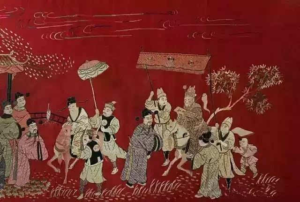
Unique Craftsmanship: The “Golden Secret” of Intangible Cultural Heritage Chaozhou Embroidery
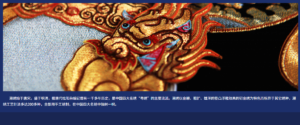
The most distinctive feature of Intangible cultural heritage Chaozhou embroidery is its “golden embroidery” (Ding Jin Xiu), which creates a raised, relief-like effect that is both magnificent and imposing. This technique involves using gold threads (such as flat gold, round gold, and twisted gold) and embedding them into the fabric with fine needles, making the patterns look like they are inlaid with gold and silver, shining brilliantly under light. This unique method not only enhances the visual impact of the works but also makes them durable—many ancient Chaozhou embroidery pieces have retained their luster after hundreds of years.
In addition to golden embroidery, Chaozhou embroidery techniques include more than 200 kinds of stitches, all done by hand. From the delicate “ping xiu” (flat embroidery) to the three-dimensional “dian xiu” (dot embroidery), each stitch requires the craftsman’s full attention and years of experience. For example, the “chuan jin xiu” (thread-passing gold embroidery) technique involves weaving gold threads through the fabric in a crisscross pattern, creating a texture that is both soft and firm. It is this variety of complex techniques that makes Intangible cultural heritage Chaozhou embroidery unique among China’s Four Famous Embroideries.
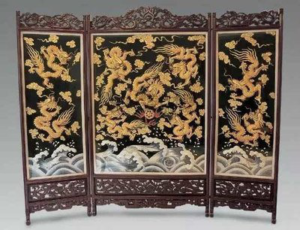
Cultural Connotation: The Spiritual Core of Intangible Cultural Heritage Chaozhou Embroidery
Beyond its exquisite craftsmanship, Intangible cultural heritage Chaozhou embroidery is also a reflection of Chaozhou people’s life philosophy and cultural beliefs. The patterns on Chaozhou embroidery works are rich in symbolism: peonies represent prosperity and wealth, cranes symbolize longevity, and dragons and phoenixes stand for auspiciousness and harmony. These patterns are not just decorative; they carry the people’s longing for a better life and their respect for traditional culture.
【Q: What cultural meanings are usually contained in the patterns of Intangible Cultural Heritage Chaozhou Embroidery? A: The patterns of Chaozhou Embroidery are full of symbolic meanings. Common ones include peonies (representing prosperity), cranes (symbolizing longevity), dragons and phoenixes (standing for auspiciousness), and other motifs that reflect the Chaozhou people’s longing for a happy life and respect for traditional culture.】
Moreover, Chaozhou embroidery for traditional festivals has become an important part of local customs. During festivals such as the Spring Festival and the Mid-Autumn Festival, families will hang Chaozhou embroidery decorations (such as tapestries and handkerchiefs) to add a festive atmosphere. In weddings, brides often wear clothes embroidered with phoenix patterns, which symbolize happiness and loyalty. These customs make Intangible cultural heritage Chaozhou embroidery deeply integrated into people’s daily lives, becoming an indispensable part of Chaozhou’s cultural identity.
Contemporary Inheritance: The New Vitality of Intangible Cultural Heritage Chaozhou Embroidery
In modern times, with the impact of industrialization and the changing times, Intangible cultural heritage Chaozhou embroidery once faced the challenge of being lost. However, in recent years, with the support of the government and the efforts of cultural inheritors, this ancient art has regained new vitality. Many young craftsmen have joined the team of inheritors, learning traditional techniques while innovating in design and materials.
Today, modern Intangible cultural heritage Chaozhou embroidery works are no longer limited to traditional decorations. They have entered the fields of fashion, home decoration, and cultural creativity—Chaozhou embroidery scarves, clothing, and tableware have become popular among young consumers. In addition, cultural institutions and schools have launched exhibition activities and training courses to popularize Chaozhou embroidery knowledge among the public, especially young people. These efforts are ensuring that Intangible cultural heritage Chaozhou embroidery can be passed down to future generations.
Join Us to Protect and Inherit Intangible Cultural Heritage Chaozhou Embroidery
Every thread of Intangible cultural heritage Chaozhou embroidery carries a thousand years of history, and every stitch embodies the wisdom of craftsmen. Have you ever seen a stunning Chaozhou embroidery work? Do you have any stories related to this traditional art? Or are you interested in learning more about Chaozhou embroidery techniques ? Welcome to leave a comment below to share your thoughts and experiences. Let’s work together to spread the charm of Intangible cultural heritage Chaozhou embroidery and let this ancient art shine brighter in the contemporary era.


Comments