
H&M’s OEM Factory: Unveiling Craftsmanship Secrets & Sustainable Fabric Styling Hacks
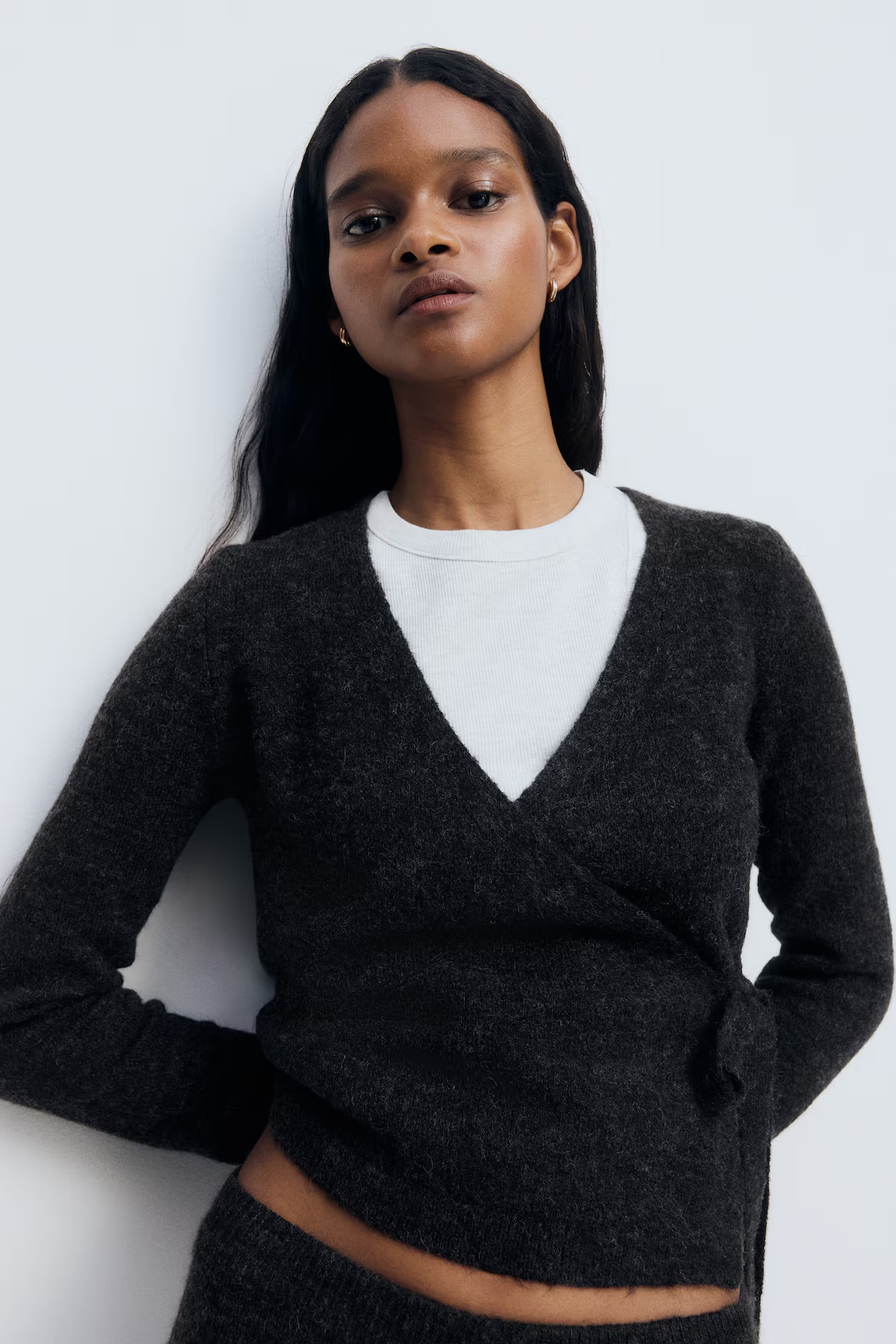
When you slip into a soft, durable H&M shirt or wrap yourself in a cozy knit sweater, you’re not just wearing fast fashion—you’re experiencing the meticulous work of H&M’s OEM partners. Behind every affordable, on-trend piece from H&M lies the expertise of H&M’s OEM factories, where craftsmanship meets eco-conscious innovation. Today, we’re pulling back the curtain on H&M’s OEM manufacturing process, decoding the quality details that make their pieces stand out, and sharing practical styling tips for H&M’s OEM-produced eco-friendly fabrics—perfect for your daily shopping sprees and casual get-togethers.
What Makes H&M’s OEM Factories a Cornerstone of Sustainable Fashion?
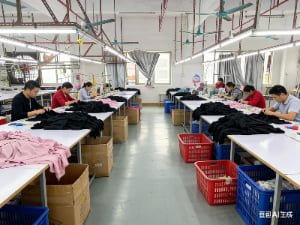
H&M’s commitment to sustainability isn’t just a marketing slogan—it’s embedded in the operations of H&M’s OEM factories. These manufacturing partners are handpicked by H&M for their strict adherence to ethical standards and advanced production techniques, making H&M’s OEM a benchmark for responsible fashion manufacturing. Unlike generic factories, H&M’s OEM facilities prioritize two core pillars: precision craftsmanship and eco-friendly practices.
One key advantage of H&M’s OEM factories is their rigorous quality control system. From the moment raw eco-friendly materials (like organic cotton and recycled polyester) arrive at the facility, H&M’s OEM teams conduct 12+ quality checks—testing for fabric strength, color fastness, and softness. This attention to detail ensures that every H&M piece from H&M’s OEM factories doesn’t just look good on the hanger, but also lasts through countless washes and wears. For shoppers, this means getting more value out of every purchase, a top priority for those building a sustainable wardrobe.
Another standout feature of H&M’s OEM manufacturing is its focus on reducing environmental impact. H&M’s OEM factories use water-saving dyeing technologies that cut water consumption by up to 50% compared to traditional methods. They also prioritize renewable energy—many of H&M’s OEM partners now power their facilities with solar or wind energy, further lowering the carbon footprint of H&M’s clothing. For eco-conscious consumers, knowing a piece comes from H&M’s OEM factories is a guarantee that it’s made with both people and the planet in mind.
Decoding H&M’s OEM Craftsmanship: Details That Elevate Everyday Pieces
It’s the small details that separate a ordinary shirt from a wardrobe staple—and H&M’s OEM factories excel at these finishing touches. Let’s take a closer look at the craftsmanship elements that make H&M’s OEM-produced items worth investing in:
1. Fabric Selection: Eco-Friendly Materials With Purpose
H&M’s OEM factories don’t just use eco-friendly fabrics—they curate materials that balance sustainability with comfort and style. Organic cotton, a staple in H&M’s OEM collections, is grown without harmful pesticides, making it gentler on the skin and the environment. H&M’s OEM teams also favor recycled polyester, which is made from plastic bottles and reduces landfill waste. What’s more, H&M’s OEM factories test each fabric for breathability and durability, ensuring that organic cotton tees stay soft after washes and recycled polyester jackets resist wear and tear.
2. Stitching & Seams: Precision That Lasts
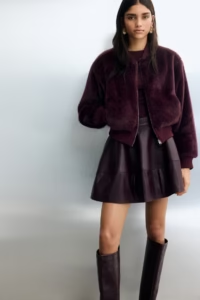
Anyone who’s had a shirt seam come undone knows the frustration of poor craftsmanship—but H&M’s OEM factories avoid this with double-stitched seams on high-tension areas (like cuffs, collars, and hemlines). H&M’s OEM seamstresses use specialized thread that’s resistant to fraying, even with frequent use. For knit pieces, H&M’s OEM factories use a “lock stitch” technique that prevents runs, ensuring your favorite sweater stays intact for seasons.
3. Fit & Tailoring: For Every Body, For Every Occasion
H&M’s OEM factories work closely with H&M’s design team to create fits that are both flattering and functional. Unlike fast fashion brands that prioritize one-size-fits-all, H&M’s OEM produces inclusive sizing with subtle adjustments—like tapered waistlines on pants and relaxed shoulders on shirts. This attention to fit means that H&M’s OEM pieces work for casual office days, weekend brunches, and everything in between.
Styling H&M’s OEM Eco-Friendly Fabrics: Tips for Everyday & Casual Socializing
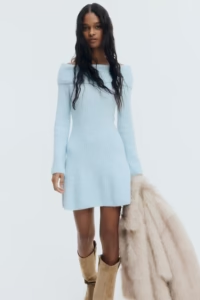
Now that you know the craftsmanship behind H&M’s OEM pieces, let’s dive into how to style these eco-friendly fabrics for maximum impact. Whether you’re running errands or meeting friends for coffee, these looks are easy to put together and highlight the best of H&M’s OEM quality.
Look 1: Casual Errands – Comfort Meets Practicality
Base piece: H&M’s OEM organic cotton crewneck tee (available in neutral tones like white, beige, and gray). Pair it with H&M’s OEM recycled polyester joggers—their soft texture feels like loungewear, but the tailored fit keeps it from looking messy. Add a H&M’s OEM organic cotton denim jacket for layering (the double-stitched seams ensure it holds up to frequent use) and white sneakers. This look is lightweight, breathable, and perfect for grocery shopping or dropping off kids at school.
Look 2: Brunch With Friends – Effortlessly Chic
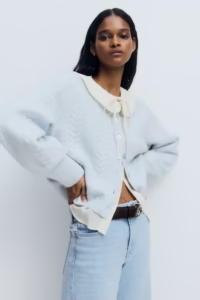
Start with H&M’s OEM linen-blend midi skirt (linen is a sustainable fabric that’s breathable for warm days). Pair it with a H&M’s OEM cropped organic cotton blouse—tuck in the front for a polished silhouette. Add a woven tote bag (made from recycled materials, of course) and strappy sandals. The linen blend resists wrinkles, so you can go from brunch to a farmers’ market without looking disheveled. Pro tip: Roll the sleeves of the blouse for a relaxed, lived-in vibe that complements H&M’s OEM’s craftsmanship.
Look 3: Casual Office – Professional Yet Relaxed
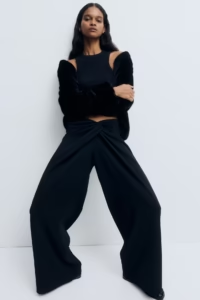
Opt for H&M’s OEM recycled polyester blazer—it’s structured but lightweight, making it ideal for air-conditioned offices. Pair it with H&M’s OEM organic cotton slim-fit trousers (the tapered waist ensures a professional look without feeling tight) and a silk-cotton blend camisole (another H&M’s OEM staple). Finish with block heels and minimal jewelry. This outfit balances professionalism with the comfort of H&M’s OEM eco-friendly fabrics, making it perfect for meetings or client calls.
Why H&M’s OEM Matters for Your Wardrobe & the Planet
In a world of fast fashion, H&M’s OEM factories prove that affordability doesn’t have to come at the cost of quality or sustainability. Every piece from H&M’s OEM combines meticulous craftsmanship—from double-stitched seams to eco-friendly fabric selection—with on-trend styling that works for everyday life. When you choose H&M’s OEM-produced items, you’re not just buying clothes; you’re supporting a manufacturing process that prioritizes durability, ethics, and the environment.
Next time you’re shopping for H&M, take a moment to check the label—chances are, it’s from one of H&M’s OEM factories. And with our styling tips, you’ll be able to turn those eco-friendly, well-crafted pieces into outfits that work for every occasion. Whether you’re after casual comfort or effortless chic, H&M’s OEM has you covered—one sustainable stitch at a time.


Comments