
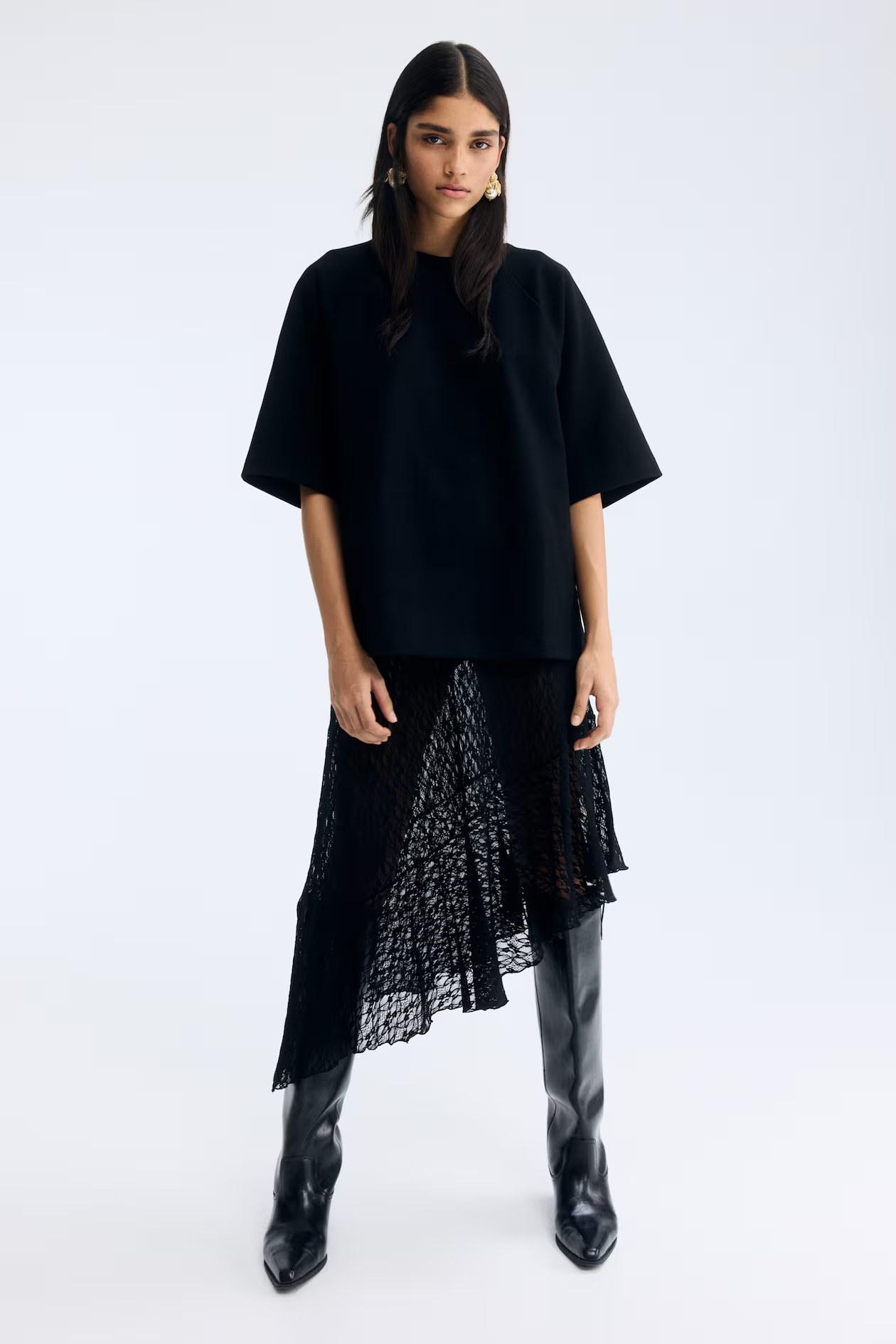
HM OEM Partnership: Your Ultimate Guide to Becoming a H&M Garment Manufacturer
In the global fashion industry, securing an HM OEM partnership is a milestone that many garment manufacturers aspire to. H&M, as one of the world’s leading fast-fashion retailers, not only boasts a massive consumer base but also sets high standards for its supply chain partners. For manufacturers looking to break into the high-volume, reputable fashion supply chain, understanding how to become a trusted HM OEM is the first and most crucial step. This guide will walk you through every key aspect—from meeting H&M’s strict requirements to navigating the application process—helping you turn your HM OEM goals into reality.
What Makes a Qualified HM OEM? Core Requirements You Must Meet
H&M’s success relies heavily on its reliable supply chain, so the brand has established rigorous criteria for HM OEM partners. These requirements cover quality, compliance, production capacity, and sustainability—areas that non-negotiable for long-term cooperation.
1. Uncompromising Product Quality: The Foundation of HM OEM Partnership
H&M’s customers expect durable, well-crafted clothing at affordable prices, which means HM OEM manufacturers must adhere to strict quality control standards. This starts with raw material selection: fabrics, threads, and accessories must meet H&M’s specifications for comfort, color fastness, and durability. For example, cotton used in HM garments must be sourced from sustainable suppliers, and stitching must be consistent to avoid fraying or tearing.
To ensure quality, HM OEM partners need a robust quality management system (QMS) in place. This includes regular inspections during production—from cutting fabric to final assembly—and third-party audits to verify compliance. Manufacturers that can consistently deliver defect-free products are far more likely to secure and retain an HM OEM contract.
2. Full Compliance: Ethical and Legal Standards for HM OEM
Ethical practices are a top priority for H&M, and any HM OEM must align with the brand’s Code of Conduct for Suppliers. This code covers labor rights, workplace safety, and environmental protection—key areas that H&M audits regularly.
For labor compliance, HM OEM manufacturers must ensure fair wages, reasonable working hours, and no child or forced labor. Workplaces must be safe, with proper ventilation, fire safety measures, and protective equipment for workers. Environmentally, HM OEM partners must minimize waste, reduce energy consumption, and properly dispose of hazardous materials (such as dyeing chemicals). Manufacturers that hold certifications like ISO 9001 (quality management) and ISO 14001 (environmental management) will have a significant advantage in the HM OEM evaluation process.
3. Production Capacity and Flexibility: Meeting H&M’s Fast-Fashion Demands
Fast fashion moves at a rapid pace, and H&M relies on its HM OEM partners to keep up with changing trends and high-volume orders. This means your manufacturing facility must have sufficient production capacity—including advanced machinery, skilled workers, and efficient production lines—to handle large batches of clothing within tight deadlines.
Flexibility is equally important. H&M often adjusts orders based on consumer demand, so HM OEM partners need to be able to scale production up or down quickly. For example, if a particular dress style goes viral, H&M may request an urgent increase in production, and your factory must be able to accommodate this without compromising quality. Investing in automated sewing machines and digital production management tools can help boost both capacity and flexibility for HM OEM cooperation.
4. Sustainable Practices: A Non-Negotiable for Modern HM OEM
Sustainability is no longer a “nice-to-have” for HM OEM partners—it’s a requirement. H&M has set ambitious sustainability goals, including using 100% recycled or sustainably sourced materials by 2030, and it expects its suppliers to contribute to these goals. As an HM OEM candidate, you need to demonstrate concrete steps toward sustainability, such as using organic fabrics, implementing water-saving dyeing processes, or reducing carbon emissions in your production.
H&M also encourages HM OEM partners to participate in its sustainability programs, such as the H&M Foundation’s Garment Factory of the Future initiative, which promotes innovative, eco-friendly production methods. Highlighting your sustainability efforts in your application can make your factory stand out from other HM OEM candidates.
The Step-by-Step Process to Become an HM OEM Partner
Once you’ve ensured your factory meets H&M’s core requirements, the next step is to navigate the official application process. While H&M’s supply chain team is selective, following these steps will help you present your factory as a strong HM OEM candidate.
1. Research and Prepare: Align Your Factory with HM OEM Standards
Before applying, conduct a thorough self-assessment to identify any gaps between your current operations and HM’s requirements. This may involve upgrading machinery, implementing a QMS, or obtaining sustainability certifications. You should also familiarize yourself with H&M’s product categories (e.g., women’s wear, children’s wear, activewear) and focus on the areas where your factory has the most expertise—specializing in a niche can make you a more attractive HM OEM candidate.
2. Submit an Application Through H&M’s Official Channels
H&M accepts HM OEM applications through its Sustainability and Suppliers page. You’ll need to provide detailed information about your factory, including: location, production capacity, number of employees, certifications, raw material sources, and compliance records. Be transparent and thorough—any inconsistencies in your application can lead to immediate rejection.
In addition to the basic application, consider including a portfolio of your past work (e.g., samples of garments you’ve manufactured for other brands) and case studies that demonstrate your ability to meet tight deadlines or implement sustainable practices. This extra information can help H&M’s team visualize your factory as a reliable HM OEM partner.
If your application passes the initial review, H&M will conduct a series of audits to verify your claims. These audits may include: a quality audit (to check product consistency), a compliance audit (to assess labor and environmental practices), and a capacity audit (to evaluate your production capabilities). H&M may use internal auditors or third-party firms for these evaluations.
To prepare for audits, ensure all your records—including payrolls, safety inspections, and material sourcing documents—are organized and up-to-date. Address any identified issues promptly; H&M may give you a timeline to make improvements before re-evaluating your HM OEM candidacy.
4. Negotiate Terms and Establish the Partnership
If you pass all audits, you’ll move on to the negotiation phase. This involves discussing terms such as pricing, order volumes, delivery schedules, and quality benchmarks. It’s important to be realistic about your capabilities—overpromising on delivery times or underpricing your services can lead to problems down the line. Remember, H&M values long-term partnerships, so focus on building trust rather than winning a one-time order.
Once terms are agreed upon, you’ll sign a formal contract and begin the onboarding process. This may include training on H&M’s systems (e.g., order management, quality reporting) and collaboration on sample production for upcoming collections. Congratulations—you’re now an HM OEM partner!
Tips to Stand Out as an HM OEM Partner and Secure Long-Term Cooperation
Becoming an HM OEM is an achievement, but retaining the partnership requires ongoing effort. Here are some tips to strengthen your relationship with H&M and grow your collaboration:
-
Prioritize Communication: Keep H&M’s team informed about production progress, potential delays, or quality issues. Proactive communication helps build trust and allows for quick problem-solving.
-
Invest in Innovation: Stay updated on the latest fashion production technologies, such as 3D sampling or digital pattern making. These innovations can help you reduce lead times and improve efficiency—key benefits for H&M’s fast-fashion model.
-
Expand Your Sustainability Efforts: Continuously look for ways to reduce your environmental impact, such as switching to renewable energy or implementing circular production practices. H&M rewards HM OEM partners that lead the way in sustainability.
-
Adapt to H&M’s Evolving Needs: As consumer trends change, H&M’s product demands will too. Be willing to adjust your production focus (e.g., shift from fast fashion to more sustainable, timeless pieces) to align with the brand’s strategy.
Final Thoughts: Is Becoming an HM OEM Right for Your Factory?
Becoming an HM OEM requires significant investment in quality, compliance, and sustainability—but the rewards are well worth it. A partnership with H&M not only provides a steady stream of high-volume orders but also boosts your factory’s reputation in the global fashion industry. By following the steps outlined in this guide, aligning your operations with H&M’s standards, and focusing on long-term collaboration, you can turn your HM OEM aspirations into a successful reality.
Ready to take the first step? Visit H&M’s official supplier page today to start your HM OEM application—and let your factory’s quality and commitment shine.


Comments