
Behind H&M’s Fashion Empire: 10 Outstanding H&M’s OEM Factories Redefining Global Supply Chains
When you pick up a trendy H&M sweater or a stylish dress from the store, you’re holding more than just a fashion item—you’re holding the result of a tightly knit global supply chain, where H&M’s OEM factories play a starring role. These manufacturing partners are the unsung heroes behind H&M’s ability to deliver affordable, on-trend clothing to millions of consumers worldwide. From adhering to strict quality standards to embracing sustainable practices, the top H&M’s OEM factories stand out for their expertise, innovation, and reliability. In this article, we’ll dive into 10 exceptional H&M’s OEM facilities, exploring what makes each one a cornerstone of H&M’s operational success and how they contribute to the brand’s global reputation.
Why H&M’s OEM Factories Are Non-Negotiable for Its Global Success
H&M’s business model—centered on fast fashion, accessibility, and constant product renewal—relies heavily on its network of OEM (Original Equipment Manufacturing) factories. Unlike in-house production, partnering with specialized H&M’s OEM facilities allows the brand to scale production quickly, adapt to changing fashion trends, and tap into regional manufacturing strengths. Whether it’s leveraging the textile expertise of Chinese factories, the cost-efficiency of Southeast Asian facilities, or the sustainability innovations of European partners, H&M’s OEM network is a strategic asset.
Moreover, H&M’s strict supplier code of conduct ensures that every H&M’s OEM factory meets rigorous standards for labor rights, environmental protection, and product quality. This commitment not only aligns with global ethical guidelines but also resonates with today’s conscious consumers—making H&M’s OEM partnerships as much about brand integrity as they are about production capacity. Now, let’s meet 10 of the standout factories that keep H&M’s fashion machine running smoothly.
10 Exceptional H&M’s OEM Factories: Strengths, Specializations, and Impact
1. Ever-Glory International Group (Shanghai, China) – The Quality Benchmark for H&M’s OEM Apparel
As one of H&M’s long-standing OEM partners, Ever-Glory International Group in Shanghai has earned a reputation as a leader in quality control for women’s and men’s casual wear. Specializing in knitwear and woven garments, this H&M’s OEM factory employs over 5,000 skilled workers and uses advanced inspection technologies to ensure every stitch meets H&M’s specifications. What sets Ever-Glory apart is its integrated production line—from fabric sourcing to final packaging—which reduces lead times by 30% compared to industry averages. For H&M, this means faster delivery of seasonal collections, a critical advantage in the fast fashion landscape. Ever-Glory also prioritizes sustainability, using recycled cotton in 40% of its H&M orders, aligning with H&M’s circular fashion goals.
2. DBL Group (Dhaka, Bangladesh) – H&M’s OEM Leader in Sustainable Production
Bangladesh is a key hub for H&M’s OEM manufacturing, and DBL Group stands out as a pioneer in eco-friendly practices. This H&M’s OEM factory, which produces over 1 million H&M garments monthly (primarily t-shirts, jeans, and activewear), runs entirely on solar and wind energy—making it one of the most sustainable facilities in the region. DBL Group also has its own water treatment plant that recycles 95% of the water used in dyeing processes, addressing a major environmental concern in textile production. For H&M, partnering with DBL Group isn’t just about production; it’s about advancing its “H&M Group Sustainability Strategy” and meeting consumer demand for eco-conscious fashion. DBL’s commitment to labor welfare—including fair wages and safe working conditions—also makes it a model for other H&M’s OEM factories in Bangladesh.
3. Viet Tien Garment Factory (Ho Chi Minh City, Vietnam) – H&M’s OEM Expert in Activewear and Loungewear
Viet Tien Garment Factory has carved a niche as H&M’s go-to OEM partner for activewear, loungewear, and athleisure—categories that have boomed in recent years. This H&M’s OEM facility specializes in working with technical fabrics, such as moisture-wicking polyester and stretchable spandex, which require precise manufacturing techniques. Viet Tien’s investment in automated cutting machines and sewing robots has improved production efficiency by 25%, allowing it to keep up with H&M’s high-volume orders for its sportswear line. The factory also has a dedicated team for product development, collaborating with H&M’s design team to test new fabrics and prototypes—making it a true strategic partner rather than just a manufacturer.
4. Otto Group Manufacturing (Istanbul, Turkey) – H&M’s OEM Gateway to Europe
Located at the crossroads of Europe and Asia, Otto Group Manufacturing in Istanbul is a critical H&M’s OEM factory for serving the European market. Specializing in outerwear—coats, jackets, and blazers—this facility leverages Turkey’s rich textile heritage and proximity to European ports to deliver H&M’s seasonal outerwear collections in record time. Otto Group’s strength lies in its ability to handle complex designs, such as tailored coats with intricate stitching and hardware details, which require skilled craftsmanship. As a H&M’s OEM partner, it also benefits from Turkey’s favorable trade agreements with the EU, reducing import tariffs and ensuring cost competitiveness. The factory’s focus on ethical production has earned it H&M’s “Supplier of the Year” award twice, thanks to its zero-tolerance policy for labor violations and its investment in employee training.
5. Kingmaker Footwear (Guangzhou, China) – H&M’s OEM Specialist for Footwear and Accessories
H&M’s product range extends beyond clothing, and Kingmaker Footwear in Guangzhou is the brand’s leading OEM partner for shoes, sandals, and fashion accessories. This H&M’s OEM factory produces over 500,000 pairs of H&M footwear annually, ranging from casual sneakers to dressy sandals. Kingmaker’s expertise lies in working with diverse materials—from vegan leather to recycled rubber—and its advanced mold-making technology ensures consistent fit and durability across every pair. What makes Kingmaker a standout H&M’s OEM partner is its focus on innovation; it recently developed a lightweight sole using 100% recycled plastic bottles, which is now used in H&M’s best-selling sneaker line. The factory also has a strict quality control process for footwear, including wear-testing and water-resistance checks, to ensure products meet H&M’s high standards.
6. Sri Lankan Apparel (Colombo, Sri Lanka) – H&M’s OEM Leader in Ethical Labor Practices

Sri Lankan Apparel is a trailblazer for ethical manufacturing in H&M’s OEM network. This facility, which produces women’s dresses, blouses, and knitwear for H&M, is certified by the Fair Wear Foundation and has implemented a range of employee-centric policies—including free healthcare, education subsidies for workers’ children, and flexible working hours for new mothers. As a H&M’s OEM partner, it also prioritizes transparency, allowing H&M to share the factory’s details with consumers via its “Garment Factory Map” tool. Sri Lankan Apparel’s focus on ethical practices hasn’t come at the cost of efficiency; it produces over 800,000 garments monthly for H&M and has a 99% on-time delivery rate. For H&M, this partnership is a key way to demonstrate its commitment to ethical fashion and build trust with consumers.
7. PT Pan Brothers (Jakarta, Indonesia) – H&M’s OEM Innovator in Circular Fashion
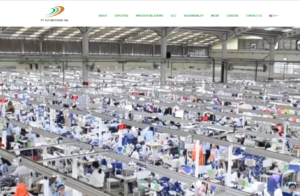
Circular fashion—designing products for reuse and recycling—is a core part of H&M’s strategy, and PT Pan Brothers in Jakarta is at the forefront of this movement as a H&M’s OEM factory. Specializing in knitwear, this facility has developed a closed-loop production system where leftover fabric scraps from H&M orders are recycled into new yarn and used to make new garments. PT Pan Brothers also uses H&M’s “Take-Back” program materials, transforming old H&M clothes into new knitwear. This innovative approach has reduced the factory’s waste by 60% and made it a key partner for H&M’s “Conscious Collection.” Additionally, PT Pan Brothers’ investment in digital printing technology allows it to create custom patterns for H&M’s limited-edition collections, adding value to the brand’s offerings.
8. TAL Apparel (Hong Kong, China) – H&M’s OEM Expert in Tailored Clothing
Tailored clothing requires precision and expertise, and TAL Apparel in Hong Kong is H&M’s top OEM partner for men’s suits, dress shirts, and tailored women’s wear. With over 50 years of experience, TAL Apparel is known for its mastery of fabric handling—from fine cotton for dress shirts to wool for suits—and its ability to produce consistent fits across large orders. This H&M’s OEM factory uses 3D body scanning technology to optimize pattern design, ensuring that H&M’s tailored pieces fit a diverse range of body types. TAL Apparel also offers a “made-to-order” service for H&M’s premium lines, allowing consumers to customize details like collar style and cuff length. For H&M, this partnership has helped elevate its tailored offerings, making them more competitive in the mid-price fashion segment.
9. C&A Manufacturing (Lisbon, Portugal) – H&M’s OEM Partner for Sustainable Denim
Denim production is resource-intensive, but C&A Manufacturing in Lisbon is changing that as a H&M’s OEM factory specializing in sustainable denim. This facility produces H&M’s popular jeans, denim jackets, and denim skirts using innovative techniques like laser finishing (which reduces water use by 90% compared to traditional sandblasting) and ozone washing (which eliminates the need for harsh chemicals). C&A Manufacturing also uses organic cotton in 100% of its H&M denim orders, which requires 88% less water than conventional cotton. As a European-based H&M’s OEM factory, it also benefits from short lead times to H&M’s European stores, reducing carbon emissions from transportation. The factory’s sustainable denim practices have made it a model for H&M’s other denim OEM partners worldwide.
10. Maharaja Textiles (Chennai, India) – H&M’s OEM Leader in Handicraft-Infused Garments
H&M’s “Artisan Collection” relies on the unique craftsmanship of Maharaja Textiles, a H&M’s OEM factory in Chennai, India. This facility specializes in integrating traditional Indian handicrafts—such as hand embroidery, block printing, and tie-dye—into H&M’s modern designs. Maharaja Textiles works with over 2,000 local artisans, providing them with fair wages and training to adapt their skills to mass production. For H&M, this partnership adds a unique, cultural touch to its collections, differentiating the brand from competitors. The factory also prioritizes sustainability, using natural dyes made from plants like indigo and turmeric for its H&M orders. Maharaja Textiles’ ability to blend tradition with modern manufacturing has made it a valued H&M’s OEM partner for over a decade.
What H&M Looks for in Its OEM Factories: Key Selection Criteria
The 10 H&M’s OEM factories highlighted above share several traits that make them stand out to H&M’s procurement team. First and foremost is ethical compliance —factories must meet H&M’s “Supplier Code of Conduct,” which covers labor rights, health and safety, and environmental protection. Second is specialization —H&M seeks OEM partners with expertise in specific product categories (eg, denim, activewear) to ensure high-quality results. Third is innovation —factories that invest in new technologies, sustainable practices, or product development are more likely to secure long-term partnerships. Finally, reliability —on-time delivery and consistent quality are non-negotiable for H&M, given its fast fashion business model.
The Future of H&M’s OEM Network: Trends to Watch
As the fashion industry evolves, H&M’s OEM network is poised to adapt to new trends. One key shift is the move toward localized production —H&M is increasingly partnering with OEM factories closer to its major markets (eg, European factories for Europe, North American factories for the US) to reduce carbon emissions and lead times. Another trend is digitalization —H&M’s OEM factories are adopting AI for quality control, blockchain for supply chain transparency, and 3D design tools to speed up product development. Finally, circularity will continue to be a priority; H&M plans to work with its OEM partners to make 100% of its products from recycled or sustainably sourced materials by 2030, a goal that relies heavily on the innovation of factories like PT Pan Brothers and C&A Manufacturing.
Conclusion: H&M’s OEM Factories Are the Backbone of Its Fashion Empire
From Shanghai to Lisbon, the 10 H&M’s OEM factories featured in this article prove that H&M’s success isn’t just about trendy designs—it’s about building a network of skilled, ethical, and innovative manufacturing partners. These factories don’t just produce clothes; they bring H&M’s brand values to life, whether through sustainable practices, ethical labor standards, or cutting-edge technology. As consumers become more conscious of where their clothes come from, H&M’s OEM network will only grow in importance—serving as a key differentiator in a competitive fashion market. For anyone interested in the inner workings of global fashion, understanding H&M’s OEM partnerships is essential to seeing the full picture of how your favorite garments go from factory to closet.
Beyond the Factory: What H&M’s OEM Network Means for Consumers and the Industry
A Guide for Conscious Consumers: How to Engage with H&M’s OEM Story
For today’s consumers, knowing the origin of a garment is as important as its style—and H&M’s OEM network offers a way to connect with that story. Many H&M’s OEM factories, like Sri Lankan Apparel and Maharaja Textiles, allow consumers to trace their purchases through H&M’s digital tools. By scanning the QR code on a garment’s tag, you can learn which H&M’s OEM factory produced it, the materials used, and the sustainability practices employed. This transparency not only builds trust but also empowers consumers to make informed choices that align with their values. For example, if you prioritize sustainable denim, you can seek out H&M jeans made by C&A Manufacturing in Lisbon, knowing they use water-saving techniques and organic cotton. Engaging with this information turns a simple purchase into a vote for the manufacturing practices you support—making H&M’s OEM network relevant to everyday shoppers.
Industry Impact: How H&M’s OEM Model Shapes Global Fashion Manufacturing
H&M’s approach to OEM partnerships isn’t just beneficial for the brand—it’s setting a standard for the entire fashion industry. By prioritizing ethical compliance and sustainability in its H&M’s OEM network, H&M is pushing other retailers to raise their own standards. Smaller brands, in particular, look to H&M’s OEM selection criteria as a blueprint for building their own supply chains, ensuring they too avoid factories with poor labor practices. Additionally, H&M’s investment in innovative H&M’s OEM factories—such as those using 3D scanning or closed-loop production—is driving technological advancement across the industry. These innovations are becoming more accessible as OEM factories scale their operations, making sustainable and efficient manufacturing available to brands of all sizes. H&M’s OEM network also plays a role in supporting local economies: factories like DBL Group in Bangladesh and Maharaja Textiles in India create thousands of jobs, many of which provide fair wages and training, lifting communities out of poverty. In this way, H&M’s OEM partnerships extend beyond production to create positive social impact.
Final Thoughts: The Inseparable Bond Between H&M and Its OEM Factories
H&M’s fashion empire is often celebrated for its design team and marketing prowess, but the true foundation lies in its network of exceptional OEM factories. These partners are more than suppliers—they are collaborators, innovators, and guardians of the brand’s reputation. As H&M continues to navigate the challenges of the fashion industry, from fast fashion criticism to the demand for sustainability, its OEM factories will remain central to its success. Whether it’s adapting to localized production, embracing digitalization, or advancing circular fashion, H&M’s OEM network will evolve alongside the brand. For consumers, industry professionals, and anyone passionate about fashion’s future, the story of H&M’s OEM factories is a reminder that great fashion isn’t just made—it’s made responsibly, collaboratively, and with a focus on people and the planet. As H&M and its OEM partners move forward, one thing is clear: their partnership will continue to redefine what’s possible in global fashion supply chains.


Comments