
For fashion brands launching or expanding in Japan, choosing the right manufacturing partner is a strategic decision. Japan’s apparel market rewards quality, fit precision, and timely delivery, but it also demands flexibility—especially for emerging labels that cannot commit to large volumes upfront. This page outlines how Orange Sea Clothing, a womenswear OEM/ODM manufacturer based in Dongguan, China, approaches small-batch production and sampling, and what you should verify before starting a project.
We focus on practical considerations: what to expect from a supplier, which capabilities are relevant to your needs, and the questions that will help you compare options confidently. The goal is not to promise outcomes, but to give you a clear framework for evaluating whether our services align with your brand’s requirements.
What Japan’s Apparel Market Demands from a Manufacturer
Japan’s retail environment is known for its discerning customers and high standards for garment construction, fabric hand-feel, and consistent sizing. For brands selling through department stores, select shops, or e-commerce platforms, even minor defects can damage reputation. This means your manufacturer must demonstrate attention to detail and quality control—not just in the final product, but throughout sampling and production.
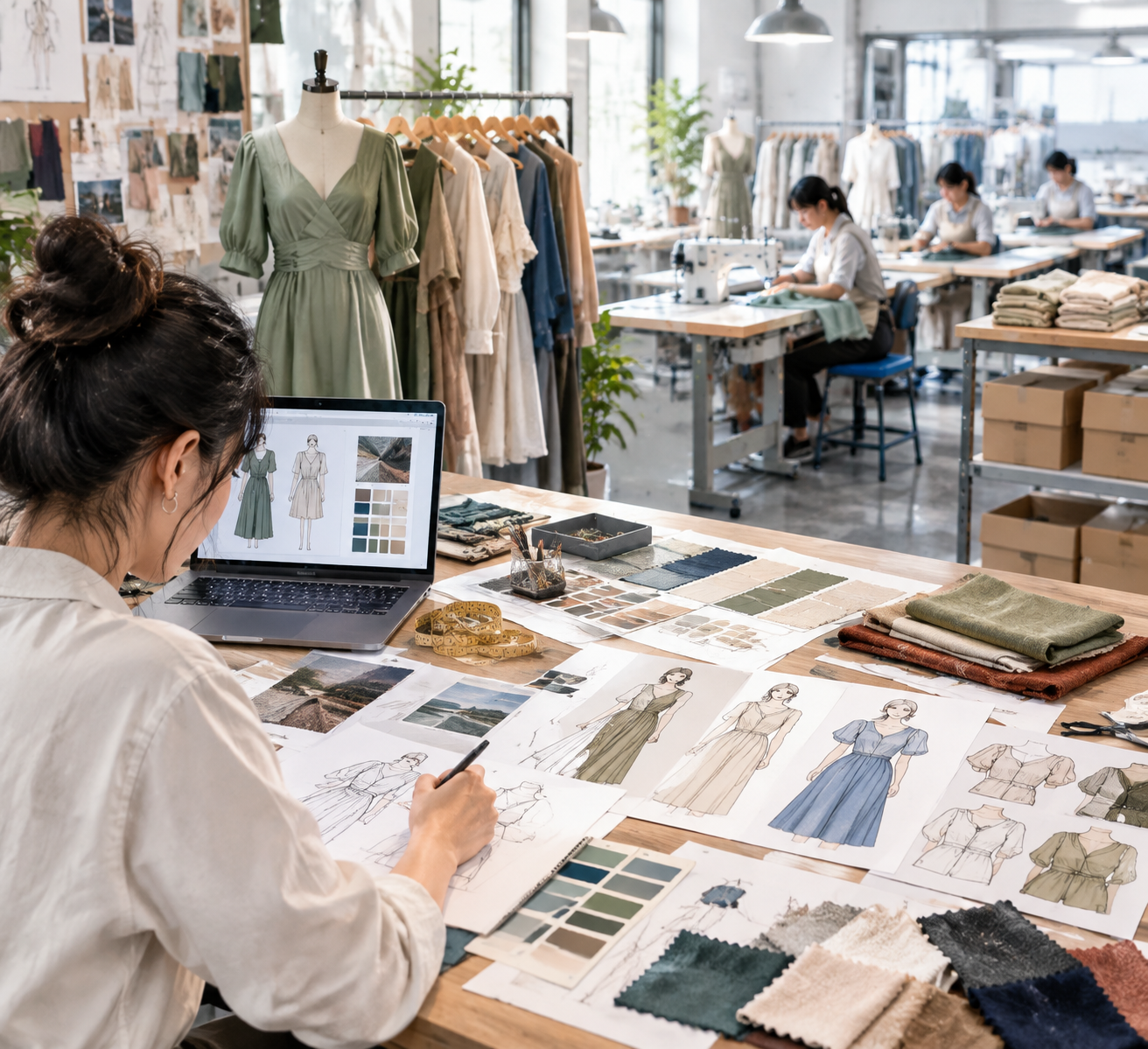
Another key factor is lead time. Japanese retail calendars often follow seasonal drops, and late deliveries can disrupt launch plans. While we cannot guarantee specific timelines without knowing your project scope, our in-house sample room allows us to produce samples in approximately seven days, which can help you iterate quickly during development. However, you should confirm production lead times for bulk orders separately, as they depend on fabric availability, order size, and current workload.
Finally, Japan’s market includes a wide range of brand types—from minimalist basics to trend-driven pieces. Your supplier should be able to work with your design specifications, whether you provide detailed tech packs or need assistance with design development. Our OEM/ODM services cover dresses, skirts, tops, bodysuits, sets, and outerwear, giving you a broad foundation for building a cohesive collection.
Small-Batch Production: A Practical Fit for Startups and Niche Brands
One of the most common challenges for emerging brands is minimum order quantities (MOQs). Many factories require large runs, forcing startups to overcommit capital and inventory. Orange Sea Clothing offers low MOQs specifically suited to startups and small batch runs, with the ability to scale up to bulk production as your brand grows.
This approach can be particularly valuable in Japan, where niche brands often thrive by offering limited quantities or capsule collections. Small batches allow you to test the market, respond to trends quickly, and avoid excess stock—a critical advantage in a market where storage and logistics costs are high. However, it is important to clarify what “low MOQ” means for your specific product category. MOQs can vary by style, fabric, and construction complexity, so we recommend discussing your initial order size during the inquiry stage.
Additionally, consider how small batches affect unit costs. While lower MOQs reduce financial risk, they typically result in higher per-unit prices compared to mass production. You should weigh this trade-off against your retail pricing strategy and margin targets. Our team can provide quotes within 24 hours, allowing you to compare costs early in your decision process.
OEM, ODM, and Private Label: Understanding Your Options
Depending on your brand’s internal capabilities, you may need different levels of supplier involvement. OEM (Original Equipment Manufacturing) is suitable if you have complete designs and tech packs, and you need the factory to execute production to your specifications. ODM (Original Design Manufacturing) is better if you want to leverage the manufacturer’s design expertise to develop styles from concept to finished product—useful for brands without an in-house design team.
Private label production sits between these models, often involving customization of existing designs or adding your branding to finished garments. For Japan-focused brands, private label can be an efficient way to launch a collection without extensive design resources. However, you should verify how much customization is possible—such as fabric changes, colorways, or silhouette adjustments—before assuming a supplier can adapt their existing styles.
Our capabilities include both OEM and ODM, with an in-house sample room that supports rapid iteration. This means we can help you refine designs, select materials, and adjust fits during the sampling phase. But the level of design support we provide depends on your project scope, so it is essential to communicate your expectations clearly from the start.
Questions to Resolve Before You Inquire
To make an informed decision, you should prepare a set of questions that go beyond basic pricing. Here are key areas to explore with any potential supplier, including us:
- Compliance and quality standards: What quality inspection processes are in place? Can you provide documentation of compliance with Japanese labeling and safety regulations, such as the Household Products Quality Labeling Act? Verify these requirements independently, as they affect your ability to sell legally in Japan.
- Fabric sourcing: Do you source fabrics locally in China, or can you work with materials supplied by the brand? If you require specific Japanese fabrics, confirm whether the factory can handle imported materials and what lead times apply.
- Shipping and logistics: How do you handle export documentation and shipping to Japan? What are the typical Incoterms you offer? Clarify whether you can support DDP (Delivered Duty Paid) or if the buyer must manage customs clearance.
- Communication and revisions: How many sample revisions are included in the sampling fee? What is the communication workflow for design changes? Clear expectations prevent misunderstandings during development.
- Scalability: If a small batch sells out quickly, how quickly can you ramp up to larger production? Understanding your capacity constraints helps you plan for growth.
These questions are not meant to be exhaustive, but they provide a starting point for comparing suppliers. We encourage you to ask them directly during your evaluation process, as answers will vary based on your specific product and order requirements.
Why Dongguan, China, Can Be a Strategic Sourcing Location
Dongguan, located in Guangdong Province, is part of one of China’s most established apparel manufacturing clusters. The region has a deep ecosystem of fabric suppliers, trims manufacturers, and skilled garment workers, which can translate into shorter sourcing cycles and easier access to materials. For brands targeting Japan, proximity to major shipping ports also facilitates export logistics.
However, being in China does not automatically guarantee quality or reliability. You should evaluate each factory on its own merits—visiting the facility if possible, requesting references, and conducting third-party audits. While we are based in Dongguan and can speak to our own capabilities, we cannot make claims about the broader region’s performance or your specific shipping experience.
For Japan-based brands, time zone differences (Dongguan is one hour behind Tokyo) can be manageable for communication, but you should confirm response times and availability for calls. Our quotes within 24 hours are designed to keep the evaluation process moving, but ongoing communication during production will require agreed-upon channels and schedules.
Choosing a manufacturing partner for the Japanese market involves balancing quality, cost, and flexibility. Orange Sea Clothing offers low-MOQ womenswear production, in-house sampling, and OEM/ODM services that may align with your brand’s needs. However, the right decision depends on your specific designs, target price points, and compliance requirements.
We invite you to discuss your project requirements with us—whether you are exploring initial concepts or ready to move into sampling. Share your product ideas, target quantities, and any questions you have about our processes, and we will provide the information you need to make an informed choice.
What to send us
If the specifications above match what you are sourcing, send your tech pack to Orange Sea Clothing. If the pack is not written yet, sketches and a reference sample are enough to start — sample development covers the design review, fabric and trim sourcing, pattern making and the first prototype, so you see fit and construction before you commit to a production run.