

Female to Male Size Conversion: Industrial-Grade Chart & Best Practices for Apparel Manufacturers
As global apparel production demands flexibility across gendered sizing, mastering female to male size conversion is critical for factories to avoid fit errors, reduce waste, and meet client specifications. This guide provides a actionable conversion chart, category-specific coefficients, and industrial best practices—designed explicitly for production floors.
Key Principles of Female to Male Size Conversion for Factories
Before using the chart, understand these foundational rules to ensure accuracy:
- Body Measurement Baselines: Aligns with ASTM D4236 (US) and ISO 3635 (global) standards for adult body dimensions.
- Category-Specific Adjustments: Upper garments prioritize chest/shoulder width, while bottoms focus on waist/hip ratios.
- Regional Compatibility: Covers US, EU, UK, and CN sizing systems (the most common in global orders).
- Fabric Flexibility: Adjust coefficients by ±0.01–0.02 for stretch fabrics (e.g., knits) or rigid materials (e.g., denim).
Female to Male Size Conversion Chart (Production-Ready)
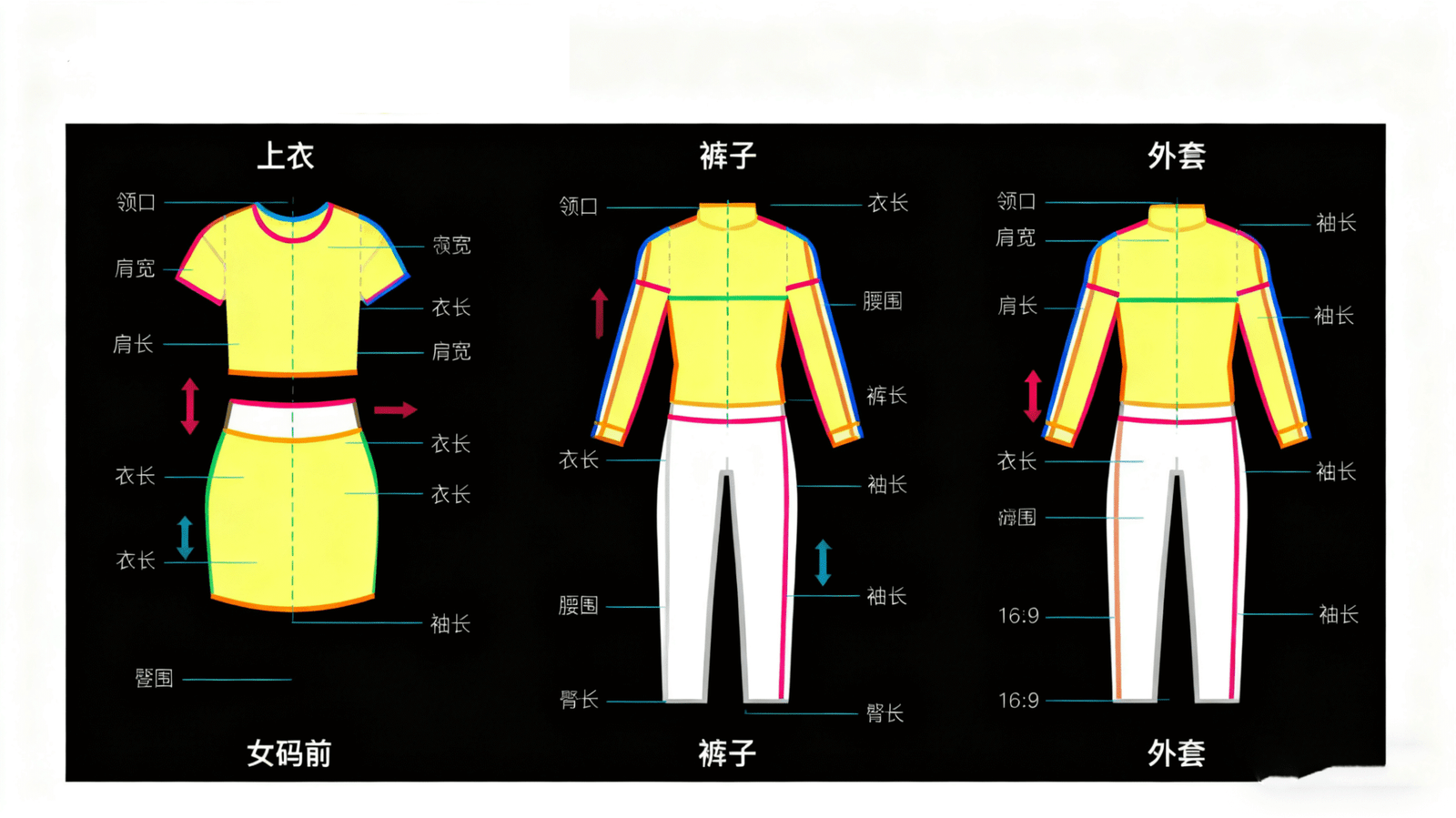
The chart below groups apparel by core categories, with conversion coefficients calibrated for mass production. All measurements follow industry conventions (chest/waist/hip in cm; length/inseam in cm).
1. T-Shirts & Tank Tops (Jerseys/Knits)
| Female Size (US/EU/UK/CN) | Corresponding Male Size (US/EU/UK/CN) | Chest Conversion Factor | Shoulder Width Conversion Factor | Body Length Conversion Factor |
| 2-4 / 32-34 / 6-8 / 155/80A-160/84A | XS / 44 / 34 / 165/84A | 1.09 | 1.14 | 1.06 |
| 6-8 / 36-38 / 10-12 / 165/88A-170/92A | S / 46-48 / 36-38 / 170/88A-175/92A | 1.08 | 1.13 | 1.05 |
| 10-12 / 40-42 / 14-16 / 170/96A-175/100A | M / 50-52 / 40-42 / 175/96A-180/100A | 1.07 | 1.12 | 1.04 |
| 14-16 / 44-46 / 18-20 / 175/104A-180/108A | L / 54-56 / 44-46 / 180/104A-185/108A | 1.06 | 1.11 | 1.03 |
2. Button-Down Shirts (Wovens)
| Female Size (US/EU/UK/CN) | Corresponding Male Size (US/EU/UK/CN) | Chest Conversion Factor | Shoulder Width Conversion Factor | Shirt Length Conversion Factor |
| 2-4 / 32-34 / 6-8 / 155/80A-160/84A | XS / 44 / 34 / 165/84A | 1.08 | 1.12 | 1.05 |
| 6-8 / 36-38 / 10-12 / 165/88A-170/92A | S / 46-48 / 36-38 / 170/88A-175/92A | 1.07 | 1.11 | 1.04 |
| 10-12 / 40-42 / 14-16 / 170/96A-175/100A | M / 50-52 / 40-42 / 175/96A-180/100A | 1.06 | 1.10 | 1.03 |
| 14-16 / 44-46 / 18-20 / 175/104A-180/108A | L / 54-56 / 44-46 / 180/104A-185/108A | 1.05 | 1.09 | 1.02 |
3. Pants & Jeans (Wovens/Knits)
| Female Size (US/EU/UK/CN) | Corresponding Male Size (US/EU/UK/CN) | Waist Conversion Factor | Hip Conversion Factor | Inseam Conversion Factor |
| 2-4 / 32-34 / 6-8 / 155/64A-160/68A | XS / 44 / 34 / 165/72A | 1.07 | 1.08 | 1.04 |
| 6-8 / 36-38 / 10-12 / 165/72A-170/76A | S / 46-48 / 36-38 / 170/76A-175/80A | 1.06 | 1.07 | 1.03 |
| 10-12 / 40-42 / 14-16 / 170/80A-175/84A | M / 50-52 / 40-42 / 175/80A-180/84A | 1.05 | 1.06 | 1.02 |
| 14-16 / 44-46 / 18-20 / 175/88A-180/92A | L / 54-56 / 44-46 / 180/88A-185/92A | 1.04 | 1.05 | 1.01 |
4. Jackets & Coats (Wovens/Knits)
| Female Size (US/EU/UK/CN) | Corresponding Male Size (US/EU/UK/CN) | Chest Conversion Factor | Shoulder Width Conversion Factor | Waist Conversion Factor |
| 2-4 / 32-34 / 6-8 / 155/80A-160/84A | XS / 44 / 34 / 165/84A | 1.10 | 1.15 | 1.06 |
| 6-8 / 36-38 / 10-12 / 165/88A-170/92A | S / 46-48 / 36-38 / 170/88A-175/92A | 1.09 | 1.14 | 1.05 |
| 10-12 / 40-42 / 14-16 / 170/96A-175/100A | M / 50-52 / 40-42 / 175/96A-180/100A | 1.08 | 1.13 | 1.04 |
| 14-16 / 44-46 / 18-20 / 175/104A-180/108A | L / 54-56 / 44-46 / 180/104A-185/108A | 1.07 | 1.12 | 1.03 |
5. Sweaters & Knits (Midweight)
| Female Size (US/EU/UK/CN) | Corresponding Male Size (US/EU/UK/CN) | Chest Conversion Factor | Shoulder Width Conversion Factor | Length Conversion Factor |
| 2-4 / 32-34 / 6-8 / 155/80A-160/84A | XS / 44 / 34 / 165/84A | 1.08 | 1.13 | 1.05 |
| 6-8 / 36-38 / 10-12 / 165/88A-170/92A | S / 46-48 / 36-38 / 170/88A-175/92A | 1.07 | 1.12 | 1.04 |
| 10-12 / 40-42 / 14-16 / 170/96A-175/100A | M / 50-52 / 40-42 / 175/96A-180/100A | 1.06 | 1.11 | 1.03 |
| 14-16 / 44-46 / 18-20 / 175/104A-180/108A | L / 54-56 / 44-46 / 180/104A-185/108A | 1.05 | 1.10 | 1.02 |
Industrial Implementation Tips for Female to Male Size Conversion
- Sample Validation: After applying conversion coefficients, produce 3–5 test samples and measure key dimensions (tolerance: ±1cm for critical areas like chest/waist).
- Batch Calibration: For large orders, recheck the first 10 units of each size to adjust cutting patterns if needed.
- Client-Specific Adjustments: Some brands may require custom coefficients (e.g., European markets prefer wider shoulders—add 0.02 to shoulder width factors).
- Digital Integration: Embed the chart into CAD/CAM systems for automated pattern grading (reduces human error).
Common Pitfalls to Avoid
- One-Size-Fits-All Coefficients: Never use upper-garment factors for bottoms (e.g., waist conversion ≠ chest conversion).
- Ignoring Regional Variances: EU male sizes run 2–3cm larger in chest than US sizes—adjust coefficients accordingly.
- Overlooking Seam Allowances: Add 1cm to all converted dimensions during pattern making (standard for industrial sewing).
FAQs About Female to Male Size Conversion
Q1: What is the average female to male chest conversion factor?
A: 1.07–1.10, with jackets requiring the highest (1.10) and woven shirts the lowest (1.05–1.08).
Q2: How do stretch fabrics impact conversion?
A: For spandex blends (≥5% stretch), reduce coefficients by 0.01–0.02—stretch compensates for minor size gaps.
Q3: Can this chart be used for children’s apparel?
A: No—this guide is for adult sizing. Children’s conversion requires age-specific body measurement data.
Final Notes
This female to male size conversion framework is optimized for factory production, balancing precision and efficiency. By following the chart and best practices, your team can streamline cross-gender sizing, minimize returns, and deliver consistent fit to global clients. For custom adjustments (e.g., plus sizes, niche categories like activewear), contact our apparel technical team for tailored coefficients.
Next Steps for Your Factory
- Download the chart as a CSV/Excel file (request a editable version by letting me know).
- Customize coefficients for your target markets (e.g., Asian vs. Western body types).
- Add your brand’s seam allowances or fabric-specific adjustments to the template.
Need to expand the chart to include plus sizes (US 18+) or niche categories (activewear, formalwear)? Or want to optimize the article for additional keywords (e.g., “gender-neutral size conversion”)? Let me know your specific requirements!




Comments